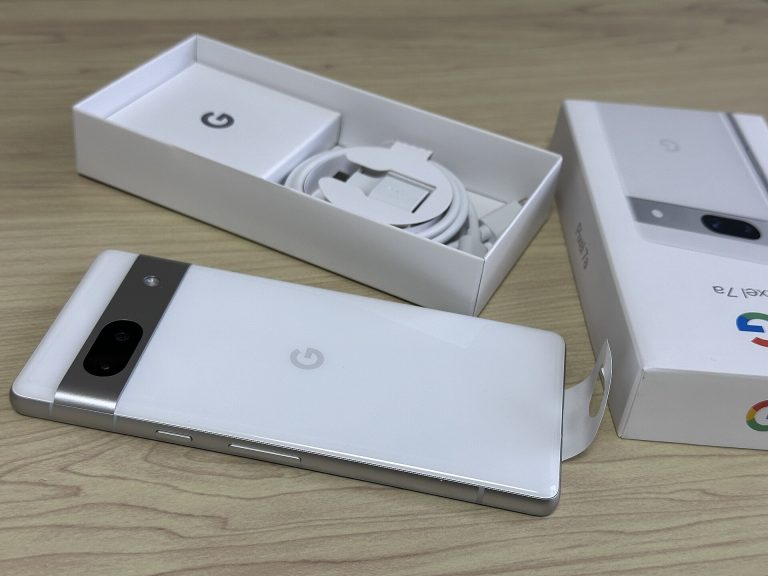
iPhone 16e vs Pixel 7a
The iPhone 16e and the Pixel 7a land in the same midrange smartphone category, so the comparison is fair, and the differences are telling. Scoring each area separately, the Pixel 7a comes out on top 2 times out of 5. Its lead is sharpest in display. The Pixel 7a launched $100 lower than the iPhone 16e, so every advantage on the pricier side has to earn its keep.
At a glance
- Display Pixel 7a wins
- Performance iPhone 16e wins
- Memory & Storage Tie
- Camera Pixel 7a wins
- Battery & Charging Tie
- Price Pixel 7a wins
- Display3.3
- Camera4.0
- Display6.7
- Camera6.9
Spec scores (0 to 10) are calculated from manufacturer specs against other models in the same class. See how the formula works. They are not reviews or user ratings.
Key Differences
-
The Pixel 7a has a 90 Hz display instead of 60 Hz
Here the Pixel 7a pulls well ahead of the iPhone 16e, with 90 Hz compared to 60 Hz. A higher refresh rate makes scrolling, animations and games look smoother. Once you’re used to it, a lower-rate screen can feel sluggish by comparison.
-
The iPhone 16e has a 0.93 oz lighter build
The iPhone 16e doesn’t just edge this one; 5.89 oz against 6.83 oz is a lead you’ll feel. Weight shows up every time you hold the phone above your face in bed or type one-handed for a long stretch.
-
The Pixel 7a has an extra rear camera
Big gap, real consequences. The Pixel 7a’s 2 versus the iPhone 16e’s 1 changes how the two compare in daily use. More cameras help most when each covers a different view, so check the table to see what the Pixel 7a’s extra lens adds.
-
The Pixel 7a has a higher-resolution 64 MP main camera
The iPhone 16e is clearly behind on main camera (48 MP against 64 MP), and that’s one of its biggest weak spots in this matchup. The Pixel 7a’s higher-resolution main sensor gives you more room to crop, which helps when you can’t get closer.
-
The iPhone 16e has a 0.05 in slimmer body
On this line of the spec sheet, the iPhone 16e is in a different league: 0.31 in, next to 0.35 in for the Pixel 7a. Thickness sometimes buys battery or camera hardware, so the Pixel 7a’s extra depth isn’t necessarily wasted.
Design & Size
- iPhone 16e 5.78 in × 2.81 in × 0.31 in
- Pixel 7a 5.98 in × 2.87 in × 0.35 in
The Pixel 7a is the larger phone of the two, while the iPhone 16e is the more compact choice. There’s 0.93 oz between them, and the iPhone 16e is on the lighter side. The Pixel 7a is the chunkier of the pair by 0.05 in.
Design & Build
| Spec | iPhone 16e | Pixel 7a |
|---|---|---|
| Height | 5.78 in | 5.98 in |
| Width | 2.81 in | 2.87 in |
| Thickness | 0.31 in (winner) | 0.35 in Thickest in class |
| Weight | 5.89 oz (winner) | 6.83 oz |
| Water & dust rating | IP68 (winner) | IP67 |
| Frame | Aluminum | Aluminum |
Display
Pixel 7a leads
The Pixel 7a dominates the display section, and the gaps are large enough to matter in daily use. On its side, the Pixel 7a has a 90 Hz display instead of 60 Hz. You notice refresh rate every time you scroll a feed or a web page, which is why the Pixel 7a feels more fluid in everyday use. Choose the iPhone 16e and you get 7.2% sharper pixel density. If display is your priority, the Pixel 7a is the phone to pick.
Refresh rate
iPhone 16e: 60 Hz Pixel 7a: 90 Hz Smoother motion is one of the most visible display upgrades, and adaptive high-refresh panels can slow down on static content to save power.
Pixel density
iPhone 16e: 460 ppi Pixel 7a: 429 ppi Pixel density matters most if you hold your phone close or read a lot of small type; for casual use, the gap is subtle.
Performance
iPhone 16e leads
On balance, the iPhone 16e leads the performance section, just not by much. The iPhone 16e answers with a newer 3 nm chip process. A finer process node generally lets a chip do the same work with less power, which can mean cooler running and better battery life. For anyone who cares most about performance, the iPhone 16e is the safer choice.
Process node
iPhone 16e: 3 nm Pixel 7a: 5 nm The iPhone 16e’s chip is built on a more advanced process. That usually points to efficiency gains, though chip design matters just as much.
CPU cores
iPhone 16e: 6 Pixel 7a: 8 Phone chips mix large and small cores, so a different count mostly reflects a different design rather than a clear speed gap.
Memory & Storage
Too close to call
Side by side, the memory & storage figures for the iPhone 16e and the Pixel 7a barely differ. Neither phone gives you a reason to choose it on memory & storage.
Camera
Pixel 7a leads
For camera, the verdict is easy: the Pixel 7a leads, and not by a little. The Pixel 7a comes with an extra rear camera. An extra rear camera usually means another focal length (ultra-wide, telephoto or macro) and more freedom in framing. On camera alone, the Pixel 7a gets the nod.
Rear cameras
iPhone 16e: 1 Pixel 7a: 2 The count alone doesn’t guarantee quality, but the Pixel 7a gives you more lenses to choose from.
Main camera
iPhone 16e: 48 MP Pixel 7a: 64 MP Megapixels are only one part of image quality, so treat this as a sign of detail potential, not a verdict on photos.
Battery & Charging
Too close to call
Evenly matched is the fairest summary of the battery & charging section. So battery & charging is a non-factor here; move on to the areas where they actually differ.
Software & Updates
Here the spec sheet speaks in model names and types. Compare the iPhone 16e and the Pixel 7a row by row in the table below.
Full Specifications
Display
| Spec | iPhone 16e | Pixel 7a |
|---|---|---|
| Screen size | 6.1 in | 6.1 in |
| Panel type | OLED (Super Retina XDR) | OLED |
| Resolution | 2532 x 1170 | 2400 x 1080 |
| Pixel density | 460 ppi (winner) | 429 ppi |
| Refresh rate | 60 Hz | 90 Hz (winner) |
| Peak brightness | 1,200 nits | N/A (not specified) |
| Always-on display | No | Yes (winner) |
Performance
| Spec | iPhone 16e | Pixel 7a |
|---|---|---|
| Chipset | A18 | Google Tensor G2 |
| CPU cores | 6 | 8 |
| Process node | 3 nm (winner) | 5 nm |
| RAM | N/A (not specified) | 8 GB |
Memory & Storage
| Spec | iPhone 16e | Pixel 7a |
|---|---|---|
| Base storage | 128 GB | 128 GB |
| Max storage | 512 GB | N/A (not specified) |
| microSD slot | No | No |
Camera
| Spec | iPhone 16e | Pixel 7a |
|---|---|---|
| Main camera | 48 MP | 64 MP (winner) |
| Ultra-wide camera | N/A (not specified) | 13 MP |
| Rear cameras | 1 | 2 (winner) |
| Front camera | 12 MP | 13 MP |
| Max video | 4K60 Dolby Vision | 4K60 |
Battery & Charging
| Spec | iPhone 16e | Pixel 7a |
|---|---|---|
| Battery capacity | N/A (not specified) | 4,385 mAh Smallest battery in class |
| Rated video playbackManufacturer rating | 26 h | N/A (not specified) |
| Wired charging | N/A (not specified) | 18 W |
| Wireless charging | 8 W | 8 W |
| Port | USB-C (USB 2) | USB-C |
Software & Updates
| Spec | iPhone 16e | Pixel 7a |
|---|---|---|
| OS at launch | iOS 18.3 | Android 13 |
| Promised OS updatesManufacturer commitment | N/A (not specified) | 3 years |
Design & Build
| Spec | iPhone 16e | Pixel 7a |
|---|---|---|
| Height | 5.78 in | 5.98 in |
| Width | 2.81 in | 2.87 in |
| Thickness | 0.31 in (winner) | 0.35 in Thickest in class |
| Weight | 5.89 oz (winner) | 6.83 oz |
| Water & dust rating | IP68 (winner) | IP67 |
| Frame | Aluminum | Aluminum |
Price
| Spec | iPhone 16e | Pixel 7a |
|---|---|---|
| Launch price | $599 | $499 (winner) |
“N/A” means the manufacturer does not specify the value or we could not confirm it. Figures marked “manufacturer rating” are the maker’s own claims, not our measurements.
Price & Value
You pay $100 extra for the iPhone 16e at launch prices, a difference of 20%. Less money, more wins: the Pixel 7a beats the iPhone 16e on value by a clear margin and saves $100.
Launch prices (US) as of February 2025. Discounts and bundles come and go, so compare current prices before buying.
Which One Should You Buy?
Choose the iPhone 16e if…
- you notice every gram in your pocket (5.89 oz vs 6.83 oz)
- you care about a thin profile in your pocket (0.31 in vs 0.35 in)
- you care about efficiency under the hood (3 nm vs 5 nm process node)
- you want the sharper screen (460 ppi vs 429 ppi)
Choose the Pixel 7a if…
- you game or scroll a lot and like motion to look fluid (90 Hz vs 60 Hz)
- you want more lenses to choose from (2 vs 1 rear cameras)
- you want the higher-resolution main camera (64 MP vs 48 MP)
- you like checking the time and alerts without waking the phone
- you don’t need the extras that cost $100 more
Also Compared
Frequently Asked Questions
Which is better for most people, the iPhone 16e or the Pixel 7a?
For most people, the Pixel 7a is the stronger choice, unless you value a 0.93 oz lighter build above everything else.
Which is larger, the iPhone 16e or the Pixel 7a?
The Pixel 7a is the larger of the two. It measures 5.98 × 2.87 × 0.35 in, compared with 5.78 × 2.81 × 0.31 in for the iPhone 16e.
Which is faster, the iPhone 16e or the Pixel 7a?
On paper, the iPhone 16e is the stronger performer, with a newer 3 nm chip process.
Does the iPhone 16e have a stronger camera setup than the Pixel 7a?
The Pixel 7a leads on camera specs thanks to an extra rear camera and a higher-resolution 64 MP main camera. Processing and personal taste also play a big part in photos.
Is the iPhone 16e’s display better than the Pixel 7a’s?
Going by the numbers, the Pixel 7a’s screen comes out ahead: a 90 Hz display instead of 60 Hz and an always-on display.
Is the iPhone 16e cheaper than the Pixel 7a?
The Pixel 7a is the cheaper option, launching at $100 less than the iPhone 16e (launch prices as of February 2025).
Executive Summary
Two companies, two answers to the same question. That’s how I see the iPhone 16e from Apple and the Pixel 7a from Google. Here’s what matters most to me: the Pixel 7a offers a 90 Hz display instead of 60 Hz. There’s more, too: the Pixel 7a offers an extra rear camera. I’ll admit the iPhone 16e has a point with a 0.93 oz lighter build.
I think of the iPhone 16e as the one for performance and the Pixel 7a as the one for display.
My pick: the Pixel 7a for most people, with the iPhone 16e as the smarter choice if your top priority is a 0.93 oz lighter build.
Personal opinion based on the data above. Your priorities may differ.