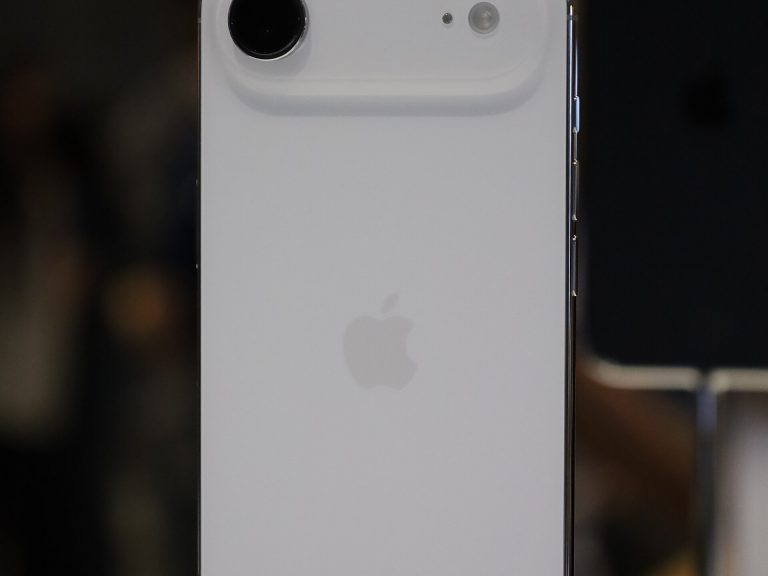
iPhone Air vs Pixel 9 Pro
The iPhone Air and the Pixel 9 Pro are direct rivals in the flagship smartphone class, one from Apple and one from Google. Of the 5 areas we compared, the Pixel 9 Pro wins 2. If one area explains the result, it’s camera.
At a glance
- Display Pixel 9 Pro wins
- Performance iPhone Air wins
- Memory & Storage iPhone Air wins
- Camera Pixel 9 Pro wins
- Battery & Charging Tie
- Price Tie
- Display6.6
- Memory & Storage4.5
- Camera1.6
- Display7.1
- Memory & Storage2.8
- Camera4.7
Spec scores (0 to 10) are calculated from manufacturer specs against other models in the same class. See how the formula works. They are not reviews or user ratings.
Key Differences
-
The iPhone Air has a 1.20 oz lighter build
The Pixel 9 Pro is clearly behind on weight (7.02 oz against 5.82 oz), and that’s one of its biggest weak spots in this matchup. A few grams won’t matter, but bigger gaps add up in a pocket or a small bag over a full day.
-
The iPhone Air has 256 GB of base storage instead of 128 GB
On this line of the spec sheet, the iPhone Air is in a different league: 256 GB, next to 128 GB for the Pixel 9 Pro. If you shoot a lot of video or keep music and maps offline, base storage is one of the specs you’ll feel most over the years.
-
The Pixel 9 Pro has an extra rear camera
For rear cameras, the Pixel 9 Pro leads by a wide margin: 3 versus 1. The count alone doesn’t guarantee quality, but the Pixel 9 Pro gives you more lenses to choose from.
-
The iPhone Air has a 0.11 in slimmer body
This is a headline difference. With 0.22 in to the Pixel 9 Pro’s 0.33 in, the iPhone Air has a lead that’s easy to see on paper and in practice. It’s a difference you mostly notice in the hand and in tight pockets.
-
The Pixel 9 Pro has a sharper 42 MP selfie camera
Put simply, the Pixel 9 Pro is far ahead here: 42 MP compared with 18 MP. Front cameras are often an afterthought, so a higher-resolution sensor is a small but welcome edge for the Pixel 9 Pro.
Design & Size
- iPhone Air 6.15 in × 2.94 in × 0.22 in
- Pixel 9 Pro 6.02 in × 2.83 in × 0.33 in
By the manufacturer’s measurements, the Pixel 9 Pro is the more compact phone, and the iPhone Air the larger one. The iPhone Air weighs 1.20 oz less than the Pixel 9 Pro. The iPhone Air is 0.11 in thinner than the Pixel 9 Pro.
Design & Build
| Spec | iPhone Air | Pixel 9 Pro |
|---|---|---|
| Height | 6.15 in | 6.02 in |
| Width | 2.94 in | 2.83 in |
| Thickness | 0.22 in (winner) Slimmest in class | 0.33 in |
| Weight | 5.82 oz (winner) | 7.02 oz |
| Water & dust rating | IP68 | IP68 |
| Frame | Titanium | Aluminum |
Display
Pixel 9 Pro leads
The iPhone Air keeps it close on display, yet the Pixel 9 Pro holds a small lead. Here the Pixel 9 Pro offers 7.6% sharper pixel density. Pixel density matters most if you hold your phone close or read a lot of small type; for casual use, the gap is subtle. On display alone, the Pixel 9 Pro gets the nod.
Screen size
iPhone Air: 6.5 in Pixel 9 Pro: 6.3 in Screen size is personal. If you watch a lot on your phone, the extra area pays off; if you text one-handed on the go, compact is kinder.
Pixel density
iPhone Air: 460 ppi Pixel 9 Pro: 495 ppi Higher pixel density keeps text and fine detail crisper, although the benefit shrinks once both panels are already sharp at normal viewing distance.
Performance
iPhone Air leads
The iPhone Air takes performance by a nose. The iPhone Air brings a newer 3 nm chip process. Process numbers are partly marketing labels these days, so read this as a hint about efficiency rather than a verdict. Prioritize performance, and the iPhone Air is where you should land.
Process node
iPhone Air: 3 nm Pixel 9 Pro: 4 nm A finer process node generally lets a chip do the same work with less power, which can mean cooler running and better battery life.
CPU cores
iPhone Air: 6 Pixel 9 Pro: 8 Treat the core count as background information; the chipset name tells you far more about real performance.
Memory & Storage
iPhone Air leads
The iPhone Air dominates the memory & storage section, and the gaps are large enough to matter in daily use. The iPhone Air comes with 256 GB of base storage instead of 128 GB. Base storage is what you get without paying extra. Photos, videos and apps add up quickly, so more space at the entry price is real value. The takeaway: on memory & storage, the iPhone Air is the stronger phone.
Base storage
iPhone Air: 256 GB Pixel 9 Pro: 128 GB The iPhone Air starts with more room, which means fewer “storage full” warnings and less time deleting old videos.
Camera
Pixel 9 Pro leads
The iPhone Air has a tough time in the camera section, where the Pixel 9 Pro pulls well ahead. The Pixel 9 Pro scores with an extra rear camera. An extra rear camera usually means another focal length (ultra-wide, telephoto or macro) and more freedom in framing. Anyone shopping mainly on camera should start with the Pixel 9 Pro.
Rear cameras
iPhone Air: 1 Pixel 9 Pro: 3 More cameras help most when each covers a different view, so check the table to see what the Pixel 9 Pro’s extra lens adds.
Front camera
iPhone Air: 18 MP Pixel 9 Pro: 42 MP If you mainly use the front camera for calls, the gap is minor; if you post selfies often, the Pixel 9 Pro’s extra resolution helps.
Battery & Charging
Too close to call
Both the iPhone Air and the Pixel 9 Pro cover battery & charging equally well on paper. In short, battery & charging is a draw; the decision lies elsewhere.
Software & Updates
There isn’t a number to compare on software & updates, just names. Look at the rows below to see how the iPhone Air and the Pixel 9 Pro differ.
Full Specifications
Display
| Spec | iPhone Air | Pixel 9 Pro |
|---|---|---|
| Screen size | 6.5 in | 6.3 in |
| Panel type | OLED, ProMotion 120 Hz (Super Retina XDR) | LTPO OLED (Super Actua) |
| Resolution | 2736 x 1260 | 2856 x 1280 |
| Pixel density | 460 ppi | 495 ppi (winner) |
| Refresh rate | 120 Hz | 120 Hz |
| Peak brightness | 3,000 nits | 3,000 nits |
| Always-on display | Yes | Yes |
Performance
| Spec | iPhone Air | Pixel 9 Pro |
|---|---|---|
| Chipset | A19 Pro | Google Tensor G4 |
| CPU cores | 6 | 8 |
| Process node | 3 nm (winner) | 4 nm |
| RAM | N/A (not specified) | 16 GB |
Memory & Storage
| Spec | iPhone Air | Pixel 9 Pro |
|---|---|---|
| Base storage | 256 GB (winner) | 128 GB |
| Max storage | 1 TB | 1 TB |
| microSD slot | No | No |
Camera
| Spec | iPhone Air | Pixel 9 Pro |
|---|---|---|
| Main camera | 48 MP | 50 MP |
| Ultra-wide camera | N/A (not specified) | 48 MP |
| Telephoto camera | N/A (not specified) | 48 MP |
| Optical zoom | N/A (not specified) | 5× |
| Rear cameras | 1 | 3 (winner) |
| Front camera | 18 MP | 42 MP (winner) |
| Max video | 4K60 Dolby Vision | 4K60 (8K via Video Boost) |
Battery & Charging
| Spec | iPhone Air | Pixel 9 Pro |
|---|---|---|
| Battery capacity | N/A (not specified) | 4,700 mAh |
| Rated video playbackManufacturer rating | 27 h | N/A (not specified) |
| Wired charging | N/A (not specified) | 27 W |
| Wireless charging | 20 W | 21 W |
| Port | USB-C (USB 2) | USB-C |
Software & Updates
| Spec | iPhone Air | Pixel 9 Pro |
|---|---|---|
| OS at launch | iOS 26 | Android 14 |
| Promised OS updatesManufacturer commitment | N/A (not specified) | 7 years |
Design & Build
| Spec | iPhone Air | Pixel 9 Pro |
|---|---|---|
| Height | 6.15 in | 6.02 in |
| Width | 2.94 in | 2.83 in |
| Thickness | 0.22 in (winner) Slimmest in class | 0.33 in |
| Weight | 5.82 oz (winner) | 7.02 oz |
| Water & dust rating | IP68 | IP68 |
| Frame | Titanium | Aluminum |
Price
| Spec | iPhone Air | Pixel 9 Pro |
|---|---|---|
| Launch price | $999 | $999 |
“N/A” means the manufacturer does not specify the value or we could not confirm it. Figures marked “manufacturer rating” are the maker’s own claims, not our measurements.
Price & Value
Price is a tie: both launched at the same figure.
These are US launch prices, recorded September 2025; what you pay today may be higher or lower.
Which One Should You Buy?
Choose the iPhone Air if…
- you notice every gram in your pocket (5.82 oz vs 7.02 oz)
- you want more storage without paying for an upgrade (256 GB vs 128 GB)
- you want the slimmer phone (0.22 in vs 0.33 in)
- you want a chip built on a finer process (3 nm vs 4 nm)
Choose the Pixel 9 Pro if…
- you like switching between focal lengths (3 vs 1 cameras)
- you want the sharper selfie camera (42 MP vs 18 MP)
- you notice fine detail in text and photos (495 ppi vs 460 ppi pixel density)
Also Compared
Frequently Asked Questions
Should I buy the iPhone Air or the Pixel 9 Pro?
The Pixel 9 Pro wins more of the areas we compared, so it’s the safer pick unless you’d rather have a 1.20 oz lighter build on the iPhone Air.
Is the iPhone Air bigger than the Pixel 9 Pro?
The Pixel 9 Pro is actually the more compact one. It measures 6.02 × 2.83 × 0.33 in, while the iPhone Air comes in at 6.15 × 2.94 × 0.22 in.
Does the iPhone Air perform better than the Pixel 9 Pro?
The iPhone Air has the edge in performance thanks to a newer 3 nm chip process.
Which has the better camera, the iPhone Air or the Pixel 9 Pro?
The Pixel 9 Pro has the edge for photography, offering an extra rear camera and a sharper 42 MP selfie camera.
Which has the better screen, the iPhone Air or the Pixel 9 Pro?
The Pixel 9 Pro has the edge here, offering 7.6% sharper pixel density.
Is the iPhone Air lighter than the Pixel 9 Pro?
The iPhone Air is lighter, by 1.20 oz.
Executive Summary
Apple or Google? For a lot of people, the question really comes down to the iPhone Air versus the Pixel 9 Pro. It’s hard to argue with an extra rear camera, which is exactly what the Pixel 9 Pro brings. I’d also count 7.6% sharper pixel density in the Pixel 9 Pro’s favor. The iPhone Air does have a strong card to play: a 1.20 oz lighter build.
The way I see it, people who prioritize performance will be happier with the iPhone Air, and those who prioritize display with the Pixel 9 Pro.
My pick: the Pixel 9 Pro, though I’d happily point you to the iPhone Air if you’d trade the rest for a 1.20 oz lighter build.
Personal opinion based on the data above. Your priorities may differ.