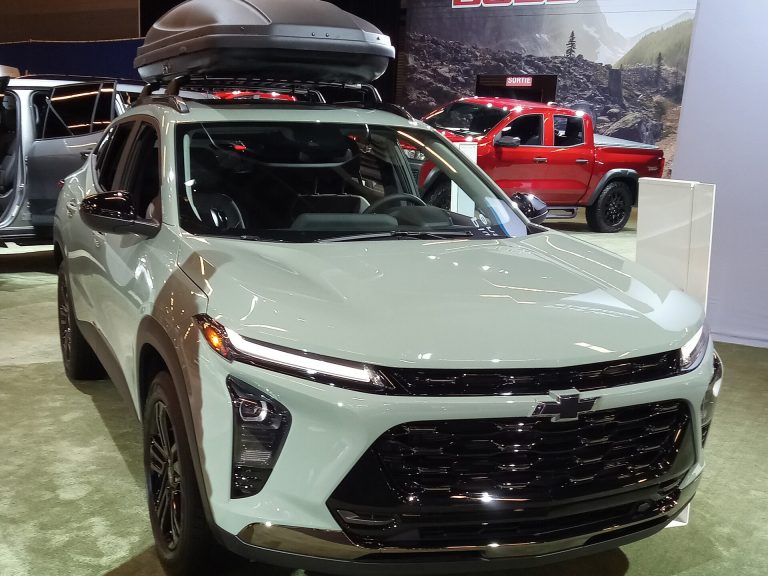
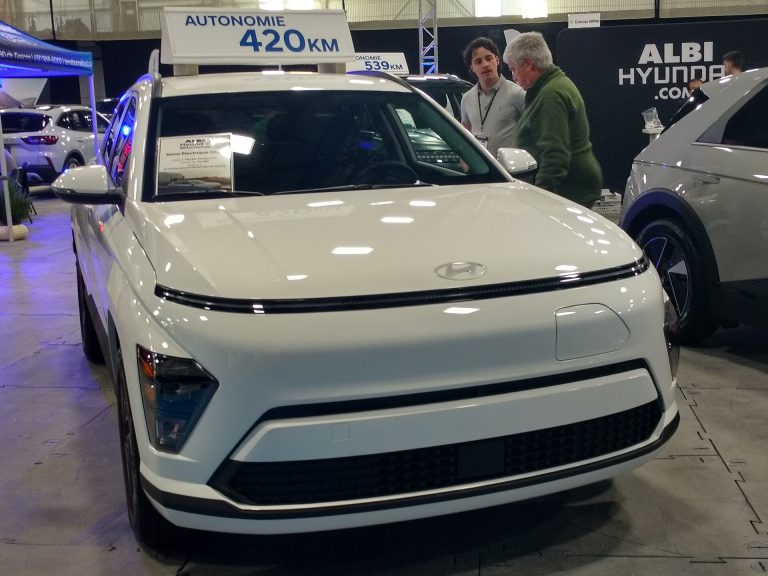
Trax vs Kona
Cross-brand comparisons are where priorities show. Chevrolet’s Trax and Hyundai’s Kona target the same subcompact suv space in different ways. Scoring each area separately, the Kona comes out on top 3 times out of 5. Its lead is sharpest in space & practicality.
At a glance
- Engine & Performance Trade-off
- Fuel Economy & Range Tie
- Space & Practicality Kona wins
- Off-road & Towing Kona wins
- Safety & Tech Kona wins
- Engine & Performance1.8
- Space & Practicality6.5
- Engine & Performance1.3
- Space & Practicality7.6
Spec scores (0 to 10) are calculated from manufacturer specs against other models in the same class. See how the formula works. They are not reviews or user ratings.
Key Differences
-
The Trax has 30 lb-ft more torque
For torque, the Trax leads by a wide margin: 162 lb-ft versus 132 lb-ft. The Trax’s extra torque makes it more relaxed when fully loaded or towing.
-
The Kona has 18% more maximum cargo space
This is a headline difference. With 63.7 cu ft to the Trax’s 54.1 cu ft, the Kona has a lead that’s easy to see on paper and in practice. Maximum cargo space with the seats folded matters when you move furniture, bikes or bulky gear.
-
The Kona has 10 hp more power
It’s a fine margin, and it favors the Kona (147 hp versus 137 hp). The Kona’s extra output gives it more in reserve when you need to get up to speed.
-
The Kona has a bigger 12.3 in touchscreen
The Kona gets a small bonus on largest touchscreen, with 12.3 in against the Trax’s 11 in. The Kona’s larger display gives navigation and menus more room.
-
The Kona has available all-wheel drive
It’s a clear yes for the Kona and a clear no for the Trax. Available all-wheel drive improves traction in rain, snow and on loose surfaces.
Design & Size
Physically, these two aren’t the same size: the Trax is larger in overall dimensions.
Dimensions
| Spec | Trax | Kona |
|---|---|---|
| Length | 179.1 in | 171.5 in |
| Width (no mirrors) | N/A (not specified) | 71.9 in |
| Height | N/A (not specified) | 62.4 in |
| Wheelbase | 106.3 in | 104.7 in |
Engine & Performance
Trade-off
It depends what you value in engine & performance: the Trax brings 30 lb-ft more torque, the Kona brings 10 hp more power. Which car wins on engine & performance depends on which of those strengths you’ll actually use.
Torque
Trax: 162 lb-ft Kona: 132 lb-ft Electrified powertrains deliver torque instantly, so compare torque figures alongside the powertrain type.
Total system output
Trax: 137 hp Kona: 147 hp Power is only part of the story; weight, gearing and torque delivery shape how quick a car feels.
Fuel Economy & Range
Too close to call
The fuel economy & range section is even. Any gaps here are within the range you’d never notice. For fuel economy & range, pick whichever you prefer for other reasons.
Space & Practicality
Kona leads
When it comes to space & practicality, the Kona is comfortably ahead. The Kona steps ahead thanks to 18% more maximum cargo space. The Kona can swallow more with the seats down, which makes it more versatile for occasional big loads. Weighing only space & practicality, the Kona comes out ahead.
Cargo (seats folded)
Trax: 54.1 cu ft Kona: 63.7 cu ft Check the shape of the load floor too: a flat floor can matter as much as the number.
Off-road & Towing
Kona leads
A modest lead on off-road & towing belongs to the Kona. Here the Kona offers available all-wheel drive. All-wheel drive helps you get going on slippery roads, but good tires matter just as much for stopping and turning. That makes the Kona the natural choice for buyers focused on off-road & towing.
AWD / 4WD available
Trax: no Kona: yes The Kona offers all-wheel drive; the Trax doesn’t, which matters if you face harsh winters.
Safety & Tech
Kona leads
The Kona squeezes out a win in the safety & tech section. The Kona comes with a bigger 12.3 in touchscreen. A bigger touchscreen makes maps and phone mirroring easier to read at a glance. So if safety & tech tops your list, lean toward the Kona.
Largest touchscreen
Trax: 11 in Kona: 12.3 in Screen size isn’t everything (physical controls and software speed matter too), but bigger is easier to read.
Full Specifications
Engine & Performance
| Spec | Trax | Kona |
|---|---|---|
| Powertrain | Gas | Gas |
| Engine | 1.2L turbo I3 | 2.0L I4 |
| Total system output | 137 hp | 147 hp (winner) |
| Torque | 162 lb-ft (winner) | 132 lb-ft |
| Transmission | 6-speed automatic | IVT (CVT) |
| Drivetrain | FWD | FWD (AWD available) |
Fuel Economy & Range
| Spec | Trax | Kona |
|---|---|---|
| Fuel economy (combined)EPA estimate where available | 30 mpg | 31 mpg |
| Fuel economy (city) | 28 mpg | N/A (not specified) |
| Fuel economy (highway) | 32 mpg | N/A (not specified) |
| Fuel tank | 13.2 gal | N/A (not specified) |
Space & Practicality
| Spec | Trax | Kona |
|---|---|---|
| Seats | 5 seats | 5 seats |
| Cargo (behind rear seats) | 25.6 cu ft | 25.5 cu ft |
| Cargo (seats folded) | 54.1 cu ft | 63.7 cu ft (winner) |
| Rear legroom | 38.70 in Most rear legroom | N/A (not specified) |
Off-road & Towing
| Spec | Trax | Kona |
|---|---|---|
| AWD / 4WD available | No | Yes (winner) |
Safety & Tech
| Spec | Trax | Kona |
|---|---|---|
| Largest touchscreen | 11 in | 12.3 in (winner) |
| Apple CarPlay / Android Auto | Wireless Apple CarPlay & Android Auto | N/A (not specified) |
| Driver-assist suite | Chevy Safety Assist | Hyundai SmartSense |
| Basic warranty | 3 yr / 36,000 mi | 5 yr / 60,000 mi |
Dimensions
| Spec | Trax | Kona |
|---|---|---|
| Length | 179.1 in | 171.5 in |
| Width (no mirrors) | N/A (not specified) | 71.9 in |
| Height | N/A (not specified) | 62.4 in |
| Wheelbase | 106.3 in | 104.7 in |
Price
| Spec | Trax | Kona |
|---|---|---|
| Starting MSRP | $20,500 Lowest price in class | N/A (not specified) |
“N/A” means the manufacturer does not specify the value or we could not confirm it. Figures marked “manufacturer rating” are the maker’s own claims, not our measurements.
Which One Should You Buy?
Choose the Trax if…
- you want more pulling power from low speeds (162 lb-ft vs 132 lb-ft of torque)
- you like more of everything, size included
- you prefer staying with Chevrolet
Choose the Kona if…
- you move bulky items now and then (63.7 cu ft vs 54.1 cu ft maximum cargo)
- you merge, overtake or climb hills with a full load (147 hp vs 137 hp)
- you rely on navigation and phone mirroring on a larger display (12.3 in vs 11 in)
- you face snow, ice or slippery back roads
Also Compared

Frequently Asked Questions
Which is better for most people, the Trax or the Kona?
For most people, the Kona is the stronger choice, unless you value 30 lb-ft more torque above everything else.
Is the Trax bigger than the Kona?
The Kona is actually the more compact one. It measures 171.5 × 71.9 × 62.4 in, while the Trax comes in at 179.1 in.
Executive Summary
I don’t have a favorite brand in this fight between the Trax and the Kona. I just have opinions about the numbers. In daily life, I think the first difference you’d notice is 18% more maximum cargo space, and that goes to the Kona. There’s a bonus as well: the Kona has 10 hp more power. I’ll admit the Trax has a point with 30 lb-ft more torque.
Who should get which? The Trax for pulling power, the Kona for space & practicality.
My pick: the Kona gets my vote, but the Trax is the right call if your top priority is 30 lb-ft more torque.
Personal opinion based on the data above. Your priorities may differ.