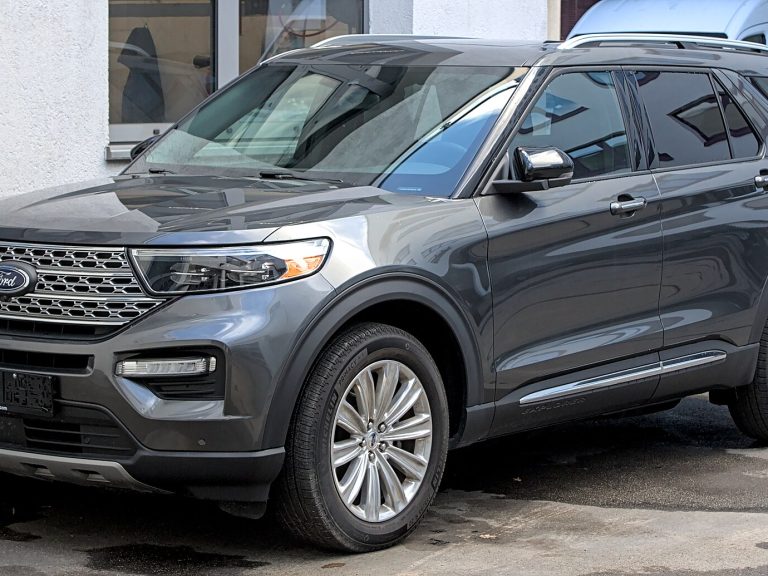
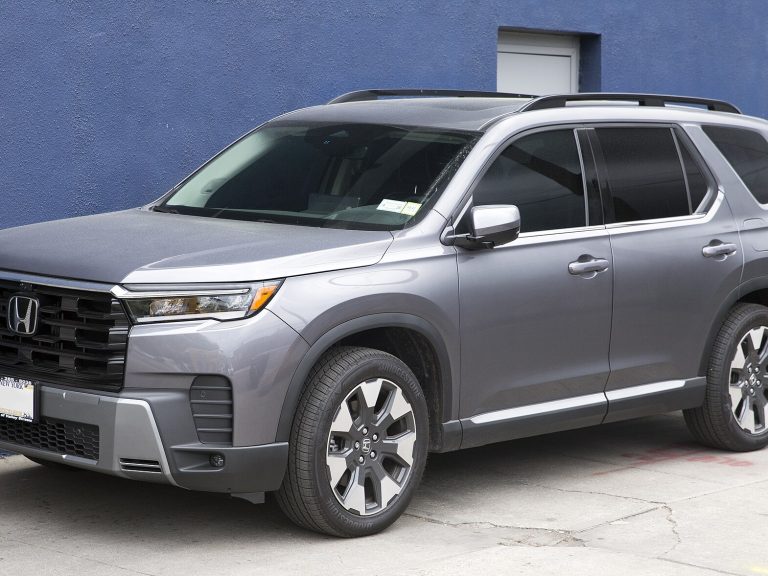
Explorer vs Pilot
The Explorer and the Pilot compete for the same spot on your shortlist, with Ford and Honda each making its case. Scoring each area separately, the Explorer comes out on top 3 times out of 5. Its lead is sharpest in engine & performance.
At a glance
- Engine & Performance Explorer wins
- Fuel Economy & Range Explorer wins
- Space & Practicality Pilot wins
- Off-road & Towing Explorer wins
- Safety & Tech Tie
- Price Explorer wins
- Engine & Performance6.3
- Fuel Economy & Range7.2
- Off-road & Towing6.0
- Engine & Performance4.9
- Fuel Economy & Range2.8
- Off-road & Towing5.3
Spec scores (0 to 10) are calculated from manufacturer specs against other models in the same class. See how the formula works. They are not reviews or user ratings.
Key Differences
-
The Explorer has 48 lb-ft more torque
The Explorer clearly leads on torque, and 310 lb-ft versus 262 lb-ft is a difference that reaches well beyond the spec sheet. The Explorer’s extra torque makes it more relaxed when fully loaded or towing.
-
The Explorer has better fuel economy
Close, but not identical: the Explorer lists 24 mpg and the Pilot lists 22 mpg. Official figures rarely match real-world driving exactly, but the ranking between two cars tends to hold.
-
The Explorer has 15 hp more power
The gap on total system output is slim (300 hp against 285 hp), yet it tips toward the Explorer. More power helps with merging, overtaking and climbing hills, especially with passengers and luggage on board.
-
The Pilot has room for 8 seats
You may not notice this one every day, but the Pilot’s 8 seats is a step ahead of the Explorer’s 7 seats. Third-row seats are often best for kids, so check legroom figures if adults will sit there.
-
The Explorer has 600 lb more towing capacity
Slight advantage to the Explorer: 5,600 lb compared with 5,000 lb. If you tow regularly, the Explorer’s higher rating gives you more margin.
Design & Size
- Explorer 198.8 in × 78.9 in × 69.9 in
- Pilot 200.1 in × 78.5 in × 71 in
There’s no meaningful size difference between the Explorer and the Pilot.
Dimensions
| Spec | Explorer | Pilot |
|---|---|---|
| Length | 198.8 in | 200.1 in |
| Width (no mirrors) | 78.9 in | 78.5 in |
| Height | 69.9 in | 71 in |
| Wheelbase | 119.1 in | 113.8 in |
Engine & Performance
Explorer leads
This is one of the Explorer’s strongest areas. On engine & performance, the Pilot falls well short. On the Explorer, you get 48 lb-ft more torque. Electrified powertrains deliver torque instantly, so compare torque figures alongside the powertrain type. For engine & performance, the Explorer is the one to beat.
Torque
Explorer: 310 lb-ft Pilot: 262 lb-ft More torque means stronger pulling from low speeds, which you feel when accelerating from a stop or climbing grades.
Total system output
Explorer: 300 hp Pilot: 285 hp The Explorer’s extra output gives it more in reserve when you need to get up to speed.
Fuel Economy & Range
Explorer leads
The Pilot has a tough time in the fuel economy & range section, where the Explorer pulls well ahead. The Explorer comes with better fuel economy. The Explorer uses less fuel on the standard combined cycle, which matters most if you drive a lot. Anyone shopping mainly on fuel economy & range should start with the Explorer.
Fuel economy (combined)
Explorer: 24 mpg Pilot: 22 mpg Better combined fuel economy lowers your running costs every week, and the savings add up over years of ownership.
Fuel economy (highway)
Explorer: 29 mpg Pilot: 27 mpg Highway fuel economy matters if you cover long distances at steady speeds.
Space & Practicality
Pilot leads
The Pilot edges the space & practicality section, though the Explorer stays close. The Pilot scores with room for 8 seats. The Pilot has room for more passengers, useful for growing families and carpools. On space & practicality alone, the Pilot gets the nod.
Seats
Explorer: 7 seats Pilot: 8 seats Extra seats mean you can take more people along without taking a second car.
Off-road & Towing
Explorer leads
It’s a narrow one, but the off-road & towing round goes to the Explorer. On its side, the Explorer has 600 lb more towing capacity. Towing ratings depend on configuration and equipment, so check the exact trim you’re looking at. Prioritize off-road & towing, and the Explorer is where you should land.
Max towing
Explorer: 5,600 lb Pilot: 5,000 lb A higher towing capacity lets you pull bigger trailers, boats and campers.
Safety & Tech
Too close to call
In the safety & tech category, the Explorer and the Pilot land in almost the same place. In short, safety & tech is a draw; the decision lies elsewhere.
Full Specifications
Engine & Performance
| Spec | Explorer | Pilot |
|---|---|---|
| Powertrain | Gas | Gas |
| Engine | 2.3L turbo I4 (EcoBoost) | 3.5L V6 |
| Total system output | 300 hp (winner) | 285 hp |
| Torque | 310 lb-ft (winner) | 262 lb-ft |
| Transmission | 10-speed automatic | 10-speed automatic |
| Drivetrain | RWD (AWD available) | FWD (AWD available) |
Fuel Economy & Range
| Spec | Explorer | Pilot |
|---|---|---|
| Fuel economy (combined)EPA estimate where available | 24 mpg (winner) | 22 mpg |
| Fuel economy (city) | 20 mpg (winner) | 19 mpg |
| Fuel economy (highway) | 29 mpg (winner) | 27 mpg |
| Fuel tank | N/A (not specified) | 18.5 gal |
Space & Practicality
| Spec | Explorer | Pilot |
|---|---|---|
| Seats | 7 seats | 8 seats (winner) |
| Cargo (behind rear seats) | N/A (not specified) | 18.6 cu ft |
| Cargo (seats folded) | N/A (not specified) | 87 cu ft |
Off-road & Towing
| Spec | Explorer | Pilot |
|---|---|---|
| Max towing | 5,600 lb (winner) | 5,000 lb |
| AWD / 4WD available | Yes | Yes |
Safety & Tech
| Spec | Explorer | Pilot |
|---|---|---|
| Largest touchscreen | 13.2 in | 12.3 in |
| Driver-assist suite | Ford Co-Pilot360 | Honda Sensing |
| Basic warranty | 3 yr / 36,000 mi | 3 yr / 36,000 mi |
Dimensions
| Spec | Explorer | Pilot |
|---|---|---|
| Length | 198.8 in | 200.1 in |
| Width (no mirrors) | 78.9 in | 78.5 in |
| Height | 69.9 in | 71 in |
| Wheelbase | 119.1 in | 113.8 in |
Price
| Spec | Explorer | Pilot |
|---|---|---|
| Starting MSRP | $40,050 (winner) Lowest price in class | $42,395 |
“N/A” means the manufacturer does not specify the value or we could not confirm it. Figures marked “manufacturer rating” are the maker’s own claims, not our measurements.
Price & Value
In launch price, the two are close: the Explorer came in $2,345 lower. The Explorer is both $2,345 cheaper and ahead on more of the specs we compared.
Launch prices (US) as of launch. Discounts and bundles come and go, so compare current prices before buying.
Which One Should You Buy?
Choose the Explorer if…
- you often drive loaded up or with a trailer (310 lb-ft vs 262 lb-ft of torque)
- you want better combined fuel economy (24 mpg vs 22 mpg)
- you merge, overtake or climb hills with a full load (300 hp vs 285 hp)
- you tow a camper, boat or trailer (5,600 lb vs 5,000 lb)
- you want the lower price and can live with the trade-offs ($2,345 less)
Choose the Pilot if…
- you regularly carry extra passengers (8 seats vs 7 seats)
- you trust Honda and want to keep things familiar
Also Compared
Frequently Asked Questions
Should I buy the Explorer or the Pilot?
The Explorer makes more sense overall. Consider the alternative only if what you want most is room for 8 seats.
Which is larger, the Explorer or the Pilot?
The Explorer and the Pilot are so close in size that you’d struggle to tell them apart on dimensions alone.
Is the Explorer cheaper than the Pilot?
At launch, the Explorer undercut the Pilot by $2,345. These figures are as of launch, and street prices can change.
Executive Summary
Honestly, the Explorer versus the Pilot is one of those matchups where your priorities matter more than the logo. The biggest reason I lean toward the Explorer is simple: it has 48 lb-ft more torque. There’s more, too: the Explorer offers better fuel economy. The Pilot has a trump card of its own in room for 8 seats.
I’d match them like this: engine & performance to the Explorer, space & practicality to the Pilot.
My pick: if it were my money, the Explorer, unless you’d trade the rest for room for 8 seats.
Personal opinion based on the data above. Your priorities may differ.