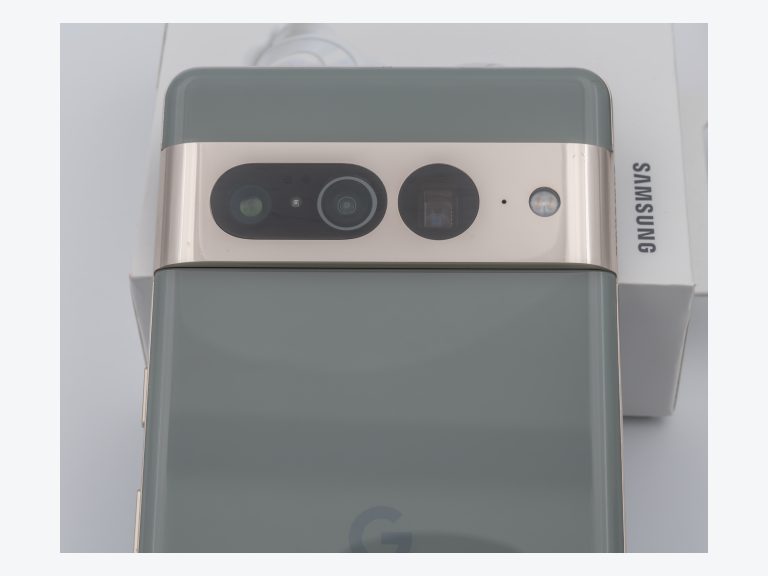
Pixel 7 vs Pixel 8: Is the Upgrade Worth It?
Every new generation promises progress. Here the Pixel 8 takes over from the Pixel 7, and the spec sheets show exactly where that progress is real. The Pixel 8 wins more of the areas that we compared (4 of 6), and its most convincing lead is in display.
At a glance
- Display Pixel 8 wins
- Performance Pixel 8 wins
- Memory & Storage Tie
- Camera Tie
- Battery & Charging Pixel 8 wins
- Software & Updates Pixel 8 wins
- Price Pixel 7 wins
- Display4.0
- Performance1.6
- Memory & Storage1.3
- Camera1.7
- Battery & Charging1.2
- Display5.6
- Performance1.9
- Memory & Storage1.3
- Camera1.6
- Battery & Charging1.7
Spec scores (0 to 10) are calculated from manufacturer specs against other models in the same class. See how the formula works. They are not reviews or user ratings.
Key Differences
-
The Pixel 8 has 4 years of extra promised updates
This is a headline difference. With 7 years to the Pixel 7’s 3 years, the Pixel 8 has a lead that’s easy to see on paper and in practice. The Pixel 8’s longer software support can also help its resale value later on.
-
The Pixel 8 has a 120 Hz display instead of 90 Hz
Put simply, the Pixel 8 is far ahead here: 120 Hz compared with 90 Hz. A higher refresh rate makes scrolling, animations and games look smoother. Once you’re used to it, a lower-rate screen can feel sluggish by comparison.
-
The Pixel 8 has 43% higher peak brightness
The Pixel 8’s 2,000 nits leaves the Pixel 7’s 1,400 nits well behind, so if this spec matters to you, the choice is easy. If you use your phone outdoors a lot, the Pixel 8’s brighter panel is the one that holds up better at midday.
-
The Pixel 8 has 5.1% more battery capacity
On battery capacity, the Pixel 8 edges out the Pixel 7, 4,575 mAh to 4,355 mAh. A bigger battery usually means longer days between charges, although chip efficiency and screen size also shape real endurance.
-
The Pixel 8 has a 0.35 oz lighter build
Don’t expect a night-and-day difference here. 6.60 oz against 6.95 oz is a small but genuine lead for the Pixel 8. Weight shows up every time you hold the phone above your face in bed or type one-handed for a long stretch.
Design & Size
- Pixel 7 6.13 in × 2.88 in × 0.34 in
- Pixel 8 5.93 in × 2.79 in × 0.35 in
The Pixel 7 has the bigger footprint. That can mean more room to work with, but also more to carry, park or pocket. The Pixel 7 carries an extra 0.35 oz.
Design & Build
| Spec | Pixel 7 | Pixel 8 |
|---|---|---|
| Height | 6.13 in | 5.93 in |
| Width | 2.88 in | 2.79 in |
| Thickness | 0.34 in | 0.35 in |
| Weight | 6.95 oz | 6.60 oz (winner) |
| Water & dust rating | IP68 | IP68 |
| Frame | Aluminum | Aluminum |
Display
Pixel 8 leads
If display is high on your list, the Pixel 8 makes the stronger case by a wide margin. The Pixel 8 comes with a 120 Hz display instead of 90 Hz. Smoother motion is one of the most visible display upgrades, and adaptive high-refresh panels can slow down on static content to save power. In short, the Pixel 8 is the better-equipped phone for display.
Refresh rate
Pixel 7: 90 Hz Pixel 8: 120 Hz You notice refresh rate every time you scroll a feed or a web page, which is why the Pixel 8 feels more fluid in everyday use.
Peak brightness
Pixel 7: 1,400 nits Pixel 8: 2,000 nits Peak brightness decides how readable the screen stays in direct sunlight and how punchy HDR content looks.
Performance
Pixel 8 leads
The Pixel 7 comes close on performance, but the Pixel 8 does just enough to lead. The Pixel 8 wins here with a newer 4 nm chip process. Process numbers are partly marketing labels these days, so read this as a hint about efficiency rather than a verdict. If this section decides it for you, choose the Pixel 8.
Process node
Pixel 7: 5 nm Pixel 8: 4 nm The Pixel 8’s chip is built on a more advanced process. That usually points to efficiency gains, though chip design matters just as much.
CPU cores
Pixel 7: 8 Pixel 8: 9 Phone chips mix large and small cores, so a different count mostly reflects a different design rather than a clear speed gap.
Memory & Storage
Too close to call
In the memory & storage category, the Pixel 7 and the Pixel 8 land in almost the same place. Don’t let memory & storage decide this one; look at the other sections instead.
Camera
Too close to call
The camera section is even. Any gaps here are within the range you’d never notice. Both cover camera well enough that other priorities should break the tie.
Battery & Charging
Pixel 8 leads
The battery & charging comparison is one-sided. The Pixel 8 leads where it counts. The Pixel 8 delivers 5.1% more battery capacity. Capacity isn’t everything, but when two phones are otherwise close, more milliamp-hours is the simplest endurance advantage there is. On the Pixel 7, you get faster 20 W wireless charging. If battery & charging is your priority, the Pixel 8 is the phone to pick.
Battery capacity
Pixel 7: 4,355 mAh Pixel 8: 4,575 mAh Extra capacity also ages better: after a few years of charge cycles, the Pixel 8 has more headroom left.
Wired charging
Pixel 7: 21 W Pixel 8: 27 W Peak charging speeds depend on a compatible charger, which may not come in the box.
Software & Updates
Pixel 8 leads
This section belongs to the Pixel 8. In software & updates, it leads the Pixel 7 by a margin that’s hard to ignore. The Pixel 8 brings 4 years of extra promised updates. Software support is what separates a phone that ages gracefully from one that doesn’t, making it one of the most practical lines on the spec sheet. That makes the Pixel 8 the natural choice for buyers focused on software & updates.
Promised OS updates
Pixel 7: 3 years Pixel 8: 7 years A longer update promise keeps the phone secure and current for longer, which matters if you keep devices for several years.
Full Specifications
Display
| Spec | Pixel 7 | Pixel 8 |
|---|---|---|
| Screen size | 6.3 in | 6.2 in |
| Panel type | OLED | OLED (Actua) |
| Resolution | 2400 x 1080 | 2400 x 1080 |
| Pixel density | 416 ppi | 428 ppi |
| Refresh rate | 90 Hz | 120 Hz (winner) |
| Peak brightness | 1,400 nits | 2,000 nits (winner) |
| Always-on display | Yes | Yes |
Performance
| Spec | Pixel 7 | Pixel 8 |
|---|---|---|
| Chipset | Google Tensor G2 | Google Tensor G3 |
| CPU cores | 8 | 9 |
| Process node | 5 nm | 4 nm (winner) |
| RAM | 8 GB | 8 GB |
Memory & Storage
| Spec | Pixel 7 | Pixel 8 |
|---|---|---|
| Base storage | 128 GB | 128 GB |
| Max storage | 256 GB | 256 GB |
| microSD slot | No | No |
Camera
| Spec | Pixel 7 | Pixel 8 |
|---|---|---|
| Main camera | 50 MP | 50 MP |
| Ultra-wide camera | 12 MP | 12 MP |
| Rear cameras | 2 | 2 |
| Front camera | 11 MP | 11 MP |
| Max video | 4K60 | 4K60 |
Battery & Charging
| Spec | Pixel 7 | Pixel 8 |
|---|---|---|
| Battery capacity | 4,355 mAh | 4,575 mAh (winner) |
| Wired charging | 21 W | 27 W (winner) |
| Wireless charging | 20 W (winner) | 18 W |
| Port | USB-C | USB-C |
Software & Updates
| Spec | Pixel 7 | Pixel 8 |
|---|---|---|
| OS at launch | Android 13 | Android 14 |
| Promised OS updatesManufacturer commitment | 3 years | 7 years (winner) |
Design & Build
| Spec | Pixel 7 | Pixel 8 |
|---|---|---|
| Height | 6.13 in | 5.93 in |
| Width | 2.88 in | 2.79 in |
| Thickness | 0.34 in | 0.35 in |
| Weight | 6.95 oz | 6.60 oz (winner) |
| Water & dust rating | IP68 | IP68 |
| Frame | Aluminum | Aluminum |
Price
| Spec | Pixel 7 | Pixel 8 |
|---|---|---|
| Launch price | $599 (winner) | $699 |
“N/A” means the manufacturer does not specify the value or we could not confirm it. Figures marked “manufacturer rating” are the maker’s own claims, not our measurements.
Price & Value
Price barely moves the needle here: the Pixel 8 launched $100 higher. That $100 gap does buy something tangible: 4 years of extra promised updates and a 120 Hz display instead of 90 Hz.
Prices shown are US launch prices as of October 2023. Retail prices change often, so it’s worth checking current offers.
Which One Should You Buy?
Choose the Pixel 7 if…
- you use a wireless charging pad every day (20 W vs 18 W)
- you’d rather keep $100 in your pocket
- you find the Pixel 7 already covers everything you need
Choose the Pixel 8 if…
- you want software support that lasts longer (7 years vs 3 years)
- you game or scroll a lot and like motion to look fluid (120 Hz vs 90 Hz)
- you want the screen that stays readable on sunny days (2,000 nits vs 1,400 nits)
- you want the bigger battery (4,575 mAh vs 4,355 mAh)
- you want the newer generation
Also Compared
Frequently Asked Questions
Which is better for most people, the Pixel 7 or the Pixel 8?
The Pixel 8 makes more sense overall. Consider the alternative only if your Pixel 7 still does everything you need.
Should I upgrade from the Pixel 7 to the Pixel 8?
If those changes matter to you, yes: the Pixel 8 adds 4 years of extra promised updates, a 120 Hz display instead of 90 Hz and 43% higher peak brightness compared with the Pixel 7.
Does the Pixel 7 last longer on a charge than the Pixel 8?
The Pixel 8 comes out ahead on battery capacity, with 4,575 mAh compared with 4,355 mAh on the Pixel 7.
Which is larger, the Pixel 7 or the Pixel 8?
The Pixel 8 is actually the more compact one. It measures 5.93 × 2.79 × 0.35 in, while the Pixel 7 comes in at 6.13 × 2.88 × 0.34 in.
Does the Pixel 7 perform better than the Pixel 8?
Going by the specs, the Pixel 8 comes out ahead: it offers a newer 4 nm chip process.
Which has the better screen, the Pixel 7 or the Pixel 8?
On display specs, the Pixel 8 leads thanks to a 120 Hz display instead of 90 Hz and 43% higher peak brightness.
Executive Summary
The Pixel 8 arrived to replace the Pixel 7, and I’ve spent a good while with both spec sheets. I think the Pixel 8 makes its strongest case with 4 years of extra promised updates. It also helps that the Pixel 8 has a 120 Hz display instead of 90 Hz. Still, if you care most about faster 20 W wireless charging, the Pixel 7 deserves a look.
I’d steer wireless charging fans toward the Pixel 7 and display fans toward the Pixel 8.
My pick: the Pixel 8 if you’re buying fresh, but I wouldn’t rush to replace a working Pixel 7.
Personal opinion based on the data above. Your priorities may differ.