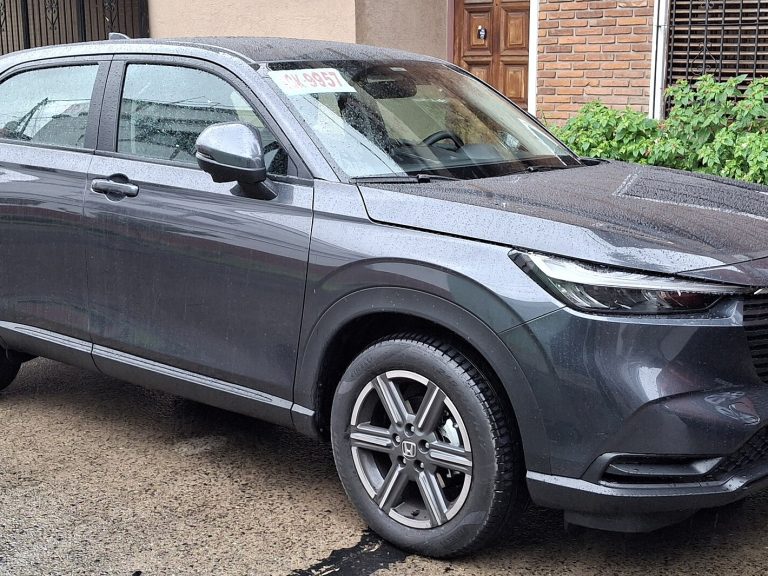
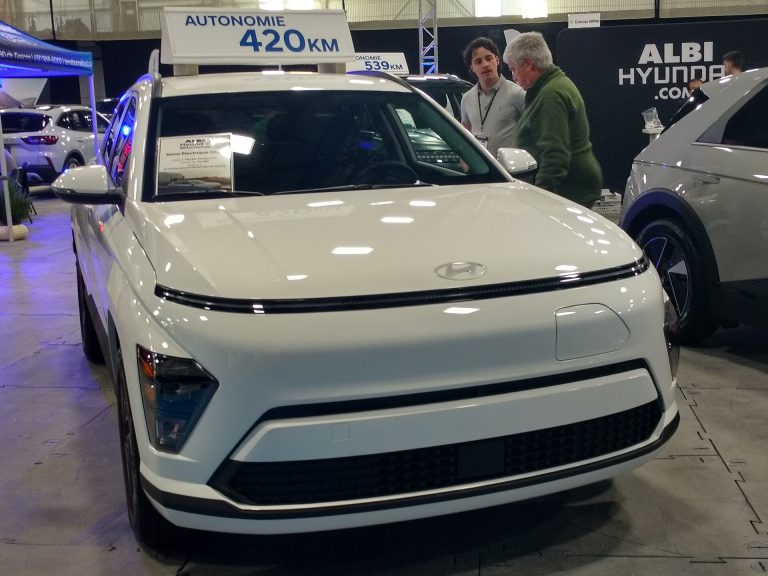
HR-V vs Kona
The HR-V and the Kona are aimed squarely at each other: same class, different badges. Across 4 compared areas, the Kona takes 2. The widest gap shows up under space & practicality.
At a glance
- Engine & Performance HR-V wins
- Fuel Economy & Range Kona wins
- Space & Practicality Kona wins
- Off-road & Towing Tie
- Engine & Performance1.7
- Space & Practicality5.9
- Engine & Performance1.3
- Space & Practicality7.6
Spec scores (0 to 10) are calculated from manufacturer specs against other models in the same class. See how the formula works. They are not reviews or user ratings.
Key Differences
-
The Kona has 16% more maximum cargo space
For cargo (seats folded), the Kona leads by a wide margin: 63.7 cu ft versus 55.1 cu ft. The Kona can swallow more with the seats down, which makes it more versatile for occasional big loads.
-
The Kona has better fuel economy
You may not notice this one every day, but the Kona’s 31 mpg is a step ahead of the HR-V’s 28 mpg. Better combined fuel economy lowers your running costs every week, and the savings add up over years of ownership.
-
The HR-V has 11 hp more power
Slight advantage to the HR-V: 158 hp compared with 147 hp. The HR-V’s extra output gives it more in reserve when you need to get up to speed.
Design & Size
Dimensions
| Spec | HR-V | Kona |
|---|---|---|
| Length | N/A (not specified) | 171.5 in |
| Width (no mirrors) | N/A (not specified) | 71.9 in |
| Height | N/A (not specified) | 62.4 in |
| Wheelbase | 104.5 in | 104.7 in |
Engine & Performance
HR-V leads
A modest lead on engine & performance belongs to the HR-V. Choose the HR-V and you get 11 hp more power. Power is only part of the story; weight, gearing and torque delivery shape how quick a car feels. For engine & performance, the HR-V is the one to beat.
Total system output
HR-V: 158 hp Kona: 147 hp More power helps with merging, overtaking and climbing hills, especially with passengers and luggage on board.
Fuel Economy & Range
Kona leads
The fuel economy & range numbers lean toward the Kona, not dramatically but consistently. The Kona stands out with better fuel economy. The Kona uses less fuel on the standard combined cycle, which matters most if you drive a lot. Anyone shopping mainly on fuel economy & range should start with the Kona.
Fuel economy (combined)
HR-V: 28 mpg Kona: 31 mpg Official figures rarely match real-world driving exactly, but the ranking between two cars tends to hold.
Space & Practicality
Kona leads
Few areas are as clear-cut as this one: the Kona leads the space & practicality section with room to spare. The Kona steps ahead thanks to 16% more maximum cargo space. Maximum cargo space with the seats folded matters when you move furniture, bikes or bulky gear. If space & practicality is your priority, the Kona is the car to pick.
Cargo (seats folded)
HR-V: 55.1 cu ft Kona: 63.7 cu ft Check the shape of the load floor too: a flat floor can matter as much as the number.
Off-road & Towing
Too close to call
Neither pulls ahead on off-road & towing; the numbers are close throughout. If off-road & towing was going to be your tiebreaker, you’ll need a different one.
Safety & Tech
Names, not numbers: the safety & tech rows below show what each one is built with, and it’s worth reading them side by side.
Full Specifications
Engine & Performance
| Spec | HR-V | Kona |
|---|---|---|
| Powertrain | Gas | Gas |
| Engine | 2.0L I4 | 2.0L I4 |
| Total system output | 158 hp (winner) | 147 hp |
| Torque | 138 lb-ft | 132 lb-ft |
| Transmission | CVT | IVT (CVT) |
| Drivetrain | FWD (AWD available) | FWD (AWD available) |
Fuel Economy & Range
| Spec | HR-V | Kona |
|---|---|---|
| Fuel economy (combined)EPA estimate where available | 28 mpg | 31 mpg (winner) |
| Fuel economy (city) | 26 mpg | N/A (not specified) |
| Fuel economy (highway) | 32 mpg | N/A (not specified) |
Space & Practicality
| Spec | HR-V | Kona |
|---|---|---|
| Seats | 5 seats | 5 seats |
| Cargo (behind rear seats) | 24.4 cu ft | 25.5 cu ft |
| Cargo (seats folded) | 55.1 cu ft | 63.7 cu ft (winner) |
Off-road & Towing
| Spec | HR-V | Kona |
|---|---|---|
| AWD / 4WD available | Yes | Yes |
Safety & Tech
| Spec | HR-V | Kona |
|---|---|---|
| Largest touchscreen | N/A (not specified) | 12.3 in |
| Driver-assist suite | Honda Sensing | Hyundai SmartSense |
| Basic warranty | 3 yr / 36,000 mi | 5 yr / 60,000 mi |
Dimensions
| Spec | HR-V | Kona |
|---|---|---|
| Length | N/A (not specified) | 171.5 in |
| Width (no mirrors) | N/A (not specified) | 71.9 in |
| Height | N/A (not specified) | 62.4 in |
| Wheelbase | 104.5 in | 104.7 in |
“N/A” means the manufacturer does not specify the value or we could not confirm it. Figures marked “manufacturer rating” are the maker’s own claims, not our measurements.
Which One Should You Buy?
Choose the HR-V if…
- you merge, overtake or climb hills with a full load (158 hp vs 147 hp)
- you already know your way around Honda’s products
Choose the Kona if…
- you move bulky items now and then (63.7 cu ft vs 55.1 cu ft maximum cargo)
- you drive a lot and want lower running costs (31 mpg vs 28 mpg combined)
- you trust Hyundai and want to keep things familiar
Also Compared
Frequently Asked Questions
Which is better for most people, the HR-V or the Kona?
The Kona wins more of the areas we compared, so it’s the safer pick unless you’d rather have 11 hp more power on the HR-V.
Executive Summary
Honestly, the HR-V versus the Kona is one of those matchups where your priorities matter more than the logo. What I like most about the Kona here is 16% more maximum cargo space. Less flashy, but still real: the Kona brings better fuel economy. Fairness check: the HR-V does come with 11 hp more power.
Choose by what you’d use most: engine & performance leads to the HR-V, fuel economy & range leads to the Kona.
My pick: the Kona, and I’d only look at the HR-V if you value 11 hp more power above everything else.
Personal opinion based on the data above. Your priorities may differ.