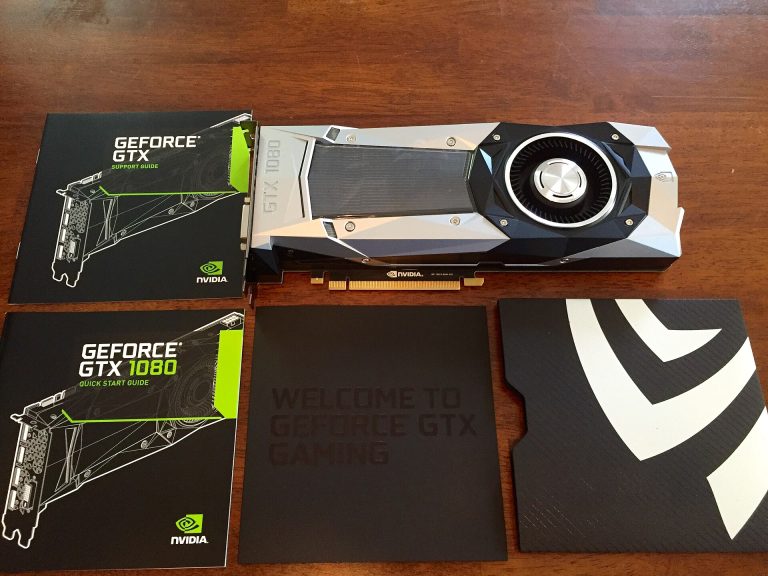
GTX 1080 Ti vs RTX 2080
Picking between the GTX 1080 Ti and the RTX 2080 means picking between two of NVIDIA’s own lines rather than between brands. The RTX 2080 is up against it here: the GTX 1080 Ti wins 2 of the 3 areas on our scorecard, with memory as its standout.
At a glance
- GPU & Performance GTX 1080 Ti wins
- Memory GTX 1080 Ti wins
- Power & Thermals RTX 2080 wins
- Price Tie
- GPU & Performance0.8
- Memory4.5
- Power & Thermals5.3
- GPU & Performance0.5
- Memory1.4
- Power & Thermals6.3
Spec scores (0 to 10) are calculated from manufacturer specs against other models in the same class. See how the formula works. They are not reviews or user ratings.
Key Differences
-
The GTX 1080 Ti has 3 GB more VRAM
For vram, the GTX 1080 Ti leads by a wide margin: 11 GB versus 8 GB. Newer games tend to ask for more video memory, so the GTX 1080 Ti’s extra VRAM helps the card age better.
-
The GTX 1080 Ti has 22% more shader units
This is a headline difference. With 3,584 to the RTX 2080’s 2,944, the GTX 1080 Ti has a lead that’s easy to see on paper and in practice. Shader units do most of the heavy lifting in games, so more of them usually means more frames per second within the same architecture.
-
The RTX 2080 has 35 W lower board power
Put simply, the RTX 2080 is far ahead here: 215 W compared with 250 W. The RTX 2080 draws less power, which makes it easier to cool in compact cases.
-
The GTX 1080 Ti has 12% more theoretical FP32 compute
Not a big gap, but a consistent one. The GTX 1080 Ti’s 11.3 TFLOPS beats the RTX 2080’s 10.1 TFLOPS. FP32 compute is a theoretical peak that combines shader count and clock speed, a quick way to size up raw power.
-
The GTX 1080 Ti has a wider 352-bit memory bus
The GTX 1080 Ti’s 352-bit leaves the RTX 2080’s 256-bit well behind, so if this spec matters to you, the choice is easy. The GTX 1080 Ti’s wider bus supports higher bandwidth, which helps most at high resolutions.
Design & Size
- GTX 1080 Ti 10.51 in × 2 slots
- RTX 2080 10.51 in × 2 slots
Size won’t decide this one: the GTX 1080 Ti and the RTX 2080 have very similar dimensions.
Size & Connectivity
| Spec | GTX 1080 Ti | RTX 2080 |
|---|---|---|
| Reference card length | 10.51 in | 10.51 in |
| Slot width | 2 slots | 2 slots |
| Display outputs | 3x DisplayPort 1.4, 1x HDMI 2.0b | 3x DisplayPort 1.4a, 1x HDMI 2.0b, 1x USB-C (VirtualLink) |
GPU & Performance
GTX 1080 Ti leads
No contest in gpu & performance: the GTX 1080 Ti is the stronger of the two. The GTX 1080 Ti adds 22% more shader units. Treat shader count as a strong hint about performance tier, then check benchmarks for the games you actually play. The RTX 2080 scores with an 8.1% higher boost clock. So if gpu & performance tops your list, lean toward the GTX 1080 Ti.
Shader units
GTX 1080 Ti: 3,584 RTX 2080: 2,944 The GTX 1080 Ti’s extra shaders give it more raw muscle, although comparisons across different architectures aren’t one-to-one.
FP32 compute
GTX 1080 Ti: 11.3 TFLOPS RTX 2080: 10.1 TFLOPS Architectures use their compute differently, so treat the gap as a guide and look at game benchmarks for the details.
Memory
GTX 1080 Ti leads
The memory numbers point firmly in one direction: toward the GTX 1080 Ti. The GTX 1080 Ti answers with 3 GB more VRAM. At high resolutions or with texture packs, running out of VRAM can hurt more than a small speed gap. The memory verdict goes to the GTX 1080 Ti.
VRAM
GTX 1080 Ti: 11 GB RTX 2080: 8 GB More VRAM lets the card hold higher-resolution textures and bigger scenes without stutter.
Memory bus
GTX 1080 Ti: 352-bit RTX 2080: 256-bit Large on-chip caches can make up for a narrower bus, so bandwidth is the more telling number.
Features
The GTX 1080 Ti and the RTX 2080 differ on features in ways that are described rather than measured. The table has the details.
Power & Thermals
RTX 2080 leads
The GTX 1080 Ti has a tough time in the power & thermals section, where the RTX 2080 pulls well ahead. The RTX 2080 delivers 35 W lower board power. Lower board power means less heat, quieter cooling and a smaller impact on your electricity bill. The GTX 1080 Ti steps ahead thanks to a smaller 600 W PSU requirement. For power & thermals, the RTX 2080 is the one to beat.
Total board power
GTX 1080 Ti: 250 W RTX 2080: 215 W Higher board power often comes with higher performance, so the GTX 1080 Ti’s appetite may be part of the price of its speed.
Recommended PSU
GTX 1080 Ti: 600 W RTX 2080: 650 W With the GTX 1080 Ti, you’re more likely to keep your existing power supply, which can save real money.
Full Specifications
GPU & Performance
| Spec | GTX 1080 Ti | RTX 2080 |
|---|---|---|
| Architecture | Pascal | Turing |
| GPU die | GP102 | TU104 |
| Process | TSMC 16nm FinFET | TSMC 12nm FFN |
| Shader units | 3,584 (winner) | 2,944 |
| Ray tracing units | N/A (not specified) | 46 |
| Base clock | 1,480 MHz | 1,515 MHz |
| Boost clock | 1,582 MHz Lowest boost clock | 1,710 MHz (winner) |
| FP32 computeTheoretical peak; AMD counts dual-issue, so compare within a brand only | 11.3 TFLOPS (winner) | 10.1 TFLOPS |
Memory
| Spec | GTX 1080 Ti | RTX 2080 |
|---|---|---|
| VRAM | 11 GB (winner) | 8 GB |
| Memory type | GDDR5X | GDDR6 |
| Memory bus | 352-bit (winner) Widest memory bus | 256-bit |
| Memory bandwidth | 484 GB/s (winner) | 448 GB/s |
Features
| Spec | GTX 1080 Ti | RTX 2080 |
|---|---|---|
| Upscaling | None (no DLSS) | DLSS Super Resolution |
| Frame generation | None | No DLSS Frame Generation |
| PCIe interface | PCIe 3.0 x16 | PCIe 3.0 x16 |
Power & Thermals
| Spec | GTX 1080 Ti | RTX 2080 |
|---|---|---|
| Total board power | 250 W | 215 W (winner) |
| Recommended PSU | 600 W (winner) | 650 W |
| Power connector | 1x 8-pin + 1x 6-pin | 1x 8-pin + 1x 6-pin |
Size & Connectivity
| Spec | GTX 1080 Ti | RTX 2080 |
|---|---|---|
| Reference card length | 10.51 in | 10.51 in |
| Slot width | 2 slots | 2 slots |
| Display outputs | 3x DisplayPort 1.4, 1x HDMI 2.0b | 3x DisplayPort 1.4a, 1x HDMI 2.0b, 1x USB-C (VirtualLink) |
Price
| Spec | GTX 1080 Ti | RTX 2080 |
|---|---|---|
| Launch price (MSRP) | $699 | $699 |
“N/A” means the manufacturer does not specify the value or we could not confirm it. Figures marked “manufacturer rating” are the maker’s own claims, not our measurements.
Price & Value
The GTX 1080 Ti and the RTX 2080 launched at the same price, so this comes down to the specs.
Launch prices (US) as of September 2018. Discounts and bundles come and go, so compare current prices before buying.
Which One Should You Buy?
Choose the GTX 1080 Ti if…
- you want more video memory for the years ahead (11 GB vs 8 GB)
- you want more shader units working on every frame (3,584 vs 2,944)
- you run compute-heavy work alongside gaming (11.3 TFLOPS vs 10.1 TFLOPS FP32)
- you want the wider memory bus (352-bit vs 256-bit)
Choose the RTX 2080 if…
- you care about your power bill and a quieter case (215 W vs 250 W)
- you care about peak clock speed (1,710 MHz vs 1,582 MHz boost)
Also Compared
Frequently Asked Questions
Which is better for most people, the GTX 1080 Ti or the RTX 2080?
The GTX 1080 Ti makes more sense overall. Consider the alternative only if having 35 W lower board power matters more to you than the rest.
Which is larger, the GTX 1080 Ti or the RTX 2080?
The GTX 1080 Ti and the RTX 2080 are so close in size that you’d struggle to tell them apart on dimensions alone.
Does the GTX 1080 Ti perform better than the RTX 2080?
The GTX 1080 Ti has the edge in performance thanks to 22% more shader units and 12% more theoretical FP32 compute.
Executive Summary
A lineup gives you options, and options give you headaches. Let me try to cure this one: the GTX 1080 Ti or the RTX 2080. For me, the deciding factor is that only the GTX 1080 Ti gives you 3 GB more VRAM. I’d also count 22% more shader units in the GTX 1080 Ti’s favor. Where the RTX 2080 fights back is 35 W lower board power.
The GTX 1080 Ti is built for people who weigh gpu & performance heavily, and the RTX 2080 for people who weigh power & thermals.
My pick: I think most people will be happier with the GTX 1080 Ti, unless you’d rather have 35 W lower board power on the RTX 2080.
Personal opinion based on the data above. Your priorities may differ.