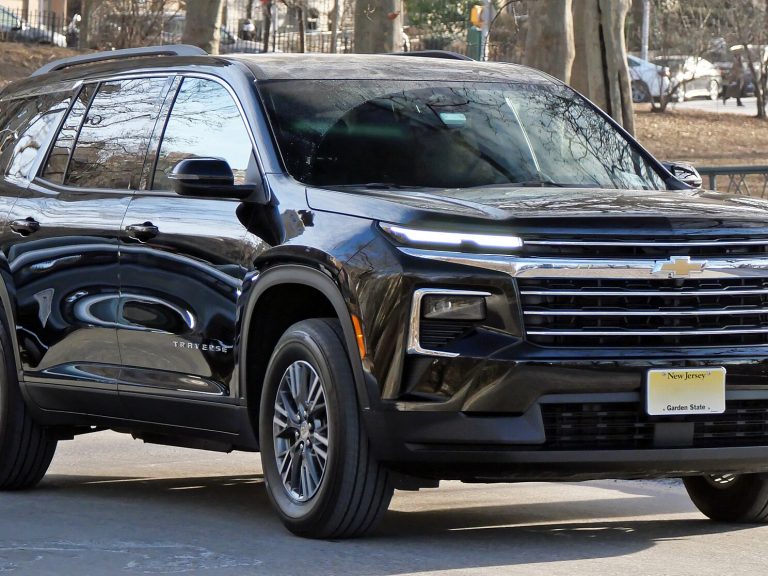
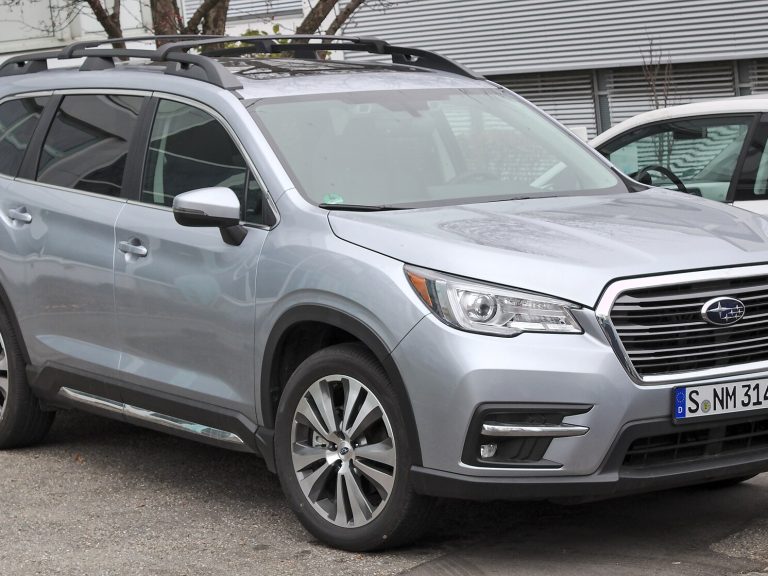
Traverse vs Ascent
Both the Traverse and the Ascent sit in the three-row suv class, and Chevrolet and Subaru are clearly watching each other. Neither side dominates. Only a few of the compared specs differ by enough to matter day to day.
At a glance
- Engine & Performance Traverse wins
- Fuel Economy & Range Tie
- Space & Practicality Tie
- Off-road & Towing Tie
- Engine & Performance7.6
- Fuel Economy & Range4.8
- Off-road & Towing5.3
- Engine & Performance4.3
- Fuel Economy & Range2.7
- Off-road & Towing5.3
Spec scores (0 to 10) are calculated from manufacturer specs against other models in the same class. See how the formula works. They are not reviews or user ratings.
Key Differences
-
The Traverse has 68 hp more power
At 328 hp versus 260 hp, this is a decisive lead for the Traverse, the kind of difference you notice without looking for it. Power is only part of the story; weight, gearing and torque delivery shape how quick a car feels.
-
The Traverse has 49 lb-ft more torque
If torque is one of your priorities, this settles it: the Traverse leads clearly with 326 lb-ft to the Ascent’s 277 lb-ft. Electrified powertrains deliver torque instantly, so compare torque figures alongside the powertrain type.
-
The Traverse has
The Traverse is larger on wheelbase, at 120.9 in compared with 113.8 in. A shorter wheelbase can make a car more agile in tight turns and parking lots.
Design & Size
If compact matters to you, the Ascent is the one to look at. The Traverse is physically larger all round.
Dimensions
| Spec | Traverse | Ascent |
|---|---|---|
| Length | 204 in | 196.8 in |
| Width (no mirrors) | N/A (not specified) | 76 in |
| Wheelbase | 120.9 in | 113.8 in |
Engine & Performance
Traverse leads
In the engine & performance category, the Traverse isn’t just ahead; it’s clearly ahead. The Traverse has the edge with 68 hp more power. More power helps with merging, overtaking and climbing hills, especially with passengers and luggage on board. So if engine & performance tops your list, lean toward the Traverse.
Total system output
Traverse: 328 hp Ascent: 260 hp The Traverse’s extra output gives it more in reserve when you need to get up to speed.
Torque
Traverse: 326 lb-ft Ascent: 277 lb-ft More torque means stronger pulling from low speeds, which you feel when accelerating from a stop or climbing grades.
Fuel Economy & Range
Too close to call
This is a tie in all but name. On fuel economy & range, both deliver about the same. Don’t let fuel economy & range decide this one; look at the other sections instead.
Space & Practicality
Too close to call
In the space & practicality category, the Traverse and the Ascent land in almost the same place. Treat space & practicality as common ground and look elsewhere for the deciding factor.
Off-road & Towing
Too close to call
The off-road & towing section is even. Any gaps here are within the range you’d never notice. In short, off-road & towing is a draw; the decision lies elsewhere.
Safety & Tech
On safety & tech, the useful details are the names in the table: what each one uses, not a figure we can rank.
Full Specifications
Engine & Performance
| Spec | Traverse | Ascent |
|---|---|---|
| Powertrain | Gas | Gas |
| Engine | 2.5L turbo I4 | 2.4L turbo flat-4 |
| Total system output | 328 hp (winner) | 260 hp |
| Torque | 326 lb-ft (winner) | 277 lb-ft |
| Transmission | 8-speed automatic | CVT |
| Drivetrain | FWD (AWD available) | AWD |
Fuel Economy & Range
| Spec | Traverse | Ascent |
|---|---|---|
| Fuel economy (combined)EPA estimate where available | 23 mpg | 22 mpg |
| Fuel economy (city) | 20 mpg | 20 mpg |
| Fuel economy (highway) | 27 mpg | 26 mpg |
| Fuel tank | N/A (not specified) | 19.3 gal |
Space & Practicality
| Spec | Traverse | Ascent |
|---|---|---|
| Seats | 8 seats | 8 seats |
| Cargo (behind rear seats) | 23 cu ft | N/A (not specified) |
| Cargo (seats folded) | 98.2 cu ft Most room, seats folded | N/A (not specified) |
Off-road & Towing
| Spec | Traverse | Ascent |
|---|---|---|
| Ground clearance | N/A (not specified) | 8.70 in |
| Max towing | 5,000 lb | 5,000 lb |
| AWD / 4WD available | Yes | Yes |
Safety & Tech
| Spec | Traverse | Ascent |
|---|---|---|
| Largest touchscreen | 17.7 in Biggest touchscreen | N/A (not specified) |
| Driver-assist suite | Chevy Safety Assist | Subaru EyeSight |
| Basic warranty | 3 yr / 36,000 mi | 3 yr / 36,000 mi |
Dimensions
| Spec | Traverse | Ascent |
|---|---|---|
| Length | 204 in | 196.8 in |
| Width (no mirrors) | N/A (not specified) | 76 in |
| Wheelbase | 120.9 in | 113.8 in |
Price
| Spec | Traverse | Ascent |
|---|---|---|
| Starting MSRP | $40,700 | N/A (not specified) |
“N/A” means the manufacturer does not specify the value or we could not confirm it. Figures marked “manufacturer rating” are the maker’s own claims, not our measurements.
Which One Should You Buy?
Choose the Traverse if…
- you want more power (328 hp vs 260 hp)
- you often drive loaded up or with a trailer (326 lb-ft vs 277 lb-ft of torque)
- you prefer a larger car and have the room for it
Choose the Ascent if…
- you like a car that takes up less room
- you trust Subaru and want to keep things familiar
Also Compared

Frequently Asked Questions
Should I buy the Traverse or the Ascent?
On the specs compared here, the Traverse makes more sense for most buyers; the Ascent doesn’t win a single measurable area.
Which is larger, the Traverse or the Ascent?
Size goes the other way: the Traverse is larger (204 in), and the Ascent is the smaller option (196.8 × 76 in).
Executive Summary
Brand loyalty aside, I tried to judge the Traverse and the Ascent purely on what they offer. The single spec I’d point a friend to is this: the Traverse has 68 hp more power.
If you’d rather have strength in engine & performance, go with the Traverse. If the things a spec sheet can’t capture is what you’d miss, go with the Ascent.
My pick: the Traverse.
Personal opinion based on the data above. Your priorities may differ.