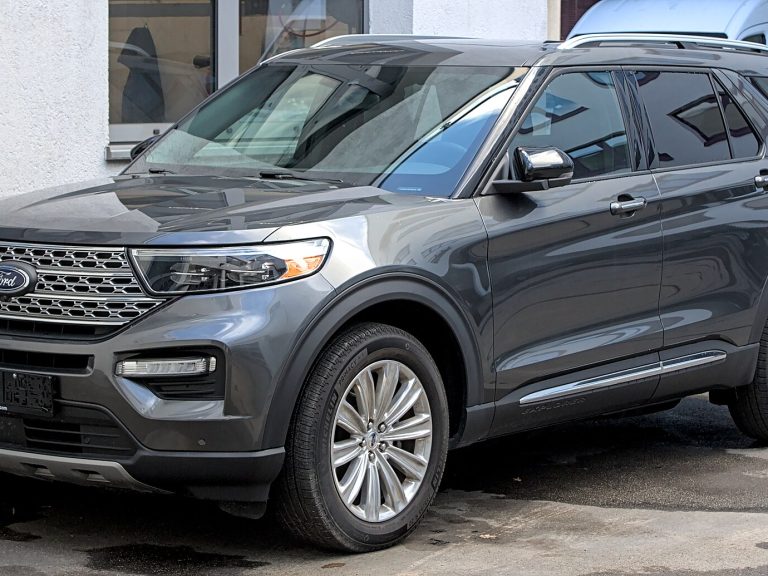
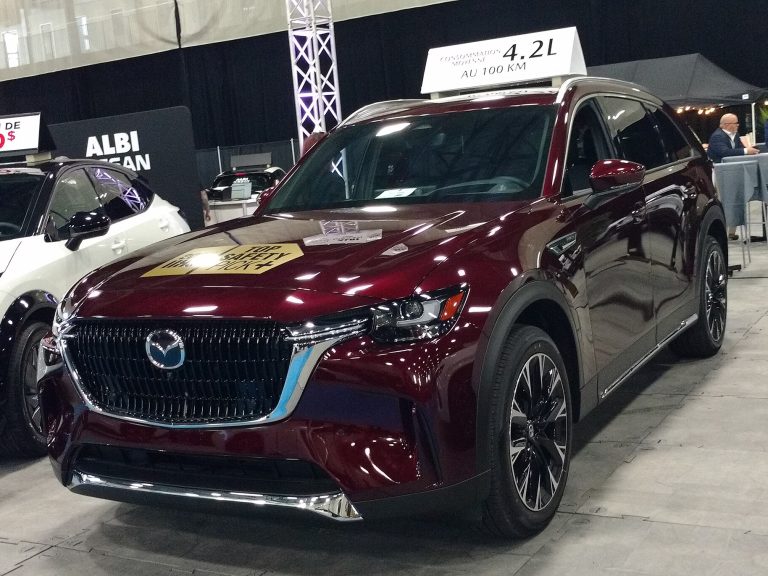
Explorer vs CX-90
Two brands, one target. The Explorer from Ford and the CX-90 from Mazda compete head to head for three-row suv shoppers. Count the areas and a pattern appears. The CX-90 is ahead in 2 of 5, led by a clear margin in fuel economy & range.
At a glance
- Engine & Performance Trade-off
- Fuel Economy & Range CX-90 wins
- Space & Practicality CX-90 wins
- Off-road & Towing Explorer wins
- Safety & Tech Tie
- Engine & Performance6.3
- Fuel Economy & Range7.2
- Off-road & Towing6.0
- Engine & Performance6.0
- Fuel Economy & Range9.6
- Off-road & Towing5.3
Spec scores (0 to 10) are calculated from manufacturer specs against other models in the same class. See how the formula works. They are not reviews or user ratings.
Key Differences
-
The Explorer has 20 hp more power
The Explorer nudges ahead with 300 hp, while the CX-90 lists 280 hp. Power is only part of the story; weight, gearing and torque delivery shape how quick a car feels.
-
The CX-90 has room for 8 seats
This one is close enough that other factors could outweigh it, but on paper the CX-90 leads with 8 seats to 7 seats. The CX-90 has room for more passengers, useful for growing families and carpools.
-
The CX-90 has better city fuel economy
The numbers aren’t close. The CX-90 lists 24 mpg for fuel economy (city), while the Explorer lists 20 mpg. In town, driving style has a big effect, but the CX-90 starts from a better baseline.
-
The Explorer has 600 lb more towing capacity
Only a little separates them: 5,600 lb on the Explorer, 5,000 lb on the CX-90. If you tow regularly, the Explorer’s higher rating gives you more margin.
-
The CX-90 has 22 lb-ft more torque
It’s a fine margin, and it favors the CX-90 (332 lb-ft versus 310 lb-ft). The CX-90’s extra torque makes it more relaxed when fully loaded or towing.
Design & Size
Neither is the “big one” here; the Explorer and the CX-90 are matched on size.
Dimensions
| Spec | Explorer | CX-90 |
|---|---|---|
| Length | 198.8 in | 201.6 in |
| Width (no mirrors) | 78.9 in | N/A (not specified) |
| Height | 69.9 in | N/A (not specified) |
| Wheelbase | 119.1 in | 122.8 in |
Engine & Performance
Trade-off
On engine & performance, it’s give and take: the Explorer brings 20 hp more power, and the CX-90 brings 22 lb-ft more torque. On engine & performance, the better choice comes down to your own priorities.
Total system output
Explorer: 300 hp CX-90: 280 hp More power helps with merging, overtaking and climbing hills, especially with passengers and luggage on board.
Torque
Explorer: 310 lb-ft CX-90: 332 lb-ft More torque means stronger pulling from low speeds, which you feel when accelerating from a stop or climbing grades.
Fuel Economy & Range
CX-90 leads
The CX-90 takes fuel economy & range by a nose. The CX-90 wins here with better city fuel economy. Hybrids often shine in the city, and the CX-90 has the better rating here. In short, the CX-90 is the better-equipped car for fuel economy & range.
Fuel economy (city)
Explorer: 20 mpg CX-90: 24 mpg City fuel economy matters most if your driving is mostly short trips, traffic and stop-and-go commutes.
Space & Practicality
CX-90 leads
A modest lead on space & practicality belongs to the CX-90. The CX-90 pulls ahead with room for 8 seats. Third-row seats are often best for kids, so check legroom figures if adults will sit there. The space & practicality verdict goes to the CX-90.
Seats
Explorer: 7 seats CX-90: 8 seats Extra seats mean you can take more people along without taking a second car.
Off-road & Towing
Explorer leads
It’s a narrow one, but the off-road & towing round goes to the Explorer. The Explorer gives you 600 lb more towing capacity. Towing ratings depend on configuration and equipment, so check the exact trim you’re looking at. For off-road & towing, the Explorer is the one to beat.
Max towing
Explorer: 5,600 lb CX-90: 5,000 lb A higher towing capacity lets you pull bigger trailers, boats and campers.
Safety & Tech
Too close to call
On paper, the safety & tech comparison ends all square. This section won’t settle the choice, so weigh the other areas more heavily.
Full Specifications
Engine & Performance
| Spec | Explorer | CX-90 |
|---|---|---|
| Powertrain | Gas | Mild hybrid |
| Engine | 2.3L turbo I4 (EcoBoost) | 3.3L turbo inline-6 (48V mild hybrid) |
| Total system output | 300 hp (winner) | 280 hp |
| Torque | 310 lb-ft | 332 lb-ft (winner) |
| Transmission | 10-speed automatic | 8-speed automatic |
| Drivetrain | RWD (AWD available) | AWD |
Fuel Economy & Range
| Spec | Explorer | CX-90 |
|---|---|---|
| Fuel economy (combined)EPA estimate where available | 24 mpg | 25 mpg |
| Fuel economy (city) | 20 mpg | 24 mpg (winner) Best city economy |
| Fuel economy (highway) | 29 mpg | 28 mpg |
Space & Practicality
| Spec | Explorer | CX-90 |
|---|---|---|
| Seats | 7 seats | 8 seats (winner) |
| Cargo (behind rear seats) | N/A (not specified) | 15.9 cu ft Smallest cargo area |
| Cargo (seats folded) | N/A (not specified) | 75.2 cu ft Least room, seats folded |
Off-road & Towing
| Spec | Explorer | CX-90 |
|---|---|---|
| Max towing | 5,600 lb (winner) | 5,000 lb |
| AWD / 4WD available | Yes | Yes |
Safety & Tech
| Spec | Explorer | CX-90 |
|---|---|---|
| Largest touchscreen | 13.2 in | 12.3 in |
| Driver-assist suite | Ford Co-Pilot360 | Mazda i-Activsense |
| Basic warranty | 3 yr / 36,000 mi | 3 yr / 36,000 mi |
Dimensions
| Spec | Explorer | CX-90 |
|---|---|---|
| Length | 198.8 in | 201.6 in |
| Width (no mirrors) | 78.9 in | N/A (not specified) |
| Height | 69.9 in | N/A (not specified) |
| Wheelbase | 119.1 in | 122.8 in |
Price
| Spec | Explorer | CX-90 |
|---|---|---|
| Starting MSRP | $40,050 Lowest price in class | N/A (not specified) |
“N/A” means the manufacturer does not specify the value or we could not confirm it. Figures marked “manufacturer rating” are the maker’s own claims, not our measurements.
Which One Should You Buy?
Choose the Explorer if…
- you want more power (300 hp vs 280 hp)
- you want the higher towing capacity (5,600 lb vs 5,000 lb)
- you already know your way around Ford’s products
Choose the CX-90 if…
- you need more seats (8 seats vs 7 seats)
- you mostly drive in town (24 mpg vs 20 mpg in the city)
- you want more pulling power from low speeds (332 lb-ft vs 310 lb-ft of torque)
Also Compared

Frequently Asked Questions
Which is better for most people, the Explorer or the CX-90?
For most people, the CX-90 is the stronger choice, unless you need 20 hp more power, which only the Explorer offers.
Which is larger, the Explorer or the CX-90?
They’re practically the same size. The difference between the Explorer and the CX-90 is too small to matter.
Executive Summary
If it were just about the brand, you wouldn’t be here. So let’s talk about the Explorer and the CX-90 on their merits. The single spec I’d point a friend to is this: the CX-90 has room for 8 seats. Stack better city fuel economy on top of that, and the CX-90’s lead grows. In fairness to the Explorer, 20 hp more power is a genuine strength.
Put simply, the Explorer suits people who care about off-road & towing, while the CX-90 suits people who put fuel economy & range first.
My pick: the CX-90, with one exception: if having 20 hp more power matters more to you than the rest, go for the Explorer.
Personal opinion based on the data above. Your priorities may differ.