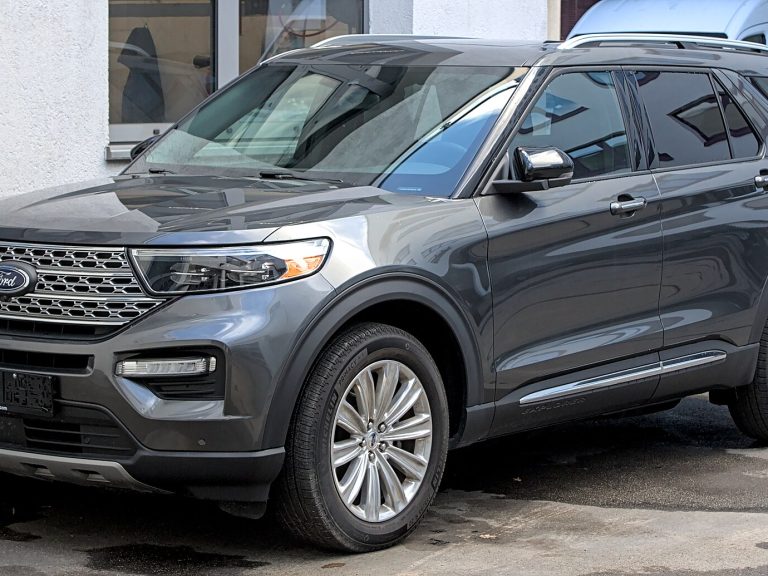
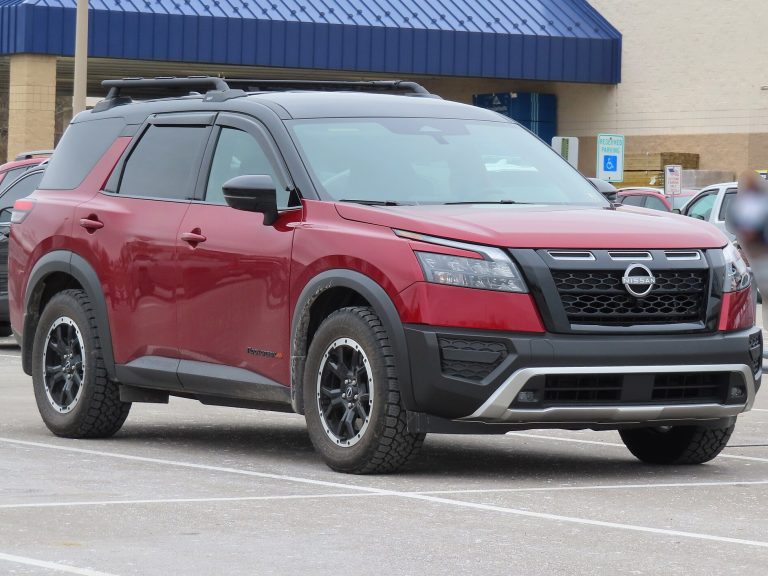
Explorer vs Pathfinder
Two brands, one target. The Explorer from Ford and the Pathfinder from Nissan compete head to head for three-row suv shoppers. By our tally, the Explorer leads 2 of 4 areas. The engine & performance section is where it pulls furthest ahead of the Pathfinder.
At a glance
- Engine & Performance Explorer wins
- Fuel Economy & Range Explorer wins
- Space & Practicality Pathfinder wins
- Off-road & Towing Tie
- Engine & Performance6.3
- Fuel Economy & Range7.2
- Off-road & Towing6.0
- Engine & Performance4.8
- Fuel Economy & Range4.8
- Off-road & Towing6.5
Spec scores (0 to 10) are calculated from manufacturer specs against other models in the same class. See how the formula works. They are not reviews or user ratings.
Key Differences
-
The Explorer has 51 lb-ft more torque
Put simply, the Explorer is far ahead here: 310 lb-ft compared with 259 lb-ft. The Explorer’s extra torque makes it more relaxed when fully loaded or towing.
-
The Explorer has 16 hp more power
The Explorer has a modest edge on total system output: 300 hp against 284 hp for the Pathfinder. Power is only part of the story; weight, gearing and torque delivery shape how quick a car feels.
-
The Pathfinder has room for 8 seats
It’s a small lead (8 seats versus 7 seats), but it’s real, and it goes to the Pathfinder. Third-row seats are often best for kids, so check legroom figures if adults will sit there.
-
The Explorer has better highway fuel economy
The Pathfinder isn’t far behind at 27 mpg, but the Explorer’s 29 mpg still comes out ahead. Speed, wind and load affect highway use a lot, but the official rating is a fair comparison point.
Design & Size
- Explorer 198.8 in × 78.9 in × 69.9 in
- Pathfinder 197.7 in × 77.9 in × 70.9 in
Neither is the “big one” here; the Explorer and the Pathfinder are matched on size.
Dimensions
| Spec | Explorer | Pathfinder |
|---|---|---|
| Length | 198.8 in | 197.7 in |
| Width (no mirrors) | 78.9 in | 77.9 in |
| Height | 69.9 in | 70.9 in |
| Wheelbase | 119.1 in | 114.2 in |
| Curb weight (from) | N/A (not specified) | 4,325 lb |
Engine & Performance
Explorer leads
In the engine & performance category, the Explorer isn’t just ahead; it’s clearly ahead. The Explorer takes this one with 51 lb-ft more torque. More torque means stronger pulling from low speeds, which you feel when accelerating from a stop or climbing grades. In short, the Explorer is the better-equipped car for engine & performance.
Torque
Explorer: 310 lb-ft Pathfinder: 259 lb-ft Electrified powertrains deliver torque instantly, so compare torque figures alongside the powertrain type.
Total system output
Explorer: 300 hp Pathfinder: 284 hp More power helps with merging, overtaking and climbing hills, especially with passengers and luggage on board.
Fuel Economy & Range
Explorer leads
Call it a small but real win for the Explorer in this area. The Explorer has the edge with better highway fuel economy. Highway fuel economy matters if you cover long distances at steady speeds. The fuel economy & range verdict goes to the Explorer.
Fuel economy (highway)
Explorer: 29 mpg Pathfinder: 27 mpg The Explorer uses less fuel on the highway, a real saving on road trips and long commutes.
Space & Practicality
Pathfinder leads
The space & practicality comparison is tighter than it first looks, with the Pathfinder marginally ahead. Point to the Pathfinder for room for 8 seats. Extra seats mean you can take more people along without taking a second car. If this section decides it for you, choose the Pathfinder.
Seats
Explorer: 7 seats Pathfinder: 8 seats The Pathfinder has room for more passengers, useful for growing families and carpools.
Off-road & Towing
Too close to call
In the off-road & towing category, the Explorer and the Pathfinder land in almost the same place. Both cover off-road & towing well enough that other priorities should break the tie.
Safety & Tech
There isn’t a number to compare on safety & tech, just names. Look at the rows below to see how the Explorer and the Pathfinder differ.
Full Specifications
Engine & Performance
| Spec | Explorer | Pathfinder |
|---|---|---|
| Powertrain | Gas | Gas |
| Engine | 2.3L turbo I4 (EcoBoost) | 3.5L V6 |
| Total system output | 300 hp (winner) | 284 hp |
| Torque | 310 lb-ft (winner) | 259 lb-ft |
| Transmission | 10-speed automatic | 9-speed automatic |
| Drivetrain | RWD (AWD available) | FWD (4WD available) |
Fuel Economy & Range
| Spec | Explorer | Pathfinder |
|---|---|---|
| Fuel economy (combined)EPA estimate where available | 24 mpg | 23 mpg |
| Fuel economy (city) | 20 mpg | 20 mpg |
| Fuel economy (highway) | 29 mpg (winner) | 27 mpg |
| Fuel tank | N/A (not specified) | 18.5 gal |
Space & Practicality
| Spec | Explorer | Pathfinder |
|---|---|---|
| Seats | 7 seats | 8 seats (winner) |
| Cargo (behind rear seats) | N/A (not specified) | 16.6 cu ft |
Off-road & Towing
| Spec | Explorer | Pathfinder |
|---|---|---|
| Ground clearance | N/A (not specified) | 7.10 in |
| Max towing | 5,600 lb | 6,000 lb |
| AWD / 4WD available | Yes | Yes |
Safety & Tech
| Spec | Explorer | Pathfinder |
|---|---|---|
| Largest touchscreen | 13.2 in | N/A (not specified) |
| Driver-assist suite | Ford Co-Pilot360 | N/A (not specified) |
| Basic warranty | 3 yr / 36,000 mi | 3 yr / 36,000 mi |
Dimensions
| Spec | Explorer | Pathfinder |
|---|---|---|
| Length | 198.8 in | 197.7 in |
| Width (no mirrors) | 78.9 in | 77.9 in |
| Height | 69.9 in | 70.9 in |
| Wheelbase | 119.1 in | 114.2 in |
| Curb weight (from) | N/A (not specified) | 4,325 lb |
Price
| Spec | Explorer | Pathfinder |
|---|---|---|
| Starting MSRP | $40,050 Lowest price in class | N/A (not specified) |
“N/A” means the manufacturer does not specify the value or we could not confirm it. Figures marked “manufacturer rating” are the maker’s own claims, not our measurements.
Which One Should You Buy?
Choose the Explorer if…
- you want more pulling power from low speeds (310 lb-ft vs 259 lb-ft of torque)
- you want more power (300 hp vs 284 hp)
- you want better highway fuel economy (29 mpg vs 27 mpg)
Choose the Pathfinder if…
- you need more seats (8 seats vs 7 seats)
- you already use other Nissan products
Also Compared

Frequently Asked Questions
Should I buy the Explorer or the Pathfinder?
The Explorer makes more sense overall. Consider the alternative only if you care more about room for 8 seats than anything else.
Is the Explorer bigger than the Pathfinder?
The Explorer and the Pathfinder are so close in size that you’d struggle to tell them apart on dimensions alone.
Executive Summary
If you’ve narrowed it down to the Explorer and the Pathfinder, you’ve already done the hard part. Let me help with the rest. I’d put 51 lb-ft more torque at the top of the list, and it belongs to the Explorer. And if that weren’t enough, the Explorer has better highway fuel economy. That said, the Pathfinder answers with room for 8 seats, which some people will value more.
Match the strength to your habits (engine & performance for the Explorer, space & practicality for the Pathfinder), and you won’t go far wrong.
My pick: the Explorer; the one scenario where I’d reach for the Pathfinder is if you know that room for 8 seats would make a real difference in your routine.
Personal opinion based on the data above. Your priorities may differ.