Explorer vs Ascent
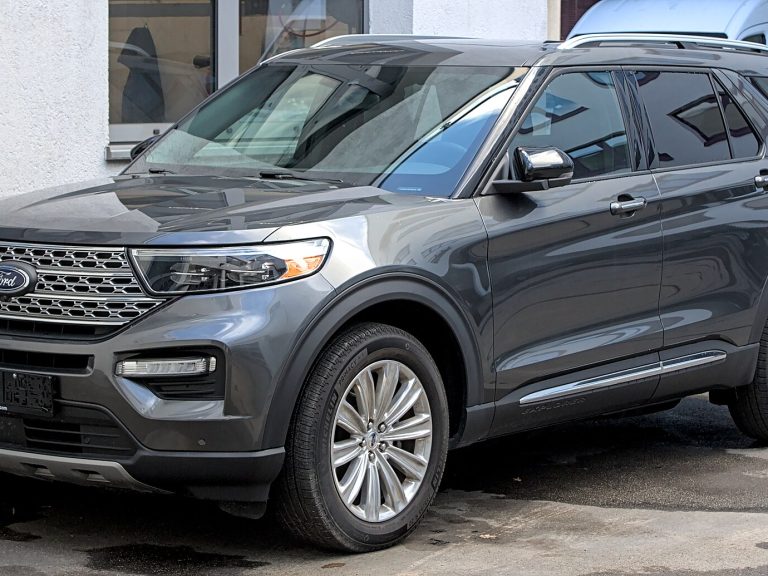
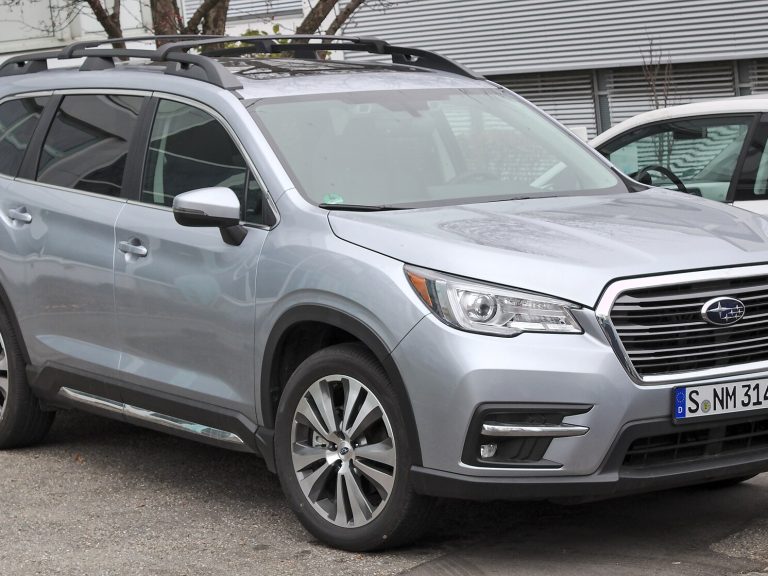
Put the Explorer next to the Ascent and you have Ford and Subaru going after exactly the same three-row suv crowd. Scoring each area separately, the Explorer comes out on top 3 times out of 4. Its lead is sharpest in engine & performance.
At a glance
- Engine & Performance Explorer wins
- Fuel Economy & Range Explorer wins
- Space & Practicality Ascent wins
- Off-road & Towing Explorer wins
- Engine & Performance6.3
- Fuel Economy & Range7.2
- Off-road & Towing6.0
- Engine & Performance4.3
- Fuel Economy & Range2.7
- Off-road & Towing5.3
Spec scores (0 to 10) are calculated from manufacturer specs against other models in the same class. See how the formula works. They are not reviews or user ratings.
Key Differences
-
The Explorer has 40 hp more power
At 300 hp versus 260 hp, this is a decisive lead for the Explorer, the kind of difference you notice without looking for it. Power is only part of the story; weight, gearing and torque delivery shape how quick a car feels.
-
The Explorer has better fuel economy
The Explorer nudges ahead with 24 mpg, while the Ascent lists 22 mpg. Better combined fuel economy lowers your running costs every week, and the savings add up over years of ownership.
-
The Ascent has room for 8 seats
This one is close enough that other factors could outweigh it, but on paper the Ascent leads with 8 seats to 7 seats. Extra seats mean you can take more people along without taking a second car.
-
The Explorer has 600 lb more towing capacity
Only a little separates them: 5,600 lb on the Explorer, 5,000 lb on the Ascent. A higher towing capacity lets you pull bigger trailers, boats and campers.
-
The Explorer has 33 lb-ft more torque
It’s a fine margin, and it favors the Explorer (310 lb-ft versus 277 lb-ft). More torque means stronger pulling from low speeds, which you feel when accelerating from a stop or climbing grades.
Design & Size
In overall size, the Explorer is ahead, which is good news only if a bigger car is what you want.
Dimensions
| Spec | Explorer | Ascent |
|---|---|---|
| Length | 198.8 in | 196.8 in |
| Width (no mirrors) | 78.9 in | 76 in |
| Height | 69.9 in | N/A (not specified) |
| Wheelbase | 119.1 in | 113.8 in |
Engine & Performance
Explorer leads
The Explorer clearly takes the engine & performance round. The Explorer scores with 40 hp more power. More power helps with merging, overtaking and climbing hills, especially with passengers and luggage on board. The takeaway: on engine & performance, the Explorer is the stronger car.
Total system output
Explorer: 300 hp Ascent: 260 hp The Explorer’s extra output gives it more in reserve when you need to get up to speed.
Torque
Explorer: 310 lb-ft Ascent: 277 lb-ft The Explorer’s extra torque makes it more relaxed when fully loaded or towing.
Fuel Economy & Range
Explorer leads
The fuel economy & range comparison is one-sided. The Explorer leads where it counts. In its favor, the Explorer has better fuel economy. The Explorer uses less fuel on the standard combined cycle, which matters most if you drive a lot. On fuel economy & range alone, the Explorer gets the nod.
Fuel economy (combined)
Explorer: 24 mpg Ascent: 22 mpg Official figures rarely match real-world driving exactly, but the ranking between two cars tends to hold.
Fuel economy (highway)
Explorer: 29 mpg Ascent: 26 mpg The Explorer uses less fuel on the highway, a real saving on road trips and long commutes.
Space & Practicality
Ascent leads
The Ascent edges the space & practicality section, though the Explorer stays close. The Ascent has the edge with room for 8 seats. The Ascent has room for more passengers, useful for growing families and carpools. The space & practicality verdict goes to the Ascent.
Seats
Explorer: 7 seats Ascent: 8 seats Third-row seats are often best for kids, so check legroom figures if adults will sit there.
Off-road & Towing
Explorer leads
It’s a narrow one, but the off-road & towing round goes to the Explorer. The Explorer brings 600 lb more towing capacity. If you tow regularly, the Explorer’s higher rating gives you more margin. Net result: the Explorer leads this part of the comparison.
Max towing
Explorer: 5,600 lb Ascent: 5,000 lb Towing ratings depend on configuration and equipment, so check the exact trim you’re looking at.
Safety & Tech
Nothing to tally in the safety & tech section, but plenty to read. The table lists what the Explorer and the Ascent each use.
Full Specifications
Engine & Performance
| Spec | Explorer | Ascent |
|---|---|---|
| Powertrain | Gas | Gas |
| Engine | 2.3L turbo I4 (EcoBoost) | 2.4L turbo flat-4 |
| Total system output | 300 hp (winner) | 260 hp |
| Torque | 310 lb-ft (winner) | 277 lb-ft |
| Transmission | 10-speed automatic | CVT |
| Drivetrain | RWD (AWD available) | AWD |
Fuel Economy & Range
| Spec | Explorer | Ascent |
|---|---|---|
| Fuel economy (combined)EPA estimate where available | 24 mpg (winner) | 22 mpg |
| Fuel economy (city) | 20 mpg | 20 mpg |
| Fuel economy (highway) | 29 mpg (winner) | 26 mpg |
| Fuel tank | N/A (not specified) | 19.3 gal |
Space & Practicality
| Spec | Explorer | Ascent |
|---|---|---|
| Seats | 7 seats | 8 seats (winner) |
Off-road & Towing
| Spec | Explorer | Ascent |
|---|---|---|
| Ground clearance | N/A (not specified) | 8.70 in |
| Max towing | 5,600 lb (winner) | 5,000 lb |
| AWD / 4WD available | Yes | Yes |
Safety & Tech
| Spec | Explorer | Ascent |
|---|---|---|
| Largest touchscreen | 13.2 in | N/A (not specified) |
| Driver-assist suite | Ford Co-Pilot360 | Subaru EyeSight |
| Basic warranty | 3 yr / 36,000 mi | 3 yr / 36,000 mi |
Dimensions
| Spec | Explorer | Ascent |
|---|---|---|
| Length | 198.8 in | 196.8 in |
| Width (no mirrors) | 78.9 in | 76 in |
| Height | 69.9 in | N/A (not specified) |
| Wheelbase | 119.1 in | 113.8 in |
Price
| Spec | Explorer | Ascent |
|---|---|---|
| Starting MSRP | $40,050 Lowest price in class | N/A (not specified) |
“N/A” means the manufacturer does not specify the value or we could not confirm it. Figures marked “manufacturer rating” are the maker’s own claims, not our measurements.
Which One Should You Buy?
Choose the Explorer if…
- you want more power (300 hp vs 260 hp)
- you want better combined fuel economy (24 mpg vs 22 mpg)
- you want the higher towing capacity (5,600 lb vs 5,000 lb)
- you want more pulling power from low speeds (310 lb-ft vs 277 lb-ft of torque)
Choose the Ascent if…
- you need more seats (8 seats vs 7 seats)
- you like a car that takes up less room
- you already know your way around Subaru’s products
Also Compared

Frequently Asked Questions
Should I buy the Explorer or the Ascent?
We’d point most buyers to the Explorer. The main exception is if you need room for 8 seats, which only the Ascent offers.
Is the Explorer bigger than the Ascent?
Size goes the other way: the Explorer is larger (198.8 × 78.9 × 69.9 in), and the Ascent is the smaller option (196.8 × 76 in).
Executive Summary
Let’s set the logos aside for a minute. The Explorer and the Ascent are close competitors, and their spec sheets tell an interesting story. It’s hard to argue with 40 hp more power, which is exactly what the Explorer brings. I’d also count better fuel economy in the Explorer’s favor. In fairness to the Ascent, room for 8 seats is a genuine strength.
In my head, the Explorer is the engine & performance pick and the Ascent is the space & practicality pick.
My pick: the Explorer. I’d only go for the Ascent if what you want most is room for 8 seats.
Personal opinion based on the data above. Your priorities may differ.