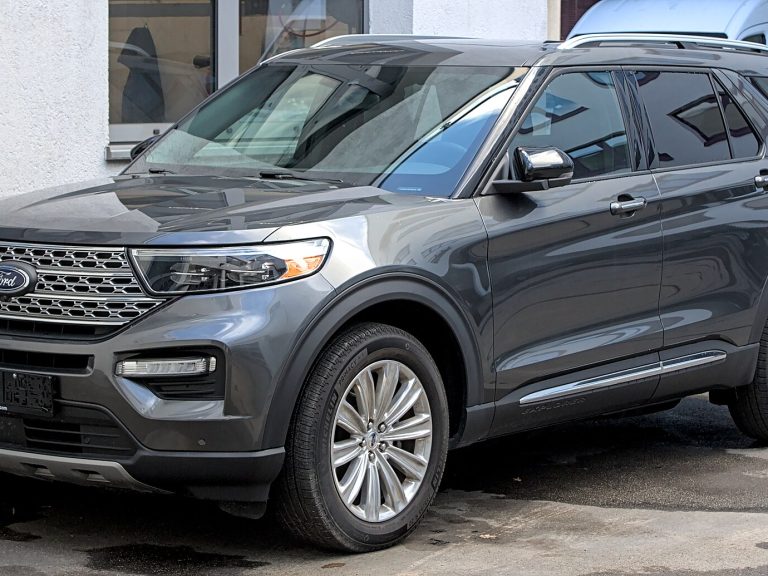
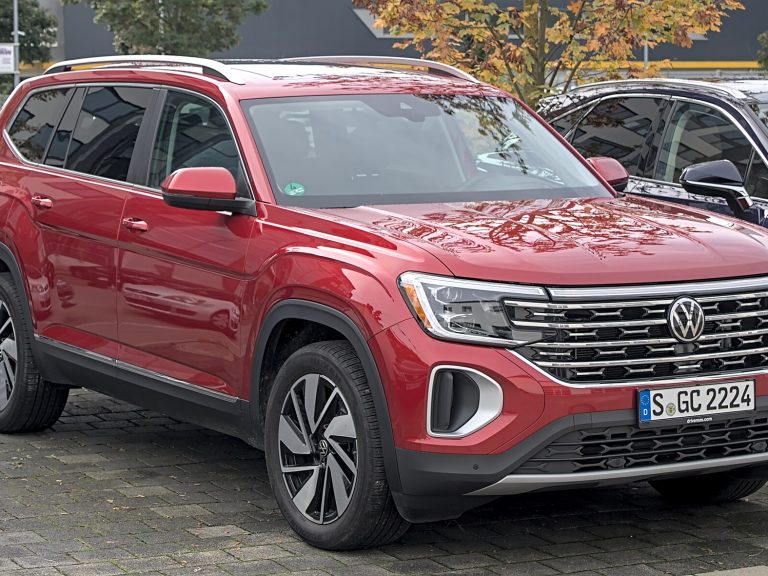
Explorer vs Atlas
For three-row suv shoppers, the Explorer from Ford and the Atlas from Volkswagen are two of the obvious candidates. The Explorer has the edge in 3 of the 4 areas we looked at, most visibly in the engine & performance category.
At a glance
- Engine & Performance Explorer wins
- Fuel Economy & Range Explorer wins
- Space & Practicality Tie
- Off-road & Towing Explorer wins
- Engine & Performance6.3
- Fuel Economy & Range7.2
- Off-road & Towing6.0
- Engine & Performance4.5
- Fuel Economy & Range2.7
- Off-road & Towing5.3
Spec scores (0 to 10) are calculated from manufacturer specs against other models in the same class. See how the formula works. They are not reviews or user ratings.
Key Differences
-
The Explorer has 31 hp more power
The Explorer gets a small bonus on total system output, with 300 hp against the Atlas’s 269 hp. More power helps with merging, overtaking and climbing hills, especially with passengers and luggage on board.
-
The Explorer has better fuel economy
Small gaps can still matter over time, and here the Explorer leads 24 mpg to 22 mpg. The Explorer uses less fuel on the standard combined cycle, which matters most if you drive a lot.
-
The Explorer has 37 lb-ft more torque
The difference is minor (310 lb-ft against 273 lb-ft), but if you’re splitting hairs, the Explorer wins it. The Explorer’s extra torque makes it more relaxed when fully loaded or towing.
-
The Explorer has 600 lb more towing capacity
The Atlas comes close with 5,000 lb; the Explorer does slightly better with 5,600 lb. If you tow regularly, the Explorer’s higher rating gives you more margin.
-
The Explorer has better highway fuel economy
Think of it as a tiebreaker rather than a deal-breaker: 29 mpg for the Explorer, 26 mpg for the Atlas. Highway fuel economy matters if you cover long distances at steady speeds.
Design & Size
Dimensions
| Spec | Explorer | Atlas |
|---|---|---|
| Length | 198.8 in | N/A (not specified) |
| Width (no mirrors) | 78.9 in | N/A (not specified) |
| Height | 69.9 in | N/A (not specified) |
| Wheelbase | 119.1 in | N/A (not specified) |
Engine & Performance
Explorer leads
The engine & performance comparison is one-sided. The Explorer leads where it counts. Here the Explorer offers 31 hp more power. The Explorer’s extra output gives it more in reserve when you need to get up to speed. That makes the Explorer the natural choice for buyers focused on engine & performance.
Total system output
Explorer: 300 hp Atlas: 269 hp Power is only part of the story; weight, gearing and torque delivery shape how quick a car feels.
Torque
Explorer: 310 lb-ft Atlas: 273 lb-ft More torque means stronger pulling from low speeds, which you feel when accelerating from a stop or climbing grades.
Fuel Economy & Range
Explorer leads
No contest in fuel economy & range: the Explorer is the stronger of the two. The Explorer has the edge with better fuel economy. Official figures rarely match real-world driving exactly, but the ranking between two cars tends to hold. In short, the Explorer is the better-equipped car for fuel economy & range.
Fuel economy (combined)
Explorer: 24 mpg Atlas: 22 mpg Better combined fuel economy lowers your running costs every week, and the savings add up over years of ownership.
Fuel economy (highway)
Explorer: 29 mpg Atlas: 26 mpg Speed, wind and load affect highway use a lot, but the official rating is a fair comparison point.
Space & Practicality
Too close to call
Call the space & practicality round a draw. If space & practicality was going to be your tiebreaker, you’ll need a different one.
Off-road & Towing
Explorer leads
The off-road & towing comparison is tighter than it first looks, with the Explorer marginally ahead. The Explorer brings 600 lb more towing capacity. Towing ratings depend on configuration and equipment, so check the exact trim you’re looking at. For off-road & towing, the Explorer is the one to beat.
Max towing
Explorer: 5,600 lb Atlas: 5,000 lb A higher towing capacity lets you pull bigger trailers, boats and campers.
Full Specifications
Engine & Performance
| Spec | Explorer | Atlas |
|---|---|---|
| Powertrain | Gas | Gas |
| Engine | 2.3L turbo I4 (EcoBoost) | 2.0L turbo I4 |
| Total system output | 300 hp (winner) | 269 hp |
| Torque | 310 lb-ft (winner) | 273 lb-ft |
| Transmission | 10-speed automatic | 8-speed automatic |
| Drivetrain | RWD (AWD available) | FWD (4Motion AWD available) |
Fuel Economy & Range
| Spec | Explorer | Atlas |
|---|---|---|
| Fuel economy (combined)EPA estimate where available | 24 mpg (winner) | 22 mpg |
| Fuel economy (city) | 20 mpg | 20 mpg |
| Fuel economy (highway) | 29 mpg (winner) | 26 mpg |
Space & Practicality
| Spec | Explorer | Atlas |
|---|---|---|
| Seats | 7 seats | 7 seats |
| Cargo (behind rear seats) | N/A (not specified) | 20.6 cu ft |
| Cargo (seats folded) | N/A (not specified) | 96.8 cu ft |
Off-road & Towing
| Spec | Explorer | Atlas |
|---|---|---|
| Max towing | 5,600 lb (winner) | 5,000 lb |
| AWD / 4WD available | Yes | Yes |
Safety & Tech
| Spec | Explorer | Atlas |
|---|---|---|
| Largest touchscreen | 13.2 in | N/A (not specified) |
| Driver-assist suite | Ford Co-Pilot360 | N/A (not specified) |
| Basic warranty | 3 yr / 36,000 mi | N/A (not specified) |
Dimensions
| Spec | Explorer | Atlas |
|---|---|---|
| Length | 198.8 in | N/A (not specified) |
| Width (no mirrors) | 78.9 in | N/A (not specified) |
| Height | 69.9 in | N/A (not specified) |
| Wheelbase | 119.1 in | N/A (not specified) |
Price
| Spec | Explorer | Atlas |
|---|---|---|
| Starting MSRP | $40,050 Lowest price in class | N/A (not specified) |
“N/A” means the manufacturer does not specify the value or we could not confirm it. Figures marked “manufacturer rating” are the maker’s own claims, not our measurements.
Which One Should You Buy?
Choose the Explorer if…
- you want more power (300 hp vs 269 hp)
- you want better combined fuel economy (24 mpg vs 22 mpg)
- you want more pulling power from low speeds (310 lb-ft vs 273 lb-ft of torque)
- you want the higher towing capacity (5,600 lb vs 5,000 lb)
Also Compared

Frequently Asked Questions
Which is better for most people, the Explorer or the Atlas?
On the specs compared here, the Explorer makes more sense for most buyers; the Atlas doesn’t win a single measurable area.
Executive Summary
Here’s my honest read on a classic rivalry: Ford’s Explorer against Volkswagen’s Atlas. The Explorer earns my vote first and foremost with 31 hp more power. I also like that the Explorer brings better fuel economy.
The Explorer makes sense for anyone who values engine & performance; the Atlas for anyone who values the things a spec sheet can’t capture.
My pick: the Explorer.
Personal opinion based on the data above. Your priorities may differ.