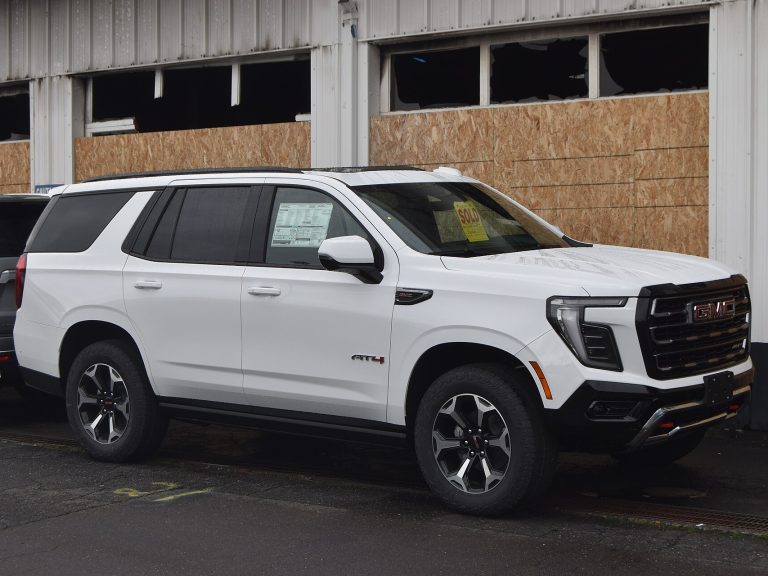
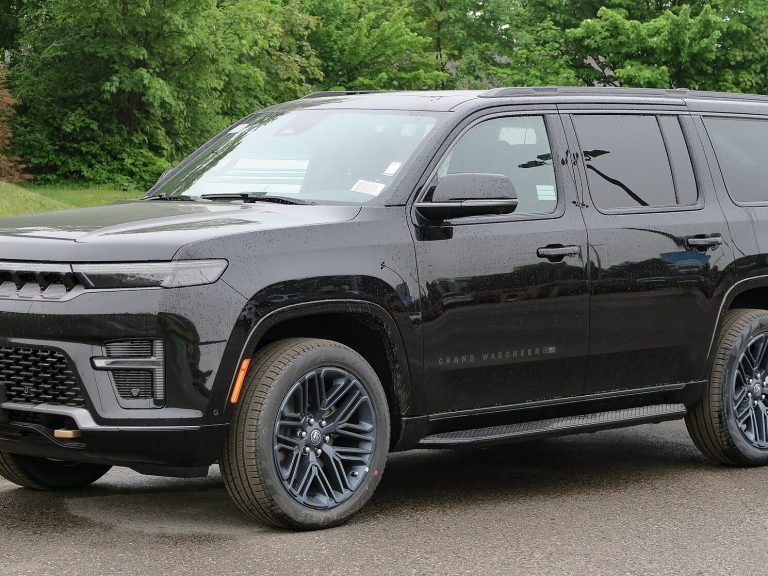
Yukon vs Grand Wagoneer
The Yukon and the Grand Wagoneer land in the same full-size suv category, so the comparison is fair, and the differences are telling. By our tally, the Grand Wagoneer leads 2 of 3 areas. The engine & performance section is where it pulls furthest ahead of the Yukon.
At a glance
- Engine & Performance Grand Wagoneer wins
- Space & Practicality Trade-off
- Off-road & Towing Grand Wagoneer wins
- Price Grand Wagoneer wins
- Engine & Performance0.0
- Space & Practicality5.3
- Off-road & Towing4.1
- Engine & Performance6.5
- Space & Practicality3.7
- Off-road & Towing10.0
Spec scores (0 to 10) are calculated from manufacturer specs against other models in the same class. See how the formula works. They are not reviews or user ratings.
Key Differences
-
The Grand Wagoneer has 65 hp more power
The spread here is large: 420 hp on the Grand Wagoneer versus 355 hp on the Yukon. Expect to notice it. Power is only part of the story; weight, gearing and torque delivery shape how quick a car feels.
-
The Yukon has 30% more maximum cargo space
Of all the specs we compared, this is one where the Yukon makes its strongest case: 122.9 cu ft against 94.2 cu ft. Check the shape of the load floor too: a flat floor can matter as much as the number.
-
The Grand Wagoneer has 85 lb-ft more torque
The Grand Wagoneer clearly leads on torque, and 468 lb-ft versus 383 lb-ft is a difference that reaches well beyond the spec sheet. More torque means stronger pulling from low speeds, which you feel when accelerating from a stop or climbing grades.
-
The Grand Wagoneer has 7.5% more cargo space
This one is close enough that other factors could outweigh it, but on paper the Grand Wagoneer leads with 27.4 cu ft to 25.5 cu ft. The Grand Wagoneer’s larger cargo area makes family trips and big shopping runs easier.
-
The Grand Wagoneer has 1,600 lb more towing capacity
Only a little separates them: 10,000 lb on the Grand Wagoneer, 8,400 lb on the Yukon. A higher towing capacity lets you pull bigger trailers, boats and campers.
Design & Size
Dimensions
| Spec | Yukon | Grand Wagoneer |
|---|---|---|
| Length | N/A (not specified) | 214.7 in |
| Width (no mirrors) | 81 in | 83.6 in |
| Wheelbase | 120.9 in | 123 in |
Engine & Performance
Grand Wagoneer leads
On engine & performance, the gap between these two is wide, and it favors the Grand Wagoneer. The Grand Wagoneer steps ahead thanks to 65 hp more power. The Grand Wagoneer’s extra output gives it more in reserve when you need to get up to speed. That makes the Grand Wagoneer the natural choice for buyers focused on engine & performance.
Total system output
Yukon: 355 hp Grand Wagoneer: 420 hp More power helps with merging, overtaking and climbing hills, especially with passengers and luggage on board.
Torque
Yukon: 383 lb-ft Grand Wagoneer: 468 lb-ft The Grand Wagoneer’s extra torque makes it more relaxed when fully loaded or towing.
Space & Practicality
Trade-off
What you gain in one place you lose in another: 30% more maximum cargo space with the Yukon, 7.5% more cargo space with the Grand Wagoneer. Weigh both advantages honestly; the one you’d miss more is your answer on space & practicality.
Cargo (seats folded)
Yukon: 122.9 cu ft Grand Wagoneer: 94.2 cu ft Maximum cargo space with the seats folded matters when you move furniture, bikes or bulky gear.
Cargo (behind rear seats)
Yukon: 25.5 cu ft Grand Wagoneer: 27.4 cu ft Cargo figures are measured in different ways by different makers, so small gaps may not show in practice.
Off-road & Towing
Grand Wagoneer leads
The off-road & towing comparison is tighter than it first looks, with the Grand Wagoneer marginally ahead. Here the Grand Wagoneer offers 1,600 lb more towing capacity. Towing ratings depend on configuration and equipment, so check the exact trim you’re looking at. The off-road & towing verdict goes to the Grand Wagoneer.
Max towing
Yukon: 8,400 lb Grand Wagoneer: 10,000 lb If you tow regularly, the Grand Wagoneer’s higher rating gives you more margin.
Safety & Tech
The safety & tech data here comes as names and types, not scores. Check the table to see what each one uses.
Full Specifications
Engine & Performance
| Spec | Yukon | Grand Wagoneer |
|---|---|---|
| Powertrain | Gas | Gas |
| Engine | 5.3L V8 | 3.0L twin-turbo I6 (Hurricane SO) |
| Total system output | 355 hp | 420 hp (winner) |
| Torque | 383 lb-ft | 468 lb-ft (winner) |
| Transmission | 10-speed automatic | 8-speed automatic |
| Drivetrain | RWD (4WD available) | RWD (4x4 available) |
Fuel Economy & Range
| Spec | Yukon | Grand Wagoneer |
|---|---|---|
| Fuel economy (combined)EPA estimate where available | 17 mpg | N/A (not specified) |
| Fuel economy (city) | 15 mpg | N/A (not specified) |
| Fuel economy (highway) | 20 mpg | N/A (not specified) |
| Fuel tank | 24 gal | N/A (not specified) |
Space & Practicality
| Spec | Yukon | Grand Wagoneer |
|---|---|---|
| Seats | N/A (not specified) | 8 seats |
| Cargo (behind rear seats) | 25.5 cu ft | 27.4 cu ft (winner) |
| Cargo (seats folded) | 122.9 cu ft (winner) | 94.2 cu ft |
Off-road & Towing
| Spec | Yukon | Grand Wagoneer |
|---|---|---|
| Max towing | 8,400 lb | 10,000 lb (winner) Best towing in class |
| AWD / 4WD available | Yes | Yes |
Safety & Tech
| Spec | Yukon | Grand Wagoneer |
|---|---|---|
| Largest touchscreen | 16.8 in | N/A (not specified) |
| Apple CarPlay / Android Auto | N/A (not specified) | Wireless Apple CarPlay & Android Auto |
| Driver-assist suite | GMC Pro Safety | N/A (not specified) |
| Basic warranty | 3 yr / 36,000 mi | 3 yr / 36,000 mi |
Dimensions
| Spec | Yukon | Grand Wagoneer |
|---|---|---|
| Length | N/A (not specified) | 214.7 in |
| Width (no mirrors) | 81 in | 83.6 in |
| Wheelbase | 120.9 in | 123 in |
Price
| Spec | Yukon | Grand Wagoneer |
|---|---|---|
| Starting MSRP | $67,900 Priciest in class | $62,145 (winner) |
“N/A” means the manufacturer does not specify the value or we could not confirm it. Figures marked “manufacturer rating” are the maker’s own claims, not our measurements.
Price & Value
Price is almost a tie, with the Grand Wagoneer launching $5,755 below the Yukon. Value is clear-cut: the Grand Wagoneer saves $5,755 and leads in more areas.
Launch prices in the US as of October 2025; street prices move, so check before you buy.
Which One Should You Buy?
Choose the Yukon if…
- you want more room with the seats folded (122.9 cu ft vs 94.2 cu ft)
- you prefer staying with GMC
Choose the Grand Wagoneer if…
- you merge, overtake or climb hills with a full load (420 hp vs 355 hp)
- you want more pulling power from low speeds (468 lb-ft vs 383 lb-ft of torque)
- you want more cargo space behind the rear seats (27.4 cu ft vs 25.5 cu ft)
- you want the higher towing capacity (10,000 lb vs 8,400 lb)
- you’d put the $5,755 saving toward something else
Also Compared
Frequently Asked Questions
Which is better for most people, the Yukon or the Grand Wagoneer?
We’d point most buyers to the Grand Wagoneer. The main exception is if you know that 30% more maximum cargo space would make a real difference in your routine.
Is the Yukon cheaper than the Grand Wagoneer?
The Yukon launched at $5,755 more than the Grand Wagoneer, based on prices as of October 2025.
Executive Summary
Two companies, two answers to the same question. That’s how I see the Yukon from GMC and the Grand Wagoneer from Jeep. What tips it for me is that the Grand Wagoneer has 65 hp more power. Secondary, but worth mentioning: the Grand Wagoneer has 7.5% more cargo space. I don’t want to sell the Yukon short, though: it has 30% more maximum cargo space.
The Yukon makes sense for anyone who values cargo space; the Grand Wagoneer for anyone who values engine & performance.
My pick: the Grand Wagoneer, unless what you want most is 30% more maximum cargo space, in which case the Yukon earns its place.
Personal opinion based on the data above. Your priorities may differ.