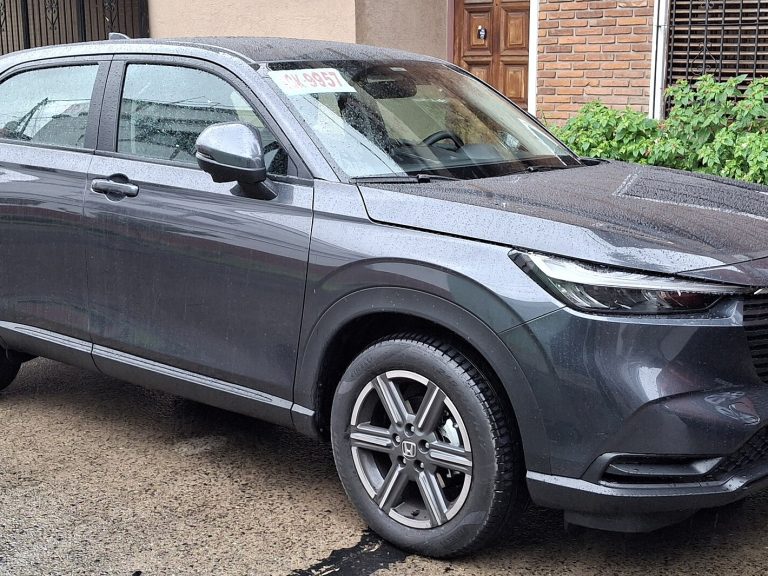
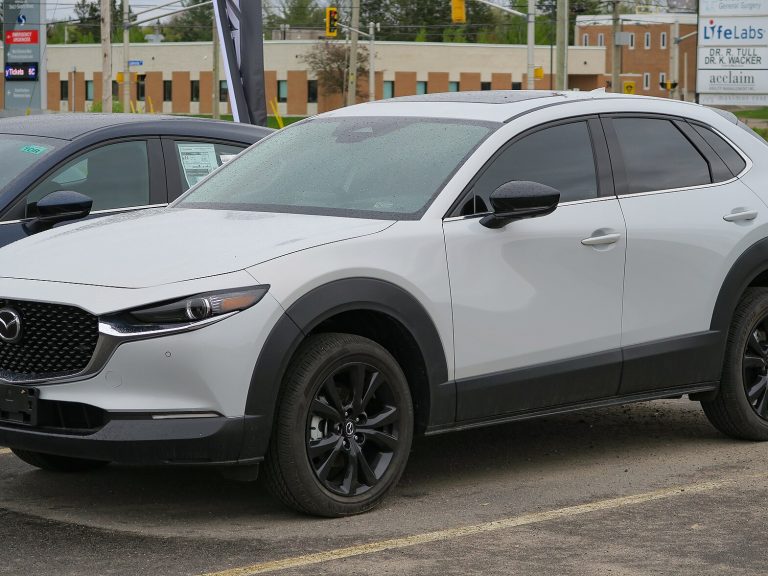
HR-V vs CX-30
In the subcompact suv class, the HR-V and the CX-30 are natural rivals. The HR-V and the CX-30 split the honors, with space & practicality going to the HR-V and engine & performance going to the CX-30.
At a glance
- Engine & Performance CX-30 wins
- Fuel Economy & Range Tie
- Space & Practicality HR-V wins
- Off-road & Towing Tie
- Engine & Performance1.7
- Fuel Economy & Range1.8
- Space & Practicality5.9
- Engine & Performance4.0
- Fuel Economy & Range2.3
- Space & Practicality2.5
Spec scores (0 to 10) are calculated from manufacturer specs against other models in the same class. See how the formula works. They are not reviews or user ratings.
Key Differences
-
The CX-30 has 33 hp more power
The CX-30 doesn’t just edge this one; 191 hp against 158 hp is a lead you’ll feel. Power is only part of the story; weight, gearing and torque delivery shape how quick a car feels.
-
The HR-V has 21% more cargo space
Big gap, real consequences. The HR-V’s 24.4 cu ft versus the CX-30’s 20.2 cu ft changes how the two compare in daily use. Cargo space behind the rear seats is what you use every day for groceries, strollers and luggage.
-
The CX-30 has 48 lb-ft more torque
The HR-V is clearly behind on torque (138 lb-ft against 186 lb-ft), and that’s one of its biggest weak spots in this matchup. The CX-30’s extra torque makes it more relaxed when fully loaded or towing.
-
The HR-V has 22% more maximum cargo space
On this line of the spec sheet, the HR-V is in a different league: 55.1 cu ft, next to 45.2 cu ft for the CX-30. Maximum cargo space with the seats folded matters when you move furniture, bikes or bulky gear.
Design & Size
Dimensions
| Spec | HR-V | CX-30 |
|---|---|---|
| Length | N/A (not specified) | 173 in |
| Width (no mirrors) | N/A (not specified) | 70.7 in |
| Height | N/A (not specified) | 61.7 in |
| Wheelbase | 104.5 in | 104.4 in |
Engine & Performance
CX-30 leads
In this area the CX-30 has a lead the HR-V can’t close. The CX-30 wins here with 33 hp more power. The CX-30’s extra output gives it more in reserve when you need to get up to speed. Weighing only engine & performance, the CX-30 comes out ahead.
Total system output
HR-V: 158 hp CX-30: 191 hp More power helps with merging, overtaking and climbing hills, especially with passengers and luggage on board.
Torque
HR-V: 138 lb-ft CX-30: 186 lb-ft More torque means stronger pulling from low speeds, which you feel when accelerating from a stop or climbing grades.
Fuel Economy & Range
Too close to call
There’s no meaningful winner in the fuel economy & range section; the two are too close to separate. So fuel economy & range is a non-factor here; move on to the areas where they actually differ.
Space & Practicality
HR-V leads
The HR-V clearly takes the space & practicality round. The HR-V takes this one with 21% more cargo space. The HR-V’s larger cargo area makes family trips and big shopping runs easier. That makes the HR-V the natural choice for buyers focused on space & practicality.
Cargo (behind rear seats)
HR-V: 24.4 cu ft CX-30: 20.2 cu ft Cargo figures are measured in different ways by different makers, so small gaps may not show in practice.
Cargo (seats folded)
HR-V: 55.1 cu ft CX-30: 45.2 cu ft The HR-V can swallow more with the seats down, which makes it more versatile for occasional big loads.
Off-road & Towing
Too close to call
In the off-road & towing category, the HR-V and the CX-30 land in almost the same place. In short, off-road & towing is a draw; the decision lies elsewhere.
Safety & Tech
In the safety & tech section, the key entries are names rather than numbers, so compare what the HR-V and the CX-30 list in the table below.
Full Specifications
Engine & Performance
| Spec | HR-V | CX-30 |
|---|---|---|
| Powertrain | Gas | Gas |
| Engine | 2.0L I4 | 2.5L I4 |
| Total system output | 158 hp | 191 hp (winner) |
| Torque | 138 lb-ft | 186 lb-ft (winner) |
| Transmission | CVT | 6-speed automatic |
| Drivetrain | FWD (AWD available) | AWD |
Fuel Economy & Range
| Spec | HR-V | CX-30 |
|---|---|---|
| Fuel economy (combined)EPA estimate where available | 28 mpg | 29 mpg |
| Fuel economy (city) | 26 mpg | 26 mpg |
| Fuel economy (highway) | 32 mpg | 33 mpg |
Space & Practicality
| Spec | HR-V | CX-30 |
|---|---|---|
| Seats | 5 seats | 5 seats |
| Cargo (behind rear seats) | 24.4 cu ft (winner) | 20.2 cu ft |
| Cargo (seats folded) | 55.1 cu ft (winner) | 45.2 cu ft |
Off-road & Towing
| Spec | HR-V | CX-30 |
|---|---|---|
| AWD / 4WD available | Yes | Yes |
Safety & Tech
| Spec | HR-V | CX-30 |
|---|---|---|
| Largest touchscreen | N/A (not specified) | 10.3 in |
| Driver-assist suite | Honda Sensing | Mazda i-Activsense |
| Basic warranty | 3 yr / 36,000 mi | 3 yr / 36,000 mi |
Dimensions
| Spec | HR-V | CX-30 |
|---|---|---|
| Length | N/A (not specified) | 173 in |
| Width (no mirrors) | N/A (not specified) | 70.7 in |
| Height | N/A (not specified) | 61.7 in |
| Wheelbase | 104.5 in | 104.4 in |
“N/A” means the manufacturer does not specify the value or we could not confirm it. Figures marked “manufacturer rating” are the maker’s own claims, not our measurements.
Which One Should You Buy?
Choose the HR-V if…
- you haul strollers, luggage or sports gear every week (24.4 cu ft vs 20.2 cu ft)
- you move bulky items now and then (55.1 cu ft vs 45.2 cu ft maximum cargo)
- you trust Honda and want to keep things familiar
Choose the CX-30 if…
- you want more power (191 hp vs 158 hp)
- you often drive loaded up or with a trailer (186 lb-ft vs 138 lb-ft of torque)
- you’re comfortable with how Mazda does things
Also Compared
Frequently Asked Questions
Which is better for most people, the HR-V or the CX-30?
There’s no single right answer. The HR-V leads on space & practicality and the CX-30 on engine & performance.
Executive Summary
Cross-brand comparisons are where I find the real differences in philosophy, and the HR-V versus the CX-30 shows that nicely. I keep coming back to one thing: the HR-V gets 21% more cargo space. Fairness check: the CX-30 does come with 33 hp more power.
The HR-V is built for people who weigh space & practicality heavily, and the CX-30 for people who weigh engine & performance.
My pick: it depends. Go for the HR-V if space & practicality comes first for you, or the CX-30 if engine & performance does.
Personal opinion based on the data above. Your priorities may differ.