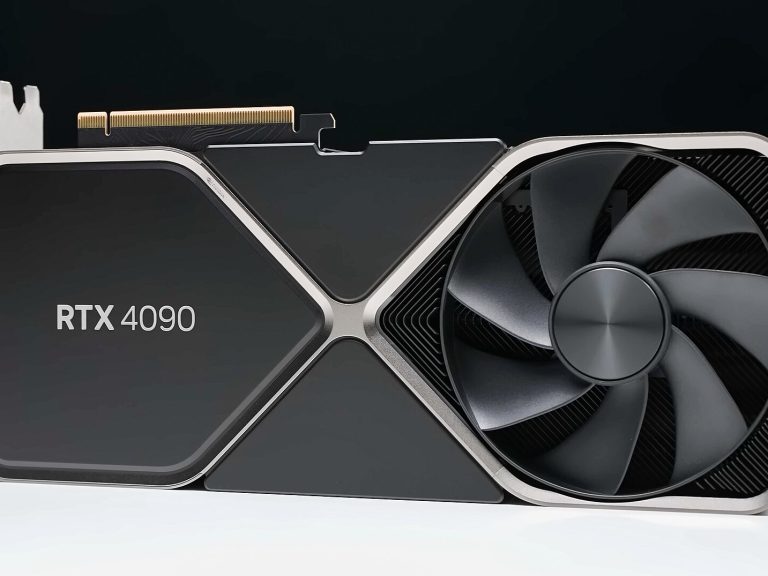
RTX 4090 vs RTX 5090: Is the Upgrade Worth It?
One generation separates the RTX 4090 from the RTX 5090, and a generation can mean a lot or surprisingly little. The numbers lean one way: the RTX 5090 comes out ahead in 2 of the 3 areas we compared, with its clearest lead in the gpu & performance category. Keep the price gap in mind throughout: $400 separates the RTX 4090 from the RTX 5090 at launch.
At a glance
- GPU & Performance RTX 5090 wins
- Memory RTX 5090 wins
- Power & Thermals RTX 4090 wins
- Price RTX 4090 wins
- GPU & Performance6.6
- Memory0.3
- Power & Thermals5.7
- GPU & Performance9.8
- Memory10.0
- Power & Thermals0.0
Spec scores (0 to 10) are calculated from manufacturer specs against other models in the same class. See how the formula works. They are not reviews or user ratings.
Key Differences
-
The RTX 5090 has 8 GB more VRAM
The RTX 4090 gives up a lot on vram: 24 GB, compared with 32 GB on the RTX 5090. At high resolutions or with texture packs, running out of VRAM can hurt more than a small speed gap.
-
The RTX 5090 has 27% more theoretical FP32 compute
Few buyers will miss this one. The RTX 5090 brings 104.9 TFLOPS to the table; the RTX 4090 brings 82.6 TFLOPS. Architectures use their compute differently, so treat the gap as a guide and look at game benchmarks for the details.
-
The RTX 5090 has 33% more shader units
When it comes to shader units, the RTX 5090 wins comfortably with 21,760 against 16,384. Treat shader count as a strong hint about performance tier, then check benchmarks for the games you actually play.
-
The RTX 4090 has 125 W lower board power
It’s a lopsided result (450 W for the RTX 4090, 575 W for the RTX 5090) and one of the main reasons to choose between them. The RTX 4090 draws less power, which makes it easier to cool in compact cases.
-
The RTX 5090 has 78% more memory bandwidth
The spread here is large: 1,792 GB/s on the RTX 5090 versus 1,008 GB/s on the RTX 4090. Expect to notice it. The RTX 5090 has more bandwidth to work with, helping it hold up in memory-heavy games.
Design & Size
- RTX 4090 11.97 in × 3 slots
- RTX 5090 11.97 in × 2 slots
The RTX 4090 and the RTX 5090 take up almost exactly the same space.
Size & Connectivity
| Spec | RTX 4090 | RTX 5090 |
|---|---|---|
| Reference card length | 11.97 in | 11.97 in |
| Slot width | 3 slots | 2 slots |
| Display outputs | 3x DisplayPort 1.4a, 1x HDMI 2.1 | 3x DisplayPort 2.1b, 1x HDMI 2.1b |
GPU & Performance
RTX 5090 leads
This section belongs to the RTX 5090. In gpu & performance, it leads the RTX 4090 by a margin that’s hard to ignore. On its side, the RTX 5090 has 27% more theoretical FP32 compute. The RTX 5090 has more theoretical compute, which often, but not always, translates into higher frame rates. The RTX 4090 adds. For gpu & performance, the RTX 5090 is the one to beat.
FP32 compute
RTX 4090: 82.6 TFLOPS RTX 5090: 104.9 TFLOPS FP32 compute is a theoretical peak that combines shader count and clock speed, a quick way to size up raw power.
Shader units
RTX 4090: 16,384 RTX 5090: 21,760 Shader units do most of the heavy lifting in games, so more of them usually means more frames per second within the same architecture.
Memory
RTX 5090 leads
The memory numbers point firmly in one direction: toward the RTX 5090. The RTX 5090 brings 8 GB more VRAM. More VRAM lets the card hold higher-resolution textures and bigger scenes without stutter. That makes the RTX 5090 the natural choice for buyers focused on memory.
VRAM
RTX 4090: 24 GB RTX 5090: 32 GB Newer games tend to ask for more video memory, so the RTX 5090’s extra VRAM helps the card age better.
Memory bandwidth
RTX 4090: 1,008 GB/s RTX 5090: 1,792 GB/s Memory bandwidth decides how quickly the GPU can feed itself with data, which matters most at 1440p and 4K.
Features
There isn’t a number to compare on features, just names. Look at the rows below to see how the RTX 4090 and the RTX 5090 differ.
Power & Thermals
RTX 4090 leads
The RTX 4090 dominates the power & thermals section, and the gaps are large enough to matter in daily use. The RTX 4090 delivers 125 W lower board power. Higher board power often comes with higher performance, so the RTX 5090’s appetite may be part of the price of its speed. In short, the RTX 4090 is the better-equipped card for power & thermals.
Total board power
RTX 4090: 450 W RTX 5090: 575 W Lower board power means less heat, quieter cooling and a smaller impact on your electricity bill.
Recommended PSU
RTX 4090: 850 W RTX 5090: 1,000 W Recommendations include a safety margin for the rest of the system, so they’re a guide rather than a hard limit.
Full Specifications
GPU & Performance
| Spec | RTX 4090 | RTX 5090 |
|---|---|---|
| Architecture | Ada Lovelace | Blackwell |
| GPU die | AD102 | GB202 |
| Process | TSMC 4N | TSMC 4N |
| Shader units | 16,384 | 21,760 (winner) Most shader units |
| Ray tracing units | 128 | 170 (winner) Most ray tracing units |
| Base clock | 2,235 MHz (winner) Highest base clock | 2,010 MHz |
| Boost clock | 2,520 MHz (winner) Highest boost clock | 2,410 MHz |
| FP32 computeTheoretical peak; AMD counts dual-issue, so compare within a brand only | 82.6 TFLOPS | 104.9 TFLOPS (winner) Most compute in class |
Memory
| Spec | RTX 4090 | RTX 5090 |
|---|---|---|
| VRAM | 24 GB | 32 GB (winner) Most VRAM in class |
| Memory type | GDDR6X | GDDR7 |
| Memory bus | 384-bit | 512-bit (winner) Widest memory bus |
| Memory bandwidth | 1,008 GB/s | 1,792 GB/s (winner) Most memory bandwidth |
Features
| Spec | RTX 4090 | RTX 5090 |
|---|---|---|
| Upscaling | DLSS Super Resolution | DLSS 4 Super Resolution |
| Frame generation | DLSS Frame Generation (2x) | DLSS 4 Multi Frame Generation (up to 4x) |
| PCIe interface | PCIe 4.0 x16 | PCIe 5.0 x16 |
Power & Thermals
| Spec | RTX 4090 | RTX 5090 |
|---|---|---|
| Total board power | 450 W (winner) | 575 W Most power-hungry in class |
| Recommended PSU | 850 W (winner) | 1,000 W Biggest PSU requirement |
| Power connector | 1x 16-pin (12VHPWR) | 1x 16-pin (12V-2x6) |
Size & Connectivity
| Spec | RTX 4090 | RTX 5090 |
|---|---|---|
| Reference card length | 11.97 in | 11.97 in |
| Slot width | 3 slots | 2 slots |
| Display outputs | 3x DisplayPort 1.4a, 1x HDMI 2.1 | 3x DisplayPort 2.1b, 1x HDMI 2.1b |
Price
| Spec | RTX 4090 | RTX 5090 |
|---|---|---|
| Launch price (MSRP) | $1,599 (winner) | $1,999 Priciest in class |
“N/A” means the manufacturer does not specify the value or we could not confirm it. Figures marked “manufacturer rating” are the maker’s own claims, not our measurements.
Price & Value
The RTX 4090 undercut the RTX 5090 by $400 at launch, which works out to 25%. For $400 more, the RTX 5090 adds 8 GB more VRAM and 27% more theoretical FP32 compute. Whether that’s good value depends on how much you need those upgrades.
These are US launch prices, recorded January 2025; what you pay today may be higher or lower.
Which One Should You Buy?
Choose the RTX 4090 if…
- you care about your power bill and a quieter case (450 W vs 575 W)
- you want to keep your current power supply (850 W vs 1,000 W recommended PSU)
- you care about clock speed under sustained load (2,235 MHz vs 2,010 MHz base)
- you care about peak clock speed (2,520 MHz vs 2,410 MHz boost)
- you want more value for your money ($400 less at launch)
Choose the RTX 5090 if…
- you play at high resolutions with high-quality textures (32 GB vs 24 GB VRAM)
- you run compute-heavy work alongside gaming (104.9 TFLOPS vs 82.6 TFLOPS FP32)
- you want more shader units working on every frame (21,760 vs 16,384)
- you game at high resolutions where bandwidth matters (1,792 GB/s vs 1,008 GB/s)
- you want the newer generation
Also Compared
Frequently Asked Questions
Should I buy the RTX 4090 or the RTX 5090?
The RTX 5090 wins more of the areas we compared, so it’s the safer pick unless you already have the RTX 4090 and it works fine.
Is the RTX 5090 worth it over the RTX 4090?
It’s one of the more worthwhile generational jumps: the RTX 5090 offers 8 GB more VRAM, 27% more theoretical FP32 compute and 33% more shader units compared with the RTX 4090.
Which is larger, the RTX 4090 or the RTX 5090?
Neither by much. The RTX 4090 and the RTX 5090 have nearly identical dimensions.
Does the RTX 4090 perform better than the RTX 5090?
On paper, the RTX 5090 is the stronger performer, with 27% more theoretical FP32 compute and 33% more shader units.
Is the RTX 4090 cheaper than the RTX 5090?
Going by launch prices, the RTX 4090 costs $400 less than the RTX 5090. Prices as of January 2025; current offers may differ.
Executive Summary
I’ll keep this simple. The RTX 5090 is the successor to the RTX 4090, and the question is whether the gap justifies a switch. Honestly, 8 GB more VRAM on the RTX 5090 does a lot of the persuading for me. There’s a bonus as well: the RTX 5090 has 27% more theoretical FP32 compute. Don’t write off the RTX 4090 entirely: it has 125 W lower board power.
If you’d rather have strength in power & thermals, go with the RTX 4090. If gpu & performance is what you’d miss, go with the RTX 5090.
My pick: the RTX 5090, though if your RTX 4090 still does the job, keep it a while longer.
Personal opinion based on the data above. Your priorities may differ.