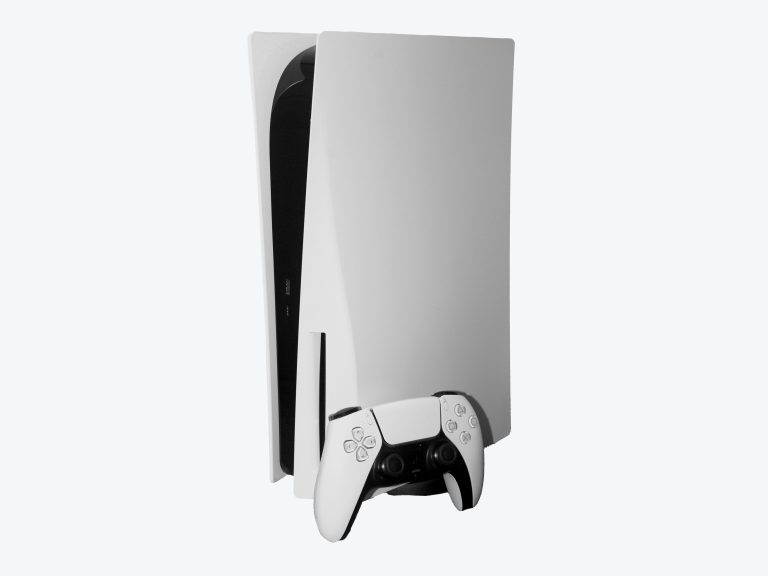
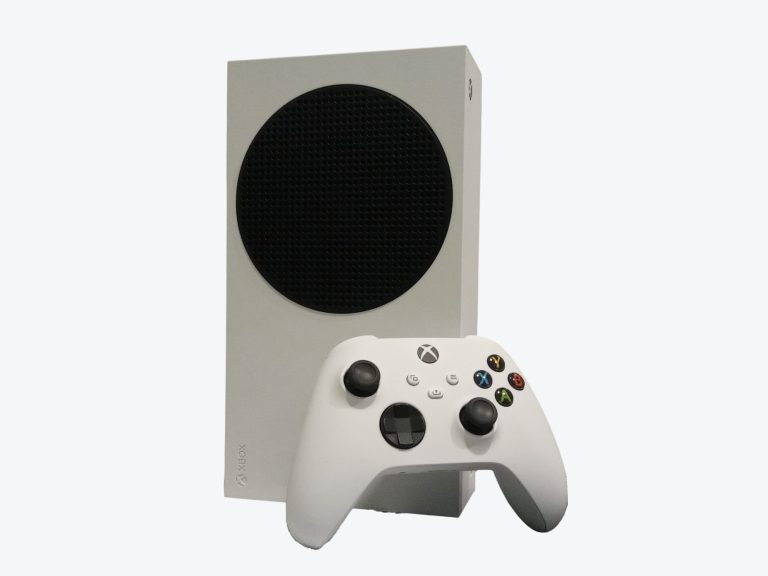
PS5 vs Xbox Series S
In the home console class, the PS5 and the Xbox Series S are natural rivals. Here the verdict on paper is fairly clear. The PS5 takes 2 of 2 areas against the Xbox Series S, starting with memory & storage. Then there’s the $201 question: that’s how much more the PS5 launched at compared with the Xbox Series S. So which one fits you better? The breakdown below should make that clearer.
At a glance
- Performance PS5 wins
- Memory & Storage PS5 wins
- Price Xbox Series S wins
- Performance5.3
- Memory & Storage6.2
- Performance2.9
- Memory & Storage1.3
Spec scores (0 to 10) are calculated from manufacturer specs against other models in the same class. See how the formula works. They are not reviews or user ratings.
Key Differences
-
The PS5 has 157% more GPU compute
The numbers aren’t close. The PS5 lists 10.28 TFLOPS for gpu compute (fp32), while the Xbox Series S lists 4 TFLOPS. GPU compute is a headline figure for graphics power, and more of it usually means sharper images or smoother frame rates.
-
The PS5 has 313 GB more built-in storage
A clear win for the PS5: 825 GB against 512 GB. Few specs in this matchup are as one-sided. Modern games are large, so more built-in storage means fewer installs to juggle.
-
The PS5 has 6 GB more memory
Here the PS5 pulls well ahead of the Xbox Series S, with 16 GB compared to 10 GB. More system memory gives games room for bigger worlds, sharper textures and faster streaming of assets.
-
The Xbox Series S has a 5.67 lb lighter body
The Xbox Series S doesn’t just edge this one; 4.25 lb against 9.92 lb is a lead you’ll feel. Extra weight often reflects bigger cooling or batteries, so the PS5 may be heavier for a reason.
-
The PS5 has 100% more memory bandwidth
Big gap, real consequences. The PS5’s 448 GB/s versus the Xbox Series S’s 224 GB/s changes how the two compare in daily use. Bandwidth works hand in hand with GPU power; one without the other can become a bottleneck.
-
The PS5 has
The PS5 is larger on depth, at 10.24 in compared with 5.94 in. A deeper body needs more shelf space, while a shallower one is easier to place.
Design & Size
- PS5 15.35 in × 4.09 in × 10.24 in
- Xbox Series S 10.83 in × 2.52 in × 5.94 in
Side by side, the PS5 is the one that fills more space; the Xbox Series S keeps things tighter. The PS5 is 5.67 lb heavier than the Xbox Series S.
Design & Size
| Spec | PS5 | Xbox Series S |
|---|---|---|
| Width | 15.35 in | 10.83 in |
| Height | 4.09 in | 2.52 in |
| Depth | 10.24 in | 5.94 in |
| Weight | 9.92 lb Heaviest in class | 4.25 lb (winner) Lightest in class |
Performance
PS5 leads
No contest in performance: the PS5 is the stronger of the two. The PS5 comes with 157% more GPU compute. Teraflops don’t capture everything (memory, upscaling and optimization matter too), but they’re a useful yardstick. Bottom line for performance: the PS5 has the edge.
GPU compute (FP32)
PS5: 10.28 TFLOPS Xbox Series S: 4 TFLOPS The PS5’s extra compute gives games more room for higher resolutions and richer effects.
Memory & Storage
PS5 leads
If memory & storage is high on your list, the PS5 makes the stronger case by a wide margin. The PS5 takes this one with 313 GB more built-in storage. With the PS5, you can keep more games ready to play without deleting old favorites. Prioritize memory & storage, and the PS5 is where you should land.
Built-in storage
PS5: 825 GB Xbox Series S: 512 GB Check the expansion options in the table; extra storage can often be added later, at a cost.
System memory
PS5: 16 GB Xbox Series S: 10 GB The PS5’s extra memory is a form of future-proofing for more demanding games.
Features & Media
The features & media comparison is about what’s inside rather than how much. See the table for the PS5’s and the Xbox Series S’s entries.
Full Specifications
Performance
| Spec | PS5 | Xbox Series S |
|---|---|---|
| CPU | AMD Zen 2, 8 cores / 16 threads | Custom AMD Zen 2, 8 cores |
| CPU max clock | 3.50 GHz | 3.60 GHz |
| GPU | AMD Radeon RDNA 2-based, up to 2.23 GHz | Custom AMD RDNA 2, 1.565 GHz |
| GPU compute units | 36 | 20 Fewest GPU compute units |
| GPU compute (FP32)Manufacturer figure | 10.28 TFLOPS (winner) | 4 TFLOPS |
| Max output resolution | 8K output; 4K at 120 Hz | 1440p target; 4K upscaled output |
| Max frame rate | 120 fps | 120 fps |
| Hardware ray tracing | Yes | Yes |
Memory & Storage
| Spec | PS5 | Xbox Series S |
|---|---|---|
| System memory | 16 GB (winner) | 10 GB |
| Memory bandwidth | 448 GB/s (winner) | 224 GB/s |
| Built-in storage | 825 GB (winner) | 512 GB |
| Storage type | Custom NVMe SSD | Custom NVMe SSD |
| Storage expansion | M.2 NVMe SSD slot; USB extended storage | Storage Expansion Card slot; USB 3.1 external drive |
Features & Media
| Spec | PS5 | Xbox Series S |
|---|---|---|
| Disc drive | Ultra HD Blu-ray | None |
| Handheld play | No | No |
| Built-in screen | None | None |
| Backward compatibility | Most PS4 games | Xbox One and select Xbox 360 and original Xbox games |
| Wi-Fi | Wi-Fi 6 | Wi-Fi 5 (802.11ac) |
Design & Size
| Spec | PS5 | Xbox Series S |
|---|---|---|
| Width | 15.35 in | 10.83 in |
| Height | 4.09 in | 2.52 in |
| Depth | 10.24 in | 5.94 in |
| Weight | 9.92 lb Heaviest in class | 4.25 lb (winner) Lightest in class |
Price
| Spec | PS5 | Xbox Series S |
|---|---|---|
| Launch price | $500 | $299 (winner) Lowest price in class |
“N/A” means the manufacturer does not specify the value or we could not confirm it. Figures marked “manufacturer rating” are the maker’s own claims, not our measurements.
Price & Value
Price alone could settle this for some buyers, with the Xbox Series S launching $201 lower, a gap of 67%. That $201 gap does buy something tangible: 157% more GPU compute and 313 GB more built-in storage.
Launch prices in the US as of November 2020; street prices move, so check before you buy.
Which One Should You Buy?
Choose the PS5 if…
- you want more GPU compute for sharper, smoother games (10.28 TFLOPS vs 4 TFLOPS)
- you want more built-in storage (825 GB vs 512 GB)
- you want more system memory (16 GB vs 10 GB)
- you care about how fast the hardware can feed its GPU (448 GB/s vs 224 GB/s)
Choose the Xbox Series S if…
- you move your console between rooms or take it on trips (4.25 lb vs 9.92 lb)
- you want the lower price and can live with the trade-offs ($201 less)
- you like a console that takes up less room
Also Compared
Frequently Asked Questions
Which is better for most people, the PS5 or the Xbox Series S?
We’d point most buyers to the PS5. The main exception is if you’d trade the rest for a 5.67 lb lighter body.
Is the PS5 bigger than the Xbox Series S?
Size goes the other way: the PS5 is larger (15.35 × 4.09 × 10.24 in), and the Xbox Series S is the smaller option (10.83 × 2.52 × 5.94 in).
Which is faster, the PS5 or the Xbox Series S?
The PS5 should be the quicker of the two, with 157% more GPU compute on its side.
Is the PS5 cheaper than the Xbox Series S?
The PS5 launched at $201 more than the Xbox Series S, based on prices as of November 2020.
Which weighs less, the PS5 or the Xbox Series S?
On the scale, the Xbox Series S comes out ahead at 5.67 lb lighter than the PS5.
Does the PS5 have more storage than the Xbox Series S?
The PS5 offers more, with 825 GB against 512 GB.
Executive Summary
The PS5 and the Xbox Series S come from rival camps, Sony and Microsoft, but they’re chasing the same person: you. If I had to name one reason, it’s that the PS5 brings 157% more GPU compute. Nor should you ignore that the PS5 has 313 GB more built-in storage. Still, if you care most about a 5.67 lb lighter body, the Xbox Series S deserves a look.
Choose by what you’d use most: performance leads to the PS5, portability leads to the Xbox Series S.
My pick: the PS5, unless you need a 5.67 lb lighter body, which only the Xbox Series S offers.
Personal opinion based on the data above. Your priorities may differ.