RX 7800 XT vs RTX 3070
Put the RX 7800 XT next to the RTX 3070 and you have AMD and NVIDIA going after exactly the same midrange graphics card crowd. The data doesn’t leave much room for doubt: 1 of 2 areas go to the RX 7800 XT, and the gap is widest in memory.
At a glance
- Memory RX 7800 XT wins
- Power & Thermals RTX 3070 wins
- Price Tie
- GPU & Performance7.8
- Memory10.0
- Power & Thermals0.0
- GPU & Performance5.6
- Memory3.1
- Power & Thermals3.4
Spec scores (0 to 10) are calculated from manufacturer specs against other models in the same class. See how the formula works. They are not reviews or user ratings.
Key Differences
-
The RX 7800 XT has 8 GB more VRAM
The spread here is large: 16 GB on the RX 7800 XT versus 8 GB on the RTX 3070. Expect to notice it. At high resolutions or with texture packs, running out of VRAM can hurt more than a small speed gap.
-
The RTX 3070 has 43 W lower board power
Of all the specs we compared, this is one where the RTX 3070 makes its strongest case: 220 W against 263 W. Higher board power often comes with higher performance, so the RX 7800 XT’s appetite may be part of the price of its speed.
-
The RX 7800 XT has 39% more memory bandwidth
The RX 7800 XT clearly leads on memory bandwidth, and 624 GB/s versus 448 GB/s is a difference that reaches well beyond the spec sheet. The RX 7800 XT has more bandwidth to work with, helping it hold up in memory-heavy games.
-
The RTX 3070 has a smaller 650 W PSU requirement
Only a little separates them: 650 W on the RTX 3070, 700 W on the RX 7800 XT. The recommended power supply tells you whether your current PSU can handle the card without an upgrade.
Design & Size
- RX 7800 XT 10.51 in × 2 slots
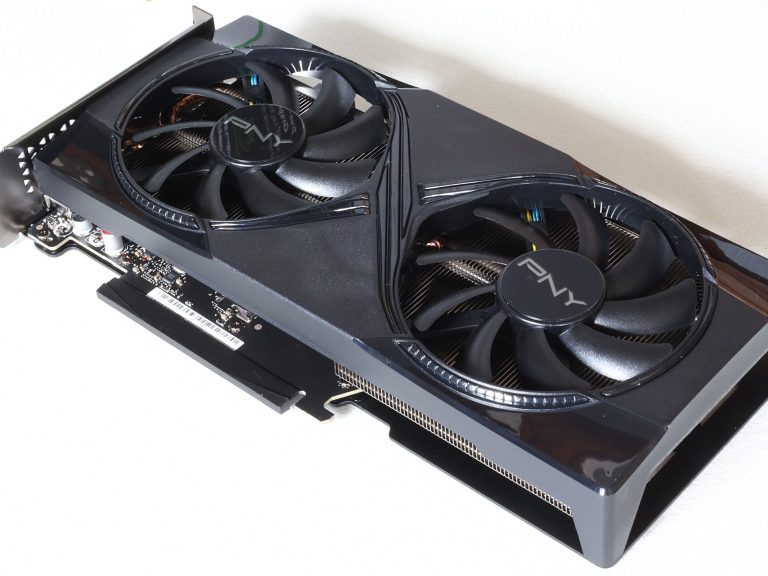
- RTX 3070 9.53 in × 2 slots
Side by side, the RX 7800 XT is the one that fills more space; the RTX 3070 keeps things tighter.
Size & Connectivity
| Spec | RX 7800 XT | RTX 3070 |
|---|---|---|
| Reference card length | 10.51 in | 9.53 in |
| Slot width | 2 slots | 2 slots |
| Display outputs | N/A (not specified) | 3x DisplayPort 1.4a, 1x HDMI 2.1 |
GPU & Performance
We don’t score this area directly, because the gpu & performance specs are labels rather than measurements. The table shows what each lists.
Memory
RX 7800 XT leads
When it comes to memory, the RX 7800 XT is comfortably ahead. On the RX 7800 XT, you get 8 GB more VRAM. More VRAM lets the card hold higher-resolution textures and bigger scenes without stutter. On memory alone, the RX 7800 XT gets the nod.
VRAM
RX 7800 XT: 16 GB RTX 3070: 8 GB Newer games tend to ask for more video memory, so the RX 7800 XT’s extra VRAM helps the card age better.
Memory bandwidth
RX 7800 XT: 624 GB/s RTX 3070: 448 GB/s Memory bandwidth decides how quickly the GPU can feed itself with data, which matters most at 1440p and 4K.
Features
On features, the useful details are the names in the table: what each one uses, not a figure we can rank.
Power & Thermals
RTX 3070 leads
On power & thermals, the gap between these two is wide, and it favors the RTX 3070. The RTX 3070 stands out with 43 W lower board power. Lower board power means less heat, quieter cooling and a smaller impact on your electricity bill. In short, the RTX 3070 is the better-equipped card for power & thermals.
Total board power
RX 7800 XT: 263 W RTX 3070: 220 W The RTX 3070 draws less power, which makes it easier to cool in compact cases.
Recommended PSU
RX 7800 XT: 700 W RTX 3070: 650 W With the RTX 3070, you’re more likely to keep your existing power supply, which can save real money.
Full Specifications
GPU & Performance
| Spec | RX 7800 XT | RTX 3070 |
|---|---|---|
| Architecture | RDNA 3 | Ampere |
| GPU die | Navi 32 | GA104 |
| Process | TSMC N5 (GCD) + N6 (MCD) chiplets | Samsung 8N |
| Shader units | 3,840 | 5,888 Most shader units |
| Ray tracing units | 60 Most ray tracing units | 46 |
| Base clock | N/A (not specified) | 1,500 MHz |
| Boost clock | 2,430 MHz | 1,725 MHz |
| FP32 computeTheoretical peak; AMD counts dual-issue, so compare within a brand only | 37.3 TFLOPS Most compute in class | 20.3 TFLOPS |
Memory
| Spec | RX 7800 XT | RTX 3070 |
|---|---|---|
| VRAM | 16 GB (winner) | 8 GB |
| Memory type | GDDR6 | GDDR6 |
| Memory bus | 256-bit | 256-bit |
| Memory bandwidth | 624 GB/s (winner) Most memory bandwidth | 448 GB/s |
Features
| Spec | RX 7800 XT | RTX 3070 |
|---|---|---|
| Upscaling | FSR 3 | DLSS Super Resolution |
| Frame generation | FSR 3 Frame Generation, AFMF 2 | No DLSS Frame Generation |
| PCIe interface | PCIe 4.0 x16 | PCIe 4.0 x16 |
Power & Thermals
| Spec | RX 7800 XT | RTX 3070 |
|---|---|---|
| Total board power | 263 W Most power-hungry in class | 220 W (winner) |
| Recommended PSU | 700 W Biggest PSU requirement | 650 W (winner) |
| Power connector | 2x 8-pin | 1x 12-pin |
Size & Connectivity
| Spec | RX 7800 XT | RTX 3070 |
|---|---|---|
| Reference card length | 10.51 in | 9.53 in |
| Slot width | 2 slots | 2 slots |
| Display outputs | N/A (not specified) | 3x DisplayPort 1.4a, 1x HDMI 2.1 |
Price
| Spec | RX 7800 XT | RTX 3070 |
|---|---|---|
| Launch price (MSRP) | $499 | $499 |
“N/A” means the manufacturer does not specify the value or we could not confirm it. Figures marked “manufacturer rating” are the maker’s own claims, not our measurements.
Price & Value
There’s no launch price gap between the RX 7800 XT and the RTX 3070.
These are US launch prices, recorded September 2023; what you pay today may be higher or lower.
Which One Should You Buy?
Choose the RX 7800 XT if…
- you play at high resolutions with high-quality textures (16 GB vs 8 GB VRAM)
- you want more memory bandwidth (624 GB/s vs 448 GB/s)
- you prefer a larger card and have the room for it
Choose the RTX 3070 if…
- you want lower power draw and less heat (220 W vs 263 W board power)
- you’re building on a modest power supply (650 W vs 700 W)
- you value compactness over sheer size
Also Compared
Frequently Asked Questions
Which is better for most people, the RX 7800 XT or the RTX 3070?
The RX 7800 XT makes more sense overall. Consider the alternative only if you value 43 W lower board power above everything else.
Is the RX 7800 XT bigger than the RTX 3070?
Size goes the other way: the RX 7800 XT is larger (10.51 in), and the RTX 3070 is the smaller option (9.53 in).
Does the RX 7800 XT perform better than the RTX 3070?
Performance is driven by RDNA 3 in the RX 7800 XT and Ampere in the RTX 3070; the spec table below shows the rest of the hardware.
Executive Summary
Here’s the short version of how I’d choose between the RX 7800 XT and the RTX 3070. What I like most about the RX 7800 XT here is 8 GB more VRAM. I don’t want to sell the RTX 3070 short, though: it has 43 W lower board power.
Choose by what you’d use most: memory leads to the RX 7800 XT, power & thermals leads to the RTX 3070.
My pick: the RX 7800 XT, with one exception: if your top priority is 43 W lower board power, go for the RTX 3070.
Personal opinion based on the data above. Your priorities may differ.