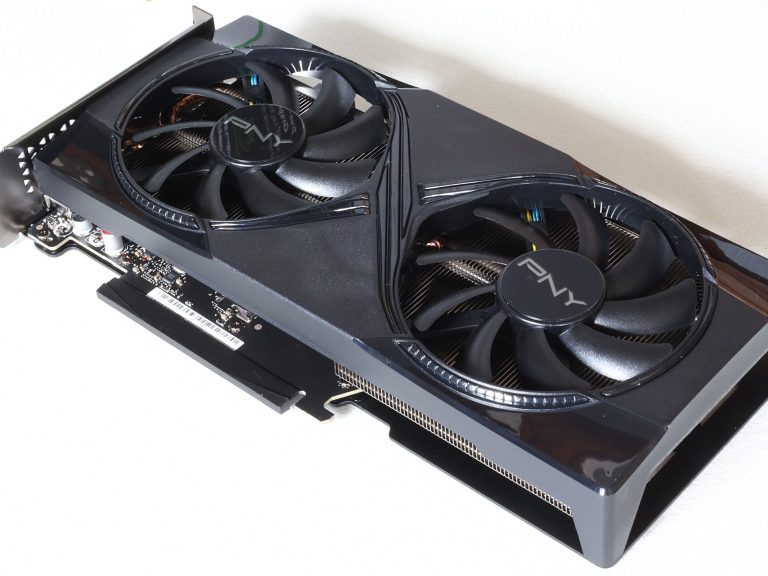
Graphics Cards
Midrange Graphics Card Comparisons
Midrange cards are where most people shopping for a solid 1080p-to-1440p gaming card end up, and it’s also the class where older high-end cards and current midrange models collide. A previous-generation card that once sat higher in the lineup can match a newer one in raw shader power, while the newer card brings lower power draw and features the older one lacks.
The biggest decision here is VRAM. You’ll find 8 GB, 12 GB and 16 GB cards in this class, sometimes as two versions of the same model. The GPU is identical, but the larger version keeps high texture settings usable for longer, and at 1440p that difference shows up sooner than at 1080p. If a card comes in two memory sizes, make sure the comparison you’re reading refers to the one you would actually buy.
Bus width and bandwidth come next. A narrow bus paired with fast memory can match a wider, older design on paper, and the large on-die caches in recent architectures reduce how often the GPU has to reach out to VRAM at all. That’s one reason raw bandwidth figures don’t compare perfectly between generations.
Features split the class as well. GeForce RTX 40 and 50 cards support DLSS Frame Generation; RTX 20 and 30 cards get DLSS upscaling but not DLSS frame generation. Radeon cards rely on FSR and AMD Fluid Motion Frames, and FSR 4 upscaling needs a Radeon RX 9000 card. For ray tracing, compare RT unit counts only between cards of the same brand.
Power is less of a worry than in higher classes, but check the recommended PSU if you’re upgrading an older system, and compare the card’s length with the space in your case before you order.
24 comparisons · 8 products
Products in This Class
Comparisons