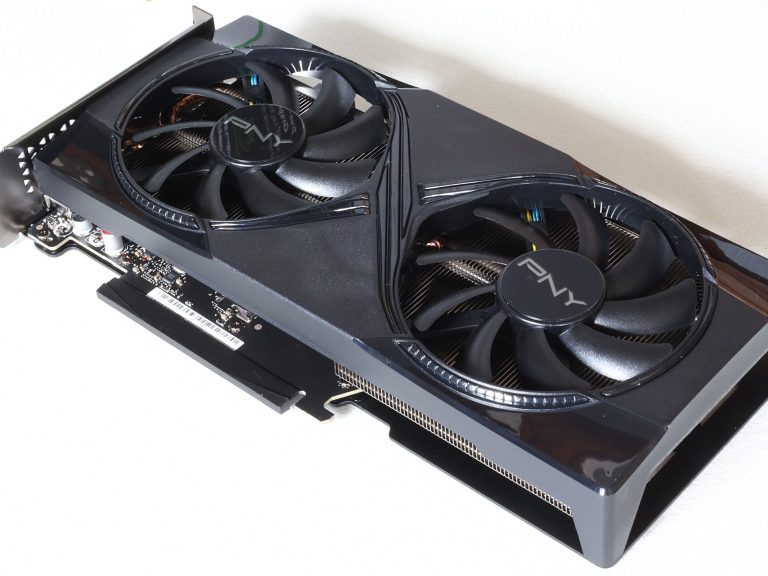
RX 7800 XT vs RTX 5060 Ti
AMD versus NVIDIA: the RX 7800 XT and the RTX 5060 Ti go after the same midrange graphics card buyer. Of the 2 areas we compared, the RX 7800 XT wins 1. If one area explains the result, it’s memory.
At a glance
- Memory RX 7800 XT wins
- Power & Thermals RTX 5060 Ti wins
- Price RTX 5060 Ti wins
- GPU & Performance7.8
- Memory10.0
- Power & Thermals0.0
- GPU & Performance5.5
- Memory6.4
- Power & Thermals8.7
Spec scores (0 to 10) are calculated from manufacturer specs against other models in the same class. See how the formula works. They are not reviews or user ratings.
Key Differences
-
The RTX 5060 Ti has 83 W lower board power
It’s a lopsided result (180 W for the RTX 5060 Ti, 263 W for the RX 7800 XT) and one of the main reasons to choose between them. Higher board power often comes with higher performance, so the RX 7800 XT’s appetite may be part of the price of its speed.
-
The RX 7800 XT has 39% more memory bandwidth
The spread here is large: 624 GB/s on the RX 7800 XT versus 448 GB/s on the RTX 5060 Ti. Expect to notice it. Bandwidth needs vary by architecture, so compare it alongside VRAM and cache rather than on its own.
-
The RX 7800 XT has a wider 256-bit memory bus
Of all the specs we compared, this is one where the RX 7800 XT makes its strongest case: 256-bit against 128-bit. The RX 7800 XT’s wider bus supports higher bandwidth, which helps most at high resolutions.
-
The RTX 5060 Ti has a smaller 450 W PSU requirement
The RTX 5060 Ti clearly leads on recommended psu, and 450 W versus 700 W is a difference that reaches well beyond the spec sheet. Recommendations include a safety margin for the rest of the system, so they’re a guide rather than a hard limit.
Design & Size
Size & Connectivity
| Spec | RX 7800 XT | RTX 5060 Ti |
|---|---|---|
| Reference card length | 10.51 in | N/A (not specified) |
| Slot width | 2 slots | N/A (not specified) |
GPU & Performance
The gpu & performance data here comes as names and types, not scores. Check the table to see what each one uses.
Memory
RX 7800 XT leads
No contest in memory: the RX 7800 XT is the stronger of the two. In its favor, the RX 7800 XT has 39% more memory bandwidth. The RX 7800 XT has more bandwidth to work with, helping it hold up in memory-heavy games. For anyone who cares most about memory, the RX 7800 XT is the safer choice.
Memory bandwidth
RX 7800 XT: 624 GB/s RTX 5060 Ti: 448 GB/s Memory bandwidth decides how quickly the GPU can feed itself with data, which matters most at 1440p and 4K.
Memory bus
RX 7800 XT: 256-bit RTX 5060 Ti: 128-bit Large on-chip caches can make up for a narrower bus, so bandwidth is the more telling number.
Features
This section is descriptive. The RX 7800 XT and the RTX 5060 Ti list different components for features, and the table spells them out.
Power & Thermals
RTX 5060 Ti leads
In the power & thermals category, the RTX 5060 Ti isn’t just ahead; it’s clearly ahead. The RTX 5060 Ti adds 83 W lower board power. Lower board power means less heat, quieter cooling and a smaller impact on your electricity bill. The power & thermals verdict goes to the RTX 5060 Ti.
Total board power
RX 7800 XT: 263 W RTX 5060 Ti: 180 W The RTX 5060 Ti draws less power, which makes it easier to cool in compact cases.
Recommended PSU
RX 7800 XT: 700 W RTX 5060 Ti: 450 W With the RTX 5060 Ti, you’re more likely to keep your existing power supply, which can save real money.
Full Specifications
GPU & Performance
| Spec | RX 7800 XT | RTX 5060 Ti |
|---|---|---|
| Architecture | RDNA 3 | Blackwell |
| GPU die | Navi 32 | GB206 |
| Process | TSMC N5 (GCD) + N6 (MCD) chiplets | TSMC 4N |
| Shader units | 3,840 | 4,608 |
| Ray tracing units | 60 Most ray tracing units | 36 |
| Base clock | N/A (not specified) | 2,407 MHz Highest base clock |
| Boost clock | 2,430 MHz | 2,572 MHz |
| FP32 computeTheoretical peak; AMD counts dual-issue, so compare within a brand only | 37.3 TFLOPS Most compute in class | 23.7 TFLOPS |
Memory
| Spec | RX 7800 XT | RTX 5060 Ti |
|---|---|---|
| VRAM | 16 GB | 16 GB |
| Memory type | GDDR6 | GDDR7 |
| Memory bus | 256-bit (winner) | 128-bit |
| Memory bandwidth | 624 GB/s (winner) Most memory bandwidth | 448 GB/s |
Features
| Spec | RX 7800 XT | RTX 5060 Ti |
|---|---|---|
| Upscaling | FSR 3 | DLSS 4 Super Resolution |
| Frame generation | FSR 3 Frame Generation, AFMF 2 | DLSS 4 Multi Frame Generation (up to 4x) |
| PCIe interface | PCIe 4.0 x16 | PCIe 5.0 x8 |
Power & Thermals
| Spec | RX 7800 XT | RTX 5060 Ti |
|---|---|---|
| Total board power | 263 W Most power-hungry in class | 180 W (winner) |
| Recommended PSU | 700 W Biggest PSU requirement | 450 W (winner) Smallest PSU requirement |
| Power connector | 2x 8-pin | N/A (not specified) |
Size & Connectivity
| Spec | RX 7800 XT | RTX 5060 Ti |
|---|---|---|
| Reference card length | 10.51 in | N/A (not specified) |
| Slot width | 2 slots | N/A (not specified) |
Price
| Spec | RX 7800 XT | RTX 5060 Ti |
|---|---|---|
| Launch price (MSRP) | $499 | $429 (winner) |
“N/A” means the manufacturer does not specify the value or we could not confirm it. Figures marked “manufacturer rating” are the maker’s own claims, not our measurements.
Price & Value
With just $70 between them at launch, the RTX 5060 Ti and the RX 7800 XT are priced as near equals. For $70 more, the RX 7800 XT adds 39% more memory bandwidth and a wider 256-bit memory bus. Whether that’s good value depends on how much you need those upgrades.
All prices are official US launch prices, last checked April 2025. Actual prices at stores may differ.
Which One Should You Buy?
Choose the RX 7800 XT if…
- you game at high resolutions where bandwidth matters (624 GB/s vs 448 GB/s)
- you push high resolutions where memory width helps (256-bit vs 128-bit bus)
- you already know your way around AMD’s products
Choose the RTX 5060 Ti if…
- you want lower power draw and less heat (180 W vs 263 W board power)
- you’re building on a modest power supply (450 W vs 700 W)
- you want the lower price and can live with the trade-offs ($70 less)
Also Compared
Frequently Asked Questions
Should I buy the RX 7800 XT or the RTX 5060 Ti?
We’d point most buyers to the RX 7800 XT. The main exception is if you know that 83 W lower board power would make a real difference in your routine.
Which is faster, the RX 7800 XT or the RTX 5060 Ti?
The RX 7800 XT uses RDNA 3, while the RTX 5060 Ti uses Blackwell. How that translates into speed depends on the workloads you care about.
Is the RX 7800 XT cheaper than the RTX 5060 Ti?
The RX 7800 XT launched at $70 more than the RTX 5060 Ti, based on prices as of April 2025.
Executive Summary
I don’t have a favorite brand in this fight between the RX 7800 XT and the RTX 5060 Ti. I just have opinions about the numbers. For me, the deciding factor is that only the RX 7800 XT gives you 39% more memory bandwidth. The RTX 5060 Ti has a trump card of its own in 83 W lower board power.
The way I see it, people who prioritize memory will be happier with the RX 7800 XT, and those who prioritize power & thermals with the RTX 5060 Ti.
My pick: the RX 7800 XT. I’d only go for the RTX 5060 Ti if you’d rather have 83 W lower board power on the RTX 5060 Ti.
Personal opinion based on the data above. Your priorities may differ.