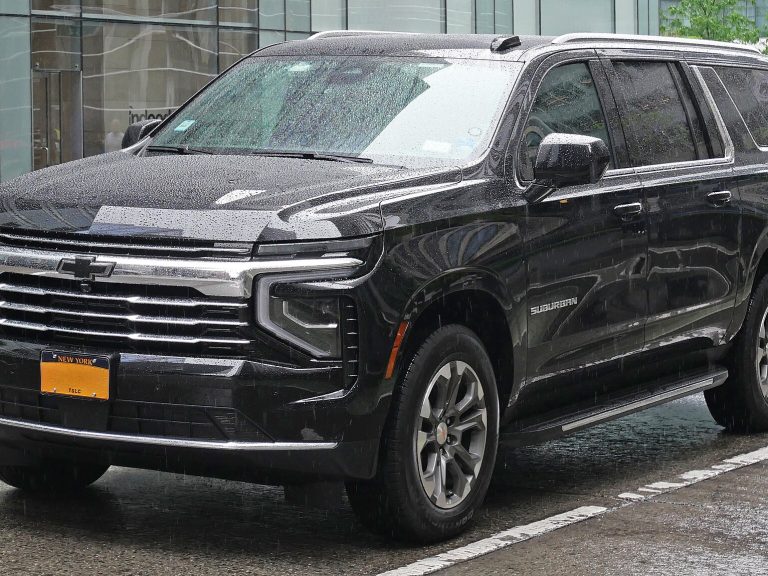
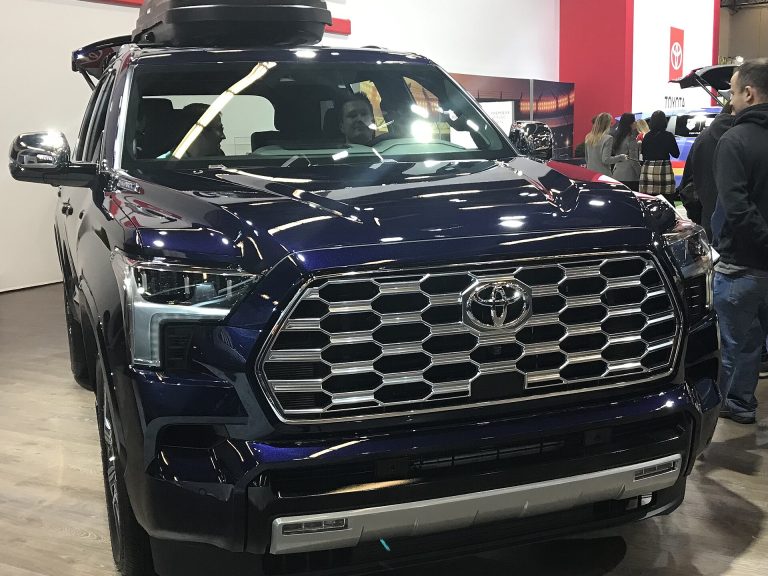
Suburban vs Sequoia
The Suburban and the Sequoia compete for the same spot on your shortlist, with Chevrolet and Toyota each making its case. The spec sheets tilt toward the Sequoia, which leads in 3 of 5 areas and opens its biggest gap on engine & performance.
At a glance
- Engine & Performance Sequoia wins
- Fuel Economy & Range Sequoia wins
- Space & Practicality Suburban wins
- Off-road & Towing Sequoia wins
- Safety & Tech Suburban wins
- Price Suburban wins
- Engine & Performance0.0
- Fuel Economy & Range0.0
- Space & Practicality10.0
- Off-road & Towing3.3
- Engine & Performance10.0
- Fuel Economy & Range10.0
- Space & Practicality0.0
- Off-road & Towing8.2
Spec scores (0 to 10) are calculated from manufacturer specs against other models in the same class. See how the formula works. They are not reviews or user ratings.
Key Differences
-
The Suburban has 261% more cargo space
This is one of the widest gaps in the whole comparison: 41.5 cu ft for the Suburban versus 11.5 cu ft for the Sequoia. Cargo figures are measured in different ways by different makers, so small gaps may not show in practice.
-
The Sequoia has better fuel economy
The Suburban lists 17 mpg; the Sequoia comes in at 22 mpg. That’s not a rounding error. Official figures rarely match real-world driving exactly, but the ranking between two cars tends to hold.
-
The Sequoia has 82 hp more power
At 437 hp versus 355 hp, this is a decisive lead for the Sequoia, the kind of difference you notice without looking for it. Power is only part of the story; weight, gearing and torque delivery shape how quick a car feels.
-
The Suburban has 67% more maximum cargo space
If cargo (seats folded) is one of your priorities, this settles it: the Suburban leads clearly with 144.7 cu ft to the Sequoia’s 86.9 cu ft. Maximum cargo space with the seats folded matters when you move furniture, bikes or bulky gear.
-
The Sequoia has 200 lb-ft more torque
The numbers aren’t close. The Sequoia lists 583 lb-ft for torque, while the Suburban lists 383 lb-ft. The Sequoia’s extra torque makes it more relaxed when fully loaded or towing.
Design & Size
A larger body can leave more room inside, while a smaller one is easier to live with in tight spaces. Here, the Suburban is the larger car.
Dimensions
| Spec | Suburban | Sequoia |
|---|---|---|
| Length | 225.7 in | 208.1 in |
| Width (no mirrors) | 81 in | 79.6 in |
| Height | N/A (not specified) | 74.5 in |
| Wheelbase | 134.1 in | 122 in |
Engine & Performance
Sequoia leads
No contest in engine & performance: the Sequoia is the stronger of the two. The Sequoia steps ahead thanks to 82 hp more power. The Sequoia’s extra output gives it more in reserve when you need to get up to speed. The engine & performance verdict goes to the Sequoia.
Total system output
Suburban: 355 hp Sequoia: 437 hp More power helps with merging, overtaking and climbing hills, especially with passengers and luggage on board.
Torque
Suburban: 383 lb-ft Sequoia: 583 lb-ft More torque means stronger pulling from low speeds, which you feel when accelerating from a stop or climbing grades.
Fuel Economy & Range
Sequoia leads
The Sequoia wins the fuel economy & range section decisively. The Sequoia brings better fuel economy. The Sequoia uses less fuel on the standard combined cycle, which matters most if you drive a lot. On fuel economy & range alone, the Sequoia gets the nod.
Fuel economy (combined)
Suburban: 17 mpg Sequoia: 22 mpg Better combined fuel economy lowers your running costs every week, and the savings add up over years of ownership.
Fuel economy (city)
Suburban: 15 mpg Sequoia: 21 mpg Hybrids often shine in the city, and the Sequoia has the better rating here.
Space & Practicality
Suburban leads
The Sequoia is outclassed on space & practicality; the Suburban leads by a clear margin. Point to the Suburban for 261% more cargo space. Cargo space behind the rear seats is what you use every day for groceries, strollers and luggage. Anyone shopping mainly on space & practicality should start with the Suburban.
Cargo (behind rear seats)
Suburban: 41.5 cu ft Sequoia: 11.5 cu ft The Suburban’s larger cargo area makes family trips and big shopping runs easier.
Cargo (seats folded)
Suburban: 144.7 cu ft Sequoia: 86.9 cu ft The Suburban can swallow more with the seats down, which makes it more versatile for occasional big loads.
Off-road & Towing
Sequoia leads
The Sequoia does a little better in the off-road & towing section, though nothing here is a deal-breaker for the Suburban. The Sequoia delivers 1,320 lb more towing capacity. If you tow regularly, the Sequoia’s higher rating gives you more margin. The takeaway: on off-road & towing, the Sequoia is the stronger car.
Max towing
Suburban: 8,200 lb Sequoia: 9,520 lb A higher towing capacity lets you pull bigger trailers, boats and campers.
Safety & Tech
Suburban leads
In the safety & tech category, the Suburban is a step ahead rather than a leap ahead. The Suburban has the edge with a bigger 17.7 in touchscreen. The Suburban’s larger display gives navigation and menus more room. For anyone who cares most about safety & tech, the Suburban is the safer choice.
Largest touchscreen
Suburban: 17.7 in Sequoia: 14 in A bigger touchscreen makes maps and phone mirroring easier to read at a glance.
Full Specifications
Engine & Performance
| Spec | Suburban | Sequoia |
|---|---|---|
| Powertrain | Gas | Hybrid |
| Engine | 5.3L V8 | 3.4L twin-turbo V6 hybrid (i-FORCE MAX) |
| Total system output | 355 hp | 437 hp (winner) Most powerful in class |
| Torque | 383 lb-ft | 583 lb-ft (winner) Most torque in class |
| Transmission | 10-speed automatic | 10-speed automatic |
| Drivetrain | RWD (4WD available) | RWD (4WD available) |
Fuel Economy & Range
| Spec | Suburban | Sequoia |
|---|---|---|
| Fuel economy (combined)EPA estimate where available | 17 mpg | 22 mpg (winner) Most efficient in class |
| Fuel economy (city) | 15 mpg | 21 mpg (winner) Best city economy |
| Fuel economy (highway) | 20 mpg | 24 mpg (winner) |
| Fuel tank | 28 gal | 22.5 gal |
Space & Practicality
| Spec | Suburban | Sequoia |
|---|---|---|
| Seats | 9 seats (winner) | 8 seats |
| Cargo (behind rear seats) | 41.5 cu ft (winner) Biggest cargo area | 11.5 cu ft Smallest cargo area |
| Cargo (seats folded) | 144.7 cu ft (winner) Most room, seats folded | 86.9 cu ft Least room, seats folded |
Off-road & Towing
| Spec | Suburban | Sequoia |
|---|---|---|
| Max towing | 8,200 lb Lowest towing capacity | 9,520 lb (winner) |
| AWD / 4WD available | Yes | Yes |
Safety & Tech
| Spec | Suburban | Sequoia |
|---|---|---|
| Largest touchscreen | 17.7 in (winner) | 14 in |
| Driver-assist suite | Chevy Safety Assist | N/A (not specified) |
| Basic warranty | 3 yr / 36,000 mi | 3 yr / 36,000 mi |
Dimensions
| Spec | Suburban | Sequoia |
|---|---|---|
| Length | 225.7 in | 208.1 in |
| Width (no mirrors) | 81 in | 79.6 in |
| Height | N/A (not specified) | 74.5 in |
| Wheelbase | 134.1 in | 122 in |
Price
| Spec | Suburban | Sequoia |
|---|---|---|
| Starting MSRP | $62,500 (winner) | $65,725 |
“N/A” means the manufacturer does not specify the value or we could not confirm it. Figures marked “manufacturer rating” are the maker’s own claims, not our measurements.
Price & Value
With just $3,225 between them at launch, the Suburban and the Sequoia are priced as near equals. The value question is simple: are better fuel economy and 82 hp more power worth $3,225 to you? If so, the Sequoia makes sense.
All prices are official US launch prices, last checked September 2026. Actual prices at stores may differ.
Which One Should You Buy?
Choose the Suburban if…
- you want more cargo space behind the rear seats (41.5 cu ft vs 11.5 cu ft)
- you want more room with the seats folded (144.7 cu ft vs 86.9 cu ft)
- you regularly carry extra passengers (9 seats vs 8 seats)
- you rely on navigation and phone mirroring on a larger display (17.7 in vs 14 in)
- you’d put the $3,225 saving toward something else
Choose the Sequoia if…
- you drive a lot and want lower running costs (22 mpg vs 17 mpg combined)
- you merge, overtake or climb hills with a full load (437 hp vs 355 hp)
- you want more pulling power from low speeds (583 lb-ft vs 383 lb-ft of torque)
- you want better city fuel economy (21 mpg vs 15 mpg)
Also Compared
Frequently Asked Questions
Should I buy the Suburban or the Sequoia?
We’d point most buyers to the Sequoia. The main exception is if your top priority is 261% more cargo space.
Is the Suburban bigger than the Sequoia?
Going by the official dimensions, the Suburban is the bigger of the two at 225.7 × 81 in. The Sequoia measures 208.1 × 79.6 × 74.5 in.
Is the Suburban cheaper than the Sequoia?
The Sequoia launched at $3,225 more than the Suburban, based on prices as of September 2026.
Executive Summary
On paper, the Suburban and the Sequoia chase the same buyer. In the details, Chevrolet and Toyota made different calls. For me, the deciding factor is that only the Sequoia gives you better fuel economy. Another thing in the Sequoia’s favor is 82 hp more power. In fairness to the Suburban, 261% more cargo space is a genuine strength.
For space & practicality, the Suburban fits better. For engine & performance, the Sequoia is the better match.
My pick: the Sequoia, though the Suburban makes sense if having 261% more cargo space matters more to you than the rest.
Personal opinion based on the data above. Your priorities may differ.