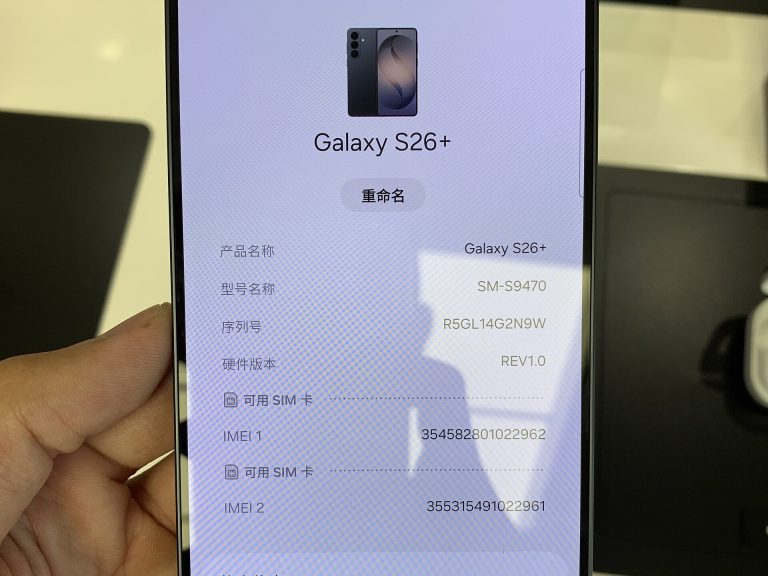
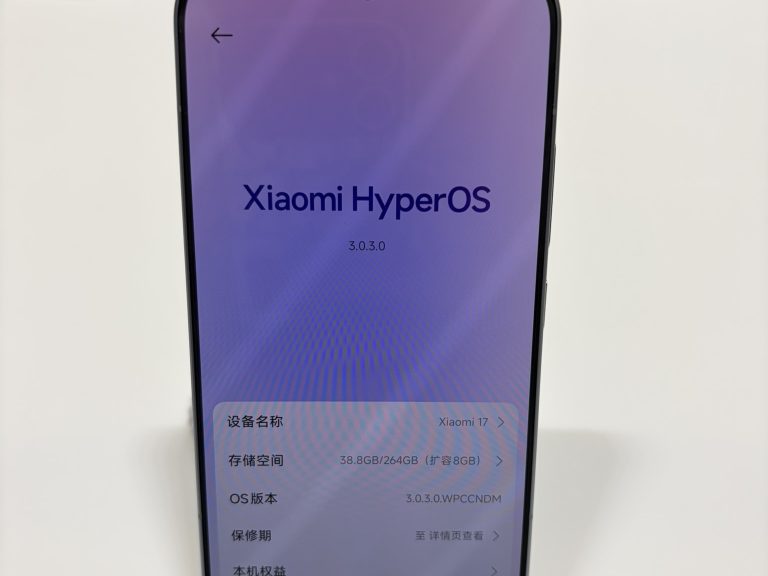
Galaxy S26+ vs Xiaomi 17
The Galaxy S26+ and the Xiaomi 17 are aimed squarely at each other: same class, different badges. Close matchups are the hardest to call, and the Galaxy S26+ versus the Xiaomi 17 is one of them.
At a glance
- Performance Tie
- Memory & Storage Tie
- Camera Tie
- Battery & Charging Xiaomi 17 wins
Key Differences
-
The Xiaomi 17 has 29% more battery capacity
The Xiaomi 17 doesn’t just edge this one; 6,330 mAh against 4,900 mAh is a lead you’ll feel. A bigger battery usually means longer days between charges, although chip efficiency and screen size also shape real endurance.
Design & Size
The Galaxy S26+ is physically larger, so the Xiaomi 17 will be the easier fit wherever space is limited.
Design & Build
| Spec | Galaxy S26+ | Xiaomi 17 |
|---|---|---|
| Height | N/A (not specified) | 5.95 in |
| Width | N/A (not specified) | 2.83 in |
| Thickness | N/A (not specified) | 0.32 in |
| Weight | N/A (not specified) | 6.74 oz |
| Water & dust rating | IP68 | IP68 |
| Frame | N/A (not specified) | Aluminum |
Display
The Galaxy S26+ and the Xiaomi 17 differ on display in ways that are described rather than measured. The table has the details.
Screen size
Galaxy S26+: 6.7 in Xiaomi 17: 6.3 in Screen size is personal. If you watch a lot on your phone, the extra area pays off; if you text one-handed on the go, compact is kinder.
Performance
Too close to call
The differences on performance are small enough to ignore in daily use. In short, performance is a draw; the decision lies elsewhere.
Memory & Storage
Too close to call
Neither pulls ahead on memory & storage; the numbers are close throughout. The memory & storage verdict: no winner, and no reason to worry either way.
Camera
Too close to call
The camera specs are close enough that neither gets the point. Neither phone gives you a reason to choose it on camera.
Battery & Charging
Xiaomi 17 leads
The Galaxy S26+ is outclassed on battery & charging; the Xiaomi 17 leads by a clear margin. On its side, the Xiaomi 17 has 29% more battery capacity. Capacity isn’t everything, but when two phones are otherwise close, more milliamp-hours is the simplest endurance advantage there is. That makes the Xiaomi 17 the natural choice for buyers focused on battery & charging.
Battery capacity
Galaxy S26+: 4,900 mAh Xiaomi 17: 6,330 mAh Extra capacity also ages better: after a few years of charge cycles, the Xiaomi 17 has more headroom left.
Software & Updates
This area doesn’t reduce to a single number. The table shows the software & updates details for both, so you can judge what matters to you.
Full Specifications
Display
| Spec | Galaxy S26+ | Xiaomi 17 |
|---|---|---|
| Screen size | 6.7 in | 6.3 in |
| Panel type | Dynamic AMOLED 2X | LTPO AMOLED |
| Resolution | N/A (not specified) | 2656 x 1220 |
| Refresh rate | N/A (not specified) | 120 Hz |
| Peak brightness | N/A (not specified) | 3,500 nits |
| Always-on display | Yes | N/A (not specified) |
Performance
| Spec | Galaxy S26+ | Xiaomi 17 |
|---|---|---|
| Chipset | Snapdragon 8 Elite Gen 5 for Galaxy (US) | Snapdragon 8 Elite Gen 5 |
| CPU cores | N/A (not specified) | 8 |
| Process node | N/A (not specified) | 3 nm |
| RAM | 12 GB | 12 GB |
Memory & Storage
| Spec | Galaxy S26+ | Xiaomi 17 |
|---|---|---|
| Base storage | 256 GB | 256 GB |
| Max storage | N/A (not specified) | 512 GB |
| microSD slot | No | No |
Camera
| Spec | Galaxy S26+ | Xiaomi 17 |
|---|---|---|
| Main camera | 50 MP | 50 MP |
| Ultra-wide camera | N/A (not specified) | 50 MP |
| Telephoto camera | N/A (not specified) | 50 MP |
| Optical zoom | N/A (not specified) | 2.6× Shortest optical zoom |
| Rear cameras | N/A (not specified) | 3 |
| Front camera | N/A (not specified) | 50 MP |
| Max video | N/A (not specified) | 8K30 |
Battery & Charging
| Spec | Galaxy S26+ | Xiaomi 17 |
|---|---|---|
| Battery capacity | 4,900 mAh | 6,330 mAh (winner) |
| Wired charging | N/A (not specified) | 100 W |
| Wireless charging | N/A (not specified) | 50 W |
| Port | USB-C | USB-C (USB 3.2) |
Software & Updates
| Spec | Galaxy S26+ | Xiaomi 17 |
|---|---|---|
| OS at launch | Android 16 (One UI 8.5) | HyperOS 3 (Android 16) |
| Promised OS updatesManufacturer commitment | 7 years | N/A (not specified) |
Design & Build
| Spec | Galaxy S26+ | Xiaomi 17 |
|---|---|---|
| Height | N/A (not specified) | 5.95 in |
| Width | N/A (not specified) | 2.83 in |
| Thickness | N/A (not specified) | 0.32 in |
| Weight | N/A (not specified) | 6.74 oz |
| Water & dust rating | IP68 | IP68 |
| Frame | N/A (not specified) | Aluminum |
“N/A” means the manufacturer does not specify the value or we could not confirm it. Figures marked “manufacturer rating” are the maker’s own claims, not our measurements.
Which One Should You Buy?
Choose the Galaxy S26+ if…
- you want the bigger phone
- you trust Samsung and want to keep things familiar
Choose the Xiaomi 17 if…
- you want the bigger battery (6,330 mAh vs 4,900 mAh)
- you like a phone that takes up less room
- you’re loyal to Xiaomi and happy with it
Also Compared
Frequently Asked Questions
Which is better for most people, the Galaxy S26+ or the Xiaomi 17?
On the specs compared here, the Xiaomi 17 makes more sense for most buyers; the Galaxy S26+ doesn’t win a single measurable area.
Does the Galaxy S26+ last longer on a charge than the Xiaomi 17?
On paper, the Xiaomi 17 has the edge: 6,330 mAh of battery capacity against 4,900 mAh for the Galaxy S26+. Real-world results also depend on how you use it.
Is the Galaxy S26+ bigger than the Xiaomi 17?
Size goes the other way: the Galaxy S26+ is larger (6.7 in), and the Xiaomi 17 is the smaller option (5.95 × 2.83 × 0.32 in).
Executive Summary
Here’s my take on Samsung’s Galaxy S26+ versus Xiaomi’s Xiaomi 17. Start with the headline difference (the Xiaomi 17 has 29% more battery capacity), and a lot of the decision falls into place.
A quick self-test: do you care more about the things a spec sheet can’t capture or battery & charging? The first answer means the Galaxy S26+, the second means the Xiaomi 17.
My pick: the Xiaomi 17.
Personal opinion based on the data above. Your priorities may differ.